This is my scrap pile–All the things I’ve had to cull from the evolving story of Excavatia. This is where, as S.K. advises in “On Writing” I have had to kill my darlings.
I have more threshing to do, as I move through stealthily behind the scenes, editing previously published Blog Post Chapters, but it has the sneaky effect of making me look like a much better writer, earlier on, than I actually was. [Heh-Heh!]
But, I have to own my foibles to ensure that this journey is not so much about illusions of my own grandeur… [Mwwah, Ha-ha-ha!]
Naw, that ain’t me. I am a seat-of-my-pants fellow that just gets in there and writes whatever comes off the top of my head. Sometimes the “top of my head” needs a good flushing… [not sure that was the image I was going for, but I’ll let it ride…]
So here it is. The culls in a jumbled Chapter by Chapter beautiful mess showing that God can do anything with the raw clay of an idea and shape it into something better.
In the interest of reducing some of the distracting exposition present in the original draft, I am relocating some of that inner dialogue and ideas here to refine the story itself for readability. The original thought I had when creating this “first step” Blog was to make it a kind of weekly devotional using a story structure to walk it out. The story points were like large flagstone pavers to me as I walked through a private garden of exploration. I used them initially to place my tender barefoot steps, during my devotional walk with my Savior, through concepts of the day appearing in my own Surface World existence. But the Grand-Storyteller showed me that even my paver stones had a Purpose that could be tailored to serve Him. I was thinking simply, but, as He always does, He was calling me to a grander, broader vision.
What follows will be excerpts of the exposition, I am carefully carved away from each chapter in the sequence of which it originally appeared.
This is the crucible of The Refiner’s Fire, the pruning of my wildly sprouting imagination that must happen for the heart of the story to not be lost in the original mix. These extractions may serve as a kind of devotional narrative or just a collection of random thoughts I had to work through for the story to emerge and develop its own character and theme. Only God knows what these may be in the end. A companion devotional or just a thought experiment notebook.
[As I revise the story from its original first draft, this section will be populated with some of the extracted content. Feel free to check back here, if interested in my progress or the behind-the-scenes content of each chapter. I get a humorous image of me acting like The Great and Terrible Oz pulling levers and making smoke. Well, here’s some smoke….]
If you want to scroll through, be my guest, but I recommend a good pair of chest high waders and a good hosing down afterwards. Hold your nose and have fun!
Chapter 1: The Valley of the Shadow
One of its precious verses lingers in my mind, almost as if I am hearing it from within a dream, but I can also see and read the words clearly in my mind.
“4 The god of this age has blinded the minds of unbelievers, so that they cannot see the light of the gospel that displays the glory of Christ, who is the image of God.” [2 Corinthians 4:4 NIV]
I have a firm believe in the truth of those words, but I wonder how much or to what degree I have played a part in that deception and blinding as well.
***
Time is of precious value. We are each given our own measure of it to use wisely. To unpack the hidden treasures stored up for us and to share the discovered eternal wealth with those we learn to love. To say what needs to be said before the last grain swirls and drops through the hour-glass.
Reflecting back, there was so much I left unsaid because I foolishly did not consider that loss could come so easily to us.
I think about this in terms of we and us, because it was more than myself affected by it. Loss is ahead of all humankind. It is our lot.
We deal with as best as we can. Anger is present with us, and one of the first feelings that come to hand. We cry out and we rage. Not at the ones we lost, nor at God for knowing that these tragic days would come and not be warning us of them…or did He?
The hardest, most difficult anger we deal with is the measure we dealt with ourselves. There are a million what-ifs or why didn’t I’s or if only’s. They come at us in wave after building a wave of self-loathing as we fool ourselves thinking that somehow our own personal suffering makes up for us not being the ones taken in the tragedy. Survivor’s guilt. They had so much ahead of them. They were such good people. They didn’t deserve to be taken from life. But did you know, or even imagine that someone might be thinking the same things of you if your day of separation came? That you would be so painfully missed, and others would feel guilty that you were snatched away instead of them? Death is permitted to take from us by measures, what we have failed to learn to appreciate in life. We forget that time and people are precious gifts. We get caught up in our own selfishness and problems so much that we fail to see the grains swiftly passing through the hourglass into a globe we cannot reach until we too pass through a burial. The holy scriptures address this in a succession of verses:
“24 The way of life [winds] upward for the wise, That he may turn away from hell below. 25 The LORD will destroy the house of the proud, But He will establish the boundary of the widow. 26 The thoughts of the wicked [are] an abomination to the LORD, But the words of the pure [are] pleasant. 27 He who is greedy for gain troubles his own house, But he who hates bribes will live. 28 The heart of the righteous studies how to answer, But the mouth of the wicked pours forth evil. 29 The LORD [is] far from the wicked, But He hears the prayer of the righteous.” [Proverbs 15:24-29 NKJV]
Perhaps that is why it has been so long. I could not get past my own guilt. I was drowning in it. Anchored down by it.
I am reminded that because life is enjoyed in fleeting moments to make the most of them. The wise among us do this. I am reminded that the arrogant and self-boasting have a day of reckoning, but the humble widow just surviving through another day, making her financial ends meet, has an advocate who will help establish her efforts. I am reminded that what we plot and scheme for ill will come back on us, but those who are aware that the Sovereign of All is watching and hearing, tempers their words accordingly to bring comfort and healing to those within hearing distance. I am reminded that those who seek success with honest methods will bring security to their household. But ones who practice deceit and claw their way to gain will invite trouble in as a guest in their house. I am reminded that we should give thoughtful and considerate answers rather than taking the bridle off of our tongue and lashing out at those we say we love and appreciate. I am reminded to do those things and live the life that causes others to prosper under our care and builds up those around us. This is how we make the most of our journey on the path to Excavatia. We appreciate those special people of goodwill sharing this road with us. We welcome them on the journey and gratefully acknowledge the contributions they make and share with us that enrich us along the way. We share with them our stories and dreams and listen to theirs and encourage and build each other up while we have time together. Time is so very precious. People who show themselves in both word and deed to be friends should be valued and shown that they are appreciated in the moments we share.
Because its original language is so packed with layers of meaning, it is interesting to see how the variant English translations back in the Surface World render the following verse to incorporate those nuances.
“There are “friends” who destroy each other, but a real friend sticks closer than a brother.” [Proverbs 18:24 NLT]
“One who has unreliable friends soon comes to ruin, but there is a friend who sticks closer than a brother.” [Proverbs 18:24 NIV]
“A man [that hath] friends must shew himself friendly: and there is a friend [that] “sticketh closer than a brother.” [Proverbs 18:24 KJV]
“A man of too many friends comes to ruin, But there is a friend who sticks closer than a brother.” [Proverbs 18:24 NASB]
“A person who has friends may be harmed by them, but there is a friend who sticks closer than a brother.” [Proverbs 18:24 NET]
There are times when we are challenged by our conviction to stand alone and proceed onward even though our traveling companions may abandon us to our own perceived foolishness. But the verse above reminds us that even if that may seem to happen, there is always ‘The Friend’ that sticks closer to us than a brother. We never walk alone, friendless and abandoned.
If we have plans that are indeed foolish and we are a person that is not receptive to the wise counsel of those who truly wishes us well, there are some admonishments that we must consider. Conditions I must apply to myself and take the measure of those who would be companions to me in this dangerous journey towards Excavatia.
Again the words of the Ancient Text echo within me:
“Where no counsel [is], the people fall: but in the multitude of counsellors [there is] safety.” [Proverbs 11:14 KJV]
“Without counsel purposes are disappointed: but in the multitude of counsellors they are established.” [Proverbs 15:22 KJV]
“For by wise counsel thou shalt make thy war: and in multitude of counsellors [there is] safety.” [Proverbs 24:6 KJV]
A passage from the Ancient Text attended my mind:
“2 Jesus called a little child to him and put the child among them. 3 Then he said, “I tell you the truth, unless you turn from your sins and become like little children, you will never get into the Kingdom of Heaven. 4 So anyone who becomes as humble as this little child is the greatest in the Kingdom of Heaven. 5 “And anyone who welcomes a little child like this on my behalf is welcoming me. … 10 “Beware that you don’t look down on any of these little ones. For I tell you that in heaven their angels are always in the presence of my heavenly Father.” [Matthew 18:2-5, 10 NLT]
Chapter 2: Writing From Prisons
Test test test test
Chapter 3: The Beasts Between Both Worlds
Test test test test
Chapter 4: Where Do Trolls Come From?
Renamed – The Unwelcome Guests
He raised his eyes at last to the large portrait and remembered back…to the beginning.
The caravan stretched for miles upon end, over the brow of the horizon, down a declivity and then rose back up to a ridge upon which Xarm, a self-styled ruler of one of the many clans, rode ahead of the masses to get a first look at the new country and mountainous lands coming off the highland plains from the great sea.
Xarm had come from a very different land many decades ago, but in this strange country, the years and the overhead sun were much kinder to aged men. Still, in all, Xarm knew he was finally growing older and could feel the effects of the years piling upon his body, signifying that sometime soon he may need to think about his final rest and the legacy he would leave to his progeny. He had been a cruel master, powerful in his day, and had ruled at times with an iron fist and at others with a velvet glove.
Now it was finally time to begin the transfer of his rule to his designated next in line. There were several of his offspring to choose from. He had not been a virtuous man. He had not thought enough about establishing a rightful lineage sanctioned by clerics, of whom he had no use for.
His chosen favorite had died of a consuming disease, no doubt given him by some vile wench he had used while reveling. Now he had only his second choice, and in his mind, the youth was a grave disappointment. The young man needed affirmation too much. A weakness for which he had been warned and chastised on numerous occasions. He certainly was not fit to darken the shadow of his dead older brother. The lad was full of bottled rage but unable to focus and make decisive use of it.
The king and his son rode side by side towards the cliffside and then dismounted to approach the edge of the overlook. Xarm had commanded his attendants and bodyguards to wait for them about a league back so that he could talk privately with the young man.
The two approached the drop-off quietly, the king slightly ahead, the son dutifully following about a pace or two behind.
The sun was beginning to set on the far horizon and shadows of the evening were stretching away and behind them.
Upon the plains and valleys and lower intervening lands, various sized cities, towns, and hamlets were just beginning to light their evening fires.
It was just how the scout said it would be. A land full and fertile, shouldered by mountain ranges, watered by myriad lakes and rivers, tilled and cultivated by generations of people who had no knowledge of what was about to happen to them.
Xarm took it all in studying it with a seasoned and calculated eye. Measuring its natural strengths and weakness. Its fortifications or lack thereof. Its arrangement of towns in situ, its approximate number of residents based on size and observable boundaries. Its roads and potential modalities of travel and food sources, and access to timber and stone.
Seeing the young man, as if for the first time within the last half hour of travel, also standing there at his right shoulder observing the land below he quietly asked, “My son, how would you move into an established land such as this and subdue them all under your authority?”
The young man glanced at his father to be sure he had spoken to him and then looked out again on the cities and thought for a moment, and then answered.
“I would take some of my most powerful warriors. Divide them up and put hundreds of my most brutal, and dangerous men under their command, and have them ride in and lay siege to the smaller towns on the fringe, cutting them off from help from the larger cities. I would allow them full liberties to take over the towns, striking fear into them and cowing them into submission. Once we had control of the town, I would move in with greater forces to take the mid-sized towns until we had so subdued and struck fear into the hearts of the citizens that they feared to resist us.”
The monarch’s jaw tightened, and his eyes narrowed, as he let out an angry breath through clenched teeth. He swiftly turned, grabbed his son by the shirt and backhanded him with a slap across his bearded cheek.
“You are a fool. I am ashamed to have brought such an idiot out of your mother’s loins. There is too much of her in you. Have I taught you nothing? You would summarily be defeated, your forces spread thin, and your head severed from your foolish body and your guts fed to the dogs.”
In disgust the monarch released his shirt and shoved the young man away from him, staring down at him with hot anger and frustration. The prince flinched at the slaps he’d received more so from each of his father’s words than the harsh strikes. His cheek was red and raw from the brutality of his father’s angry hand. Though it stung and a welt was forming, he knew better than to reflexively raise his hand to his cheek showing any kind of weakness. His father would surely break his arm for such a reactive gesture. He’d thought to impress him but had only brought further shame upon himself and increased his father’s ire and rejection.
“Listen carefully to me, you idiot. I asked you how you would gain control of an established land which is already self-sufficient. You regurgitated this tripe about conquest by force, which has its rightful place but not in the beginning. That may work with a land divided by feuding clans, but it will not work in a land living peaceably with its neighbors and sharing trade and community. You will quickly run out of powerful soldiers because you must maintain the outer cities under an iron hand. You will rapidly deplete troop strength and will at best only take the mid-sized cities but never the largest ones and you will subject your kingdom into a series of endless battles and wars which will ultimately cost you everything to maintain until they subdue you and overrun you and trample you underfoot for all of the atrocities you have committed in rising to power. You will destroy everything I’ve spent my life to build for you and your siblings. Fear is the costliest route to conquest. You would do well to always bear that in mind. Brutality is useful only after you have gained mass control and then you may use it with impunity as much as you like.”
The young man bowed his head, not daring to meet his father’s eye in challenge. He knew his father was a brutal man, and that he thought little of killing subjects or using them as he wished, so his father’s reaction to his statements bewildered him.
“How then would you do it, sire?”
The king turned his gaze back upon the distant fields, glancing sidelong at his cowed offspring, “Here is how it must be done. Listen closely. These people do not know you. Your reputation must not be known among them. You must carefully control how they see you and come to know you and the people you lead. It will cost you much at the beginning, but in the end, it will amass great fortunes into your kingdom coffers. Send emissaries representing you into their towns and communities. Live among them. Meet with them, learn what their problems are. Their concerns. Their big plans for the future. Listen especially to their suspicions. Their complaints. Sympathize with them. Offer to help them. Make them think you care about them personally. Gain their trust through empathy. Look for those who feel ostracized and outside of the community. Befriend them. Include them. And learn what it is that causes them to feel marginalized. Encourage them and others of like mind or circumstance to form groups defined by those differences. Create sub-cultures and divide them by those definitions. Fracture the community, by these self-defining groups. Marginalize the older generation who built the society with labor and traditional values. Make the younger generation distrust the older one, so they refuse to learn from them. We cannot have those old ways carrying forward.”
“Validate the angst of the youth. Encourage them to resist and rebel against the old-fashioned ways. Exchange the concept of fact-based structure to a feeling based structured society. Feelings can be manipulated, facts cannot. The more these groups make decisions based on feeling rather than fact, the better for you. Use their passions and later you can use their aggressions and frustrations to serve you as well.”
He gestured outward to the small twinkling lights in the more remote areas.
“Those smaller towns will be your hardest people to subdue because they need the least from you. They are perhaps the most self-sufficient of all that can be seen from this vista. They are more agrarian. They plant. they harvest, they make do with what they themselves are able to produce by their own industry and hard work. They have the most to lose where there is no external threat to their existence. So, with them, you must either create some external threat which causes them to believe they need something from you, or you must subvert their self-sufficiency and lure them into dependency. Only then will you have the leverage you need to rule them. Understand?”
The young man stared hard out in the direction the king indicated.
“How do you make a self-sufficient people depend on you?”
“With overly generous gifts. You trick them into doing so. You slowly lure them into wanting what you have to offer, rather than taking the time to produce it themselves. You trade with them and take initial financial losses until they stop producing and start consuming more than they produce. You make their life easier for a season until they lose their ability to do what generationally they have taught their children to do for themselves. You wait until the time is right, to begin to slowly raise the cost of the wares you offer them. You convince them that the honorable thing to do is bring together their dwindling produce into a communal storehouse and ration it back to them in fairness to all. You secretly undermine their industry. You buy out the trade of artisans who may become capable of producing superior products and avert competition. You convince these promising young and naïve artisans to go to work for you and then you bury them in monotonous duties until they either lose initiative or you have a chance to discredit them in the eyes of their peers.”
The young man’s brow furrowed, “That could take years.”
The king smiled, “It can happen sooner than you think, but you are correct, it does take time to plan and orchestrate such a shift in thinking, but the rewards are immeasurable. A quick rise to power is a fast fall out of it. You must think progressively. A slow eroding of old ways of thinking. Eventually, your might will have been gained by those who become zealous for your rise to power. In the beginning, promise them everything. Be overly generous. Gain their confidence. If your fortunes are in risk of depleting before you reach your objective, secretly organize loyal brutes to maraud and steal what you have to from the unsuspecting to continue the cycle of generosity until they trust you implicitly. Promise to deal with these vandals and marauders, which are secretly under your orders. Recover and restore some of what was stolen to the people. They will pay it amply back to you in power. In the end, they will become your slaves to do with as you wish for their very lives and welfare will depend upon your benevolences and continued power. The larger cities who are already sharing resources depend upon the outlying communities for food and clothing. These will fall faster under your rule if you are widely seen as a beneficiary. They volunteer their services and their very lives in exchange for what you offer them in the beginning. Only when you gain control of all they produce; can you show the might and violence of your true power that they unwittingly yielded to you.”
“Sounds like a very complex plan. Can this actually work?”
“It does every day, where I came from, my son. Back in an entirely different world than this one. It is working even now. Create their need for them. Give them what they want for a season, and these fools will surrender to you the keys to their kingdoms to secure for yourself an empire without end.”
Thinking back, the Son of Xarm, raised his glass to his lips again and toasted his father’s image.
Chapter 5: The Incident Behind the Inn
Trolls are elusive creatures. Like in Edgar Allen Poe’s story “The Purloined Letter” they hide in plain sight. They mimic their surroundings, looking like they belong there, though not appearing in their natural form. In Poe’s story, the stolen letter being used to blackmail a prominent woman was placed in a plain-looking envelope and left in the open room while the investigators looked for a document they expected the blackmailer to have hidden from them.
Often times your expectation of what they should look like or where they should conceal themselves for spying will cause you to miss spotting them. Like a chameleon, they blend in with their surroundings. Their skin is pebbled with a sort of photo-optic pigment that seems to texturize and darken or fade at their will. It is uncanny. They are the gypsy moths of this sub-world. Like prolonged immersion in water can crinkle your fingertips, their skin does this creepy puckering all over. Trolls like to create the false assumption that they are slow-witted, dullards. Talking with them is infuriating. They play stupid and clever interchangeably at their whim. The only time you can get a straight answer out of them is when they have no alternative to evade you or your probing questions. Their masters practically torture them to get direct answers. You might not like this term, but I can think of none better to convey what they are. A troll is essentially a smart-ass. They have piggish eyes, a crinkled bulbous nose that looks like an anemic turnip. And they suck in their chubby fat cheeks, pucker their pouty fat lips and walk around like that thinking they’re the kings and queens of the catwalk. Yeah. That sassy, cutesie, selfie-photo you’ve seen Surface World kids posting lately? Yep. It’s a Troll-face. Who knew?
The thing is, they have a memory like a three-year-old. Those little cauliflower-like fat ears on their heads pickup sound as efficiently as Soviet-era submarine radar. That is what makes them the perfect spies in a few senses. What do I mean they have the memory of a three-year-old? Well, for instance when a Surface World parent is conversing on one of those ubiquitous talking devices to “that friend that just accepts them warts and all” and in the meantime, forgets their little squatty recording device is quietly taking dictation in the nearby room with the efficiency of a court reporter. It usually happens later in that large family gathering where there is a lull in the overall “catching-up” conversations or in the interim time between Sunday school and Worship Service when the “little recorder” goes into embarrassing full-playback. In the pin drop silence, following the stunning Memorex high-definition performance, said parent now red-faced as a plum, through an asthmatic nervous laugh chastises her erstwhile “sounding board progeny” for his or her hi-fidelity. Saying to the shocked but bemused audience, “I’m so sorry. I don’t know where he/she picks these kinds of things up.” Silently promising in their heart a prayer of penance for adding perjury to their growing catalog of unconfessed sin.
Well, trolls, unlike the aforementioned three-year-old, are far from innocent or laughingly cute when divulging their carefully recounted tattles on the subjects of their surveillance. The trolls tend to embellish the recounting and will wickedly and gleefully do so if they perceive the master is plotting the severity of the subject’s sentencing upon hearing the disclosure. They love to see others get punished. Deservedly or otherwise. The little malevolent midgets! Did I mention that before? Trolls are almost always short and squat by stature. Okay, upwardly challenged. They move about in a kind of a galloping waddle, interchangeably using their feet and thick knuckles as ballast. You might have seen chimpanzees who move similarly, though Trolls do not possess such animal grace of movement nor fluidity either. They can be fast only in short sprints before they become winded and start snorting like a pig in a corset. They squeal like them too when they are surprised or threatened. Loud, ear-splitting squeals that would make one think someone set the shaggy hair on their forearms on fire.
But that is enough about trolls. We’ve got one to catch, just behind the inn if it hasn’t shuffled off into the scrub brush and sage patches skirting the pasture behind the stables.
The Inn was built in approximation to the Surface World style known as Germanic Fachwerken façade. You’ve probably seen the kind I mean in movies set in medieval villages. Whitewashed stone and dark rough-hewn beams gave the inn an otherworldly charm and an Old World European feel. The Inn was solidly built to endure. And endure it had. Year after year. Season after season. Through wet, cold and icy winters, to hot boiling and dry summers, and cold, breezy and damp falls. The bones of the place endured. Even if the whitewashing had faded and gray crackling slate peeked through. Dry mountain grass gathered in brown withered bunches under the extended eaves. Flagstones held back the Spartan grass from the area where the hearthstones built-up the back of the chimney.
Rounding the corner we saw that the flue door swung slightly. Revealing that the troll had surreptitiously exited the dining area and was in the process of absconding with its sneaky little secrets.
The thought that this Troll might actually be an unfortunate Xarmni child may give you, my fellow traveler, pause as each of you bear your unlit torches like cudgels ready to whack this ugly creature if need be. Ugliness alone is never a justification to hit a troll. If it was, I daresay, I would deserve far greater whacks than I’ve had in my many years up to this point. But the idea is not to assail it and bludgeon the little snot just because it happens to have a bratty disposition either. [Tempting as that might be.]
The point of doing what might need to be done,…if put to it,…is that this is a life or death situation for the family seeking temporary shelter and refuge in the Inn. The wife looked sallow and gaunt, her eyes haunted and hardened by life and the struggle to survive another day of it.
Clearly, she has been going without her portions of rations to allow the children to eat enough. Together they have been convincing themselves that subsistent living is the way everyone lived and somehow, they deserved nothing more than just that. To want more or to take more was somehow selfish and diminishing to the “greater good.”. The Xarmnian zeitgeist haunted her even now.
I could see and feel that in her, even in the way she hung her head and dawdled over her bowl of porridge while her husband recounted their story. Fine dresses and well-fed and happy children seemed too much to hope for. Stopping the troll from slinking back to his taskmasters with his embellished tales of these treacherous defectors spreading sedition against the state is now our primary concern.
There is the question of when evil should be addressed and with what level of severity. There is One who sees all and is recording every deed along with the intentions of every heart. Paired together, these motivations are weighed upon the scales of justice, by One who is purely righteous and clearly sees the course of every idle word spoken or deed done.
Check your motives and consider what you should and must do to thwart the evil that infects these lands and their citizenry. Make your resolution here and now. There are times when violence is the correct course on the road to and in the pursuit of justice.
“14 But you see the trouble and grief they cause. You take note of it and punish them. The helpless put their trust in you. You defend the orphans. 15 Break the arms of these wicked, evil people! Go after them until the last one is destroyed. 16 The LORD is king forever and ever! The godless nations will vanish from the land. 17 LORD, you know the hopes of the helpless. Surely you will hear their cries and comfort them. 18 You will bring justice to the orphans and the oppressed, so mere people can no longer terrify them.” [Psalms 10:14-18 NLT]
Before a dramatic performance, it is considered good luck to say the phrase “break a leg.” Not exactly sure how that applies here, but if need be, we are committed to “breaking an arm”, if necessary.
***
Nell, Begglar’s wife, unfortunately recognized the signs of undernourishment. She had witnessed too often the effects starvation had on a body, and it always broke her heart.
When the family had arrived, right away she could tell they had not eaten in a while and she knew it would take time to get them fed and strong enough to continue the journey that had brought them to their door.
Over the years, she’d taken in feral cats and small woodland animals, nursing them back to health with her gentle ministrations, culinary skills and calming demeanor, being also careful not to tame them too much that they could no longer survive in the wild on their own. She knew their own standing was temporary. That a day would come when they’d all have to flee into hiding and they would have to abandon the inn and the servicing farm that supplied it. A day when the Xarmnians uncovered their buried past and finally linked it to their present. The land was ruled by brutality and the inhuman. Humans being among the worst, for they arbitrarily could feed you with one hand and strike you brutally with the other.
As such, neither a person nor animal could become too trusting of human nature. A certain degree of caution and wildness was necessary. It was a delicate balance that she struggled to maintain, for though her desire was to lavish love on the vulnerable, they must be wary that appearances were often not what they seemed at first to be. Trust must be earned, incrementally and in small, meaningful measures, consistently over time. And for this family to entirely let their guard down, even with her and Begglar, was an indication that they might be too trusting of the wrong sort later on.
But as for their immediate needs, she and Begglar and their son could help in some respect. First things first was to feed them, then to hide them, then to get them as far away from Crowe as possible. The hour was growing late.
She knew from experience that a person or animal that is starving will have difficulty eating anything other than a small meal at first because without regular means their stomachs shrink before they swell and bloat.
The wife looked sallow and gaunt, her eyes haunted and hardened by life and the struggle to survive another day of it.
Clearly, she has been going without her portions of rations to allow the children to eat enough. Together, she and her husband must have convinced themselves that subsistence living was the way everyone lived and somehow, they could hope for nothing more than just that.
Poor souls, Nell thought, her tenderheartedness extending out to them.
She could see and feel that in the woman, even by observing the way she hung her head and dawdled over her bowl of porridge while her husband had recounted their story.
Many in the rural communities had begun to believe in the myth that the big cities were populated by the wealthy and urbane. But this family’s insider experiences exposed the lie of it, fine dresses and well-fed and happy children seemed too much of a luxury to hope for, even for this government scribe.
For Nell and Begglar, even their own situation had drastically changed when the Xarmnians began to extend their reach towards the coastal communities. Fields were commandeered and farmers indentured into servitude upon their own lands.
Begglar had negotiated with the Xarmnian Overwatch. There wasn’t much choice, now that they had extended their patrol circuits into the seaside highlands and coastal areas.
He reasoned that if the Xarmnian soldiers were to be quartered and fed well, when they came through, then the Inn and its tenants had to be allowed to share in the reserved Xarmnian provisions and be given allowances to pay less in crippling, “protective” tribute to the Xarmnian crown and treasury.
Begglar had negotiated the hire of several of the families in the village of Crowe to sustain and maintain the Inn and associated stock, but could not be seen to entirely support the townsfolk without raising Xarmnian suspicion. The Xarmnians, though they preached the virtues of the collective, distrusted small gatherings of any sort.
A few times, some of the men of Crowe Begglar had employed, foolishly tested the limit of Xarmnian tolerance and as a result made their wives widows and left their children orphans.
It was a delicate balance and fine hair’s breadth line their family had walked for so long–between resisting the urge to flee and the need to stay put to maintain the cover disguise which gave a modest subsistence to so many others.
Every added burden of offering aid to the desperate, however, was met with some miraculous means of provision from The One. And both Nell and Begglar felt that they were to remain at their Inn for as long as their small measure of widow’s oil continued to flow.
So, she had suggested they begin with the warm porridge, before trying to eat anything of more substance.
“The porridge will take the chill from your bones and warm your bellies,” she told them.
Her son had gone into the back kitchen, and was busy filling the large copper kettles with spring water from the water barrel, and tending the kitchen fires.
Begglar had alerted his stable hand to notify the tower scout, and get word to the Storm Hawk that they had a fugitive family that needed hiding.
The overturned metal pail had been placed on the top of the yard fence pole, when the family had first arrived, but with the evening sun lowering and the misty fog rising up the hill from the town below, he doubted that the signal could have be spotted in time.
When Begglar had returned inside, and Nell had gotten the family seated and the porridge served, Nell whispered to Begglar, “Be careful what is said. Something else is here. I feel it.”
Nell sensed something else in the room, before she saw the gray stony lump move into the back of the fireplace.
Begglar’s attention was focused on the outside street, watching the road, so he did not see her give the signal for silence.
The family had fallen into a subdued silence, finishing up their porridge, so the conversation had fallen into a brief lull.
Standing near the kitchen, glancing back to her son and then watching the family eating quietly, she caught the subtle motion from the corner of her eye, but tried not to stare at it or make it aware that it had been spotted.
A troll. Vile, ugly and filthy. Its body huddled in the opening of the empty fireplace box.
So that is where the smell had been coming from, she surmised.
She had suspected that a barn rat had died somewhere, but could not find the location, though she had searched, cleaned and scrubbed every place she suspected.
For the last few weeks, they knew they were being watched.
Nell had felt the presence, but did not know it belonged to a troll.
Trolls almost never ranged this far. Their kind used to be rare, but she had heard rumors they were growing in number of late.
The creature had moved throughout their property, huddling and watching in secret, skulking from place to place, but she had never considered how it might have made its way indoors.
They had been ever so careful to keep doors and windows locked, and secure them immediately walking in and out to do their chores and tend their stock.
Nell had been the first to hear the commotion beyond the back wall fireplace. There were others outside!
Nell started to say something to Begglar, but suddenly they all heard the troll’s loud shrieks.
The man jumped up from the table. His wife squealed and grabbed for her children.
Begglar had responded quickly. He moved swiftly away from the window, gathering a large flour-dusted rolling pin and Nell rushed forward into the room.
“Take’em to the outer room upstairs! Lock the door! Hide ’em there, until one of Maeven’s men comes and then down the passage.” he had said even as he pulled his work apron on, to give the illusion that he had been busy tending to his bakery ovens and rudely interrupted.
“Come this way,” Nell had said, gathering and hurriedly ushering the woman and her children towards the stairs. A teen-aged boy emerged from the kitchen and scooped up the porridge bowls and flatware, rapidly busing the table, clearing the evidence that anyone had been seated there. Without a word, he expertly took all the dining set, balanced in his hands into the kitchen.
“What can I do?” the man asked, unsure whether to follow his wife and children or help Begglar in some way.
“Stay out of sight and keep your family quiet. Follow my Nell and do everythin’ she tells you to do. Be quick about it!” and with that he had burst out the front door to find out what was going on outside.
Chapter 6: The Letter and The Marker
Begglar’s wife, Nell, was worried.
It had been so many years since other Surface Worlders had been seen in the Mid-World lands and never before in such numbers as these. Begglar, her husband had been among the fourteen travelers from the mysterious Other Land, when she’d first met him. She had heard that the first party of Other Land travelers had been only a party of seven, but that was many years before her time and before she or her brother had been born.
Her parents had lived in the “ghost town” at that time. A town that was long dead now. A place she had heard was being reborn in secret, but a place she wanted no part of because of the great tragedy that had stolen her parents from her. At any other time, she and her brother might have gone with them there. But if they had, she knew they both would have joined them in death.
Her life and her world had been crushed in the aftermath. She had on many occasions wished she would have died with them, and not been trapped in Surrogate – “Sorrows Gate” as it was renamed. A fitting title because it reflected her deepest pain. Had it not been for the kindness of Noadiah taking her and her brother in, they might have starved to death when the Xarmnians came to take over their city and placed the quarantine edicts in the town’s square, forbidding anyone from going out to investigate what had happened with the dead city. Her world had darkened, and her brother had taken their deaths hard as well. In an instant, she had been thrust cruelly into blinking and stunned adulthood. She had to do whatever was necessary to make provision for herself and her brother.
She had been raised in the family business of small-scale merchants. Her parents had tried to raise them to one-day take over for them, but her brother, Corimanth, was not properly and consistently disciplined. Indulged too much, he had proved a difficult problem to manage by herself. He resented her, resented the tragedy of losing his parents at such a young age, and became belligerent and unmanageable. He wanted to lash out but had no constructive way to do so, so he had gotten into frequent mischief. At one point, he left for many days and did not return, and she had feared the worst. She imagined that he had gone too far and had foolishly challenged the Xarmnians and had met with a swift and brutal death somewhere.
Noadiah had been kind to them. Had given them work in her Inn, but something had broken deep within Nell’s heart. She doubted that she would ever be able to feel much of anything again, so she became despondent but dutifully served Noadiah with the up-keep of her place. Cooking, cleaning, attending to travelers of all types. Rebuffing the advancements of lewd men, suffering the sneers and jests of bawdy women. Until the strange group of sojourners from the north came. Men from Capitalia, but not originally so. Men who had a secret plan to defy the Xarmnian edicts. To challenge the brutal regime’s uncontested rule and dominance of their native lands. They had arrived to start a rebellion. And with the way she was feeling, she felt she had nothing to lose in secretly helping them with their cause.
And then the strange crew of Surface Worlders arrived. And she met a tall, proud and broad-shouldered man among them. And her heart had been smitten. Perhaps, there was hope for breathing life into her wounded heart again.
Time and the man’s persistent and steadfast affections had won her over.
She loved this man, more now than she ever knew was possible. They had been through a lot together, and time had taken a toll on both of them. Weathered them to some degree, but the real ravager had been the constant strain of living under occupied hostility. The Xarmnians had been brutal and gaining in strength, while the people they oppressed diminished and perished under their brutal thumb. When Begglar had come to her and proposed and laid out his strange but clever plan, she had been fearful but trusting. It would never work, she’d thought, but the chance to be with the man she had grown to love was a force that could not be denied. She would risk it. Once married, they could not live a full life on the run forever. So, they had left Sorrow’s Gate and had moved to this small high village of Crowe. “A fitting name”, Begglar had said, because it had reminded him of an author and the story, he’d once read in his Surface World life about hiding in plain sight. Remarkably, Begglar’s ludicrous scheme had worked for many years now. They had hidden right under the very noses of their oppressors. They had enjoyed a modestly good life for a long season.
Their son’s arrival had been an unexpected blessing, a deepening of her understanding of love and the capacity for it in her own heart as it expressed itself lovingly towards delight in seeing him grow and become a similar yet unique blending of both her and her husband.
Akin to that, what disturbed her about this group of Other World travelers was now they had young children among them. A disturbing development, indeed for the prior incidences around these quests, as Begglar and the others, had termed them, had been a path through violence and political turmoil, yet that was not what was troubling her most. It was what their sudden presence here signified. She had felt something stirring deep within her upon first seeing the Surface Worlders outside the Inn. Something she had thought had faded and left her long ago. The gift was awakening in her again. Quietly she whispered, “Oh, no. Why now?” feeling some rising degree of panic such that she had to steady herself, leaning against the serving bar.
Deeper still within her spirit, a small and quiet voice, that she recognized was not her own responded kindly and gently, “Why not now?”
***
It is early out, but the sun’s promise is lighting the distant peaks. There is some activity in the inn as my fellow travelers awake to the smell of pan-fried bacon, sausages and a large skillet of scrambled eggs.
I see the Inn door open as Beggler tosses out a pan of sudsy wash water. I am shocked to see him up this early. After how he ended the evening I figured him to be in no condition for it. His wife is there with him, and his boy. Looks like they are getting ready for a big breakfast. Despite the dealings of yesterday, Beggler seems different. Almost like his old self again.
It is still a few hours before dawn. The night passed without further incident, though I was restless, reacting at every nocturnal sound, I did some wandering around the Inn grounds and found that the charred remains of the Troll were dragged away in the night, by I know not what. The hayloft was chilly, but finally settling and burrowing into the straw, I was warm enough. The fecund smell of earth, dead straw, just a hint of manure and general musty smells of the barn and its miserable four-legged occupants permeated the air and my traveling cloak and knapsack. Whoever walks next to me tomorrow, may want to do so upwind.
I return to my thoughts which tend to plague me with a general wakefulness, such that I get up at odd hours. I think my circadian rhythms are out of sync. Come to think of it, it has been a long time since I even heard a circadian. [Just kidding. I know the word for the insect is “cicada”. I used to think these were what the biblical term for “locust” referred to until I learned that a locust was just a grasshopper.]
Weird thoughts keep me up. Not necessarily important thoughts but sometimes just curiosities.
Do you ever have one of those days when some song or certain phrase gets stuck in your head and you cannot seem to get it out of there? Boy, I do. Not just music or odd-phrases either. An image that creates a ripple, then a swell, then a cresting wave of building curiosity. Until I find myself wasting some better-vested focus time mentally wrestling with an often foolish riddle and a cavalcade of ridiculous answers that never seem to satisfy my otherwise logical mind.
While traveling in a very distant land, upon on the Surface World, I came across a couple of images in a children’s storybook. The book recounted a folktale of the region, where this particular villainous old hag…
(Okay, this isn’t a real person and I’m not being Mr. Nasty here.)
She is a hag. A scowling, old crone. A witch, in the traditional sense of the term. I say she is not a real person, but here in the hinterlands of this sub-world sojourn, one can never be too sure. This place has a way of surprising even me, and I am merely chronicling what I know about it. Chasing the fleeting glimpses of it as fast as I can.
Well, anyway this old hag has a name in those fairy tales they tell in that far away land, and just so I don’t provoke her in case she might be listening, I’m not going to say her name here…or just yet, anyways.
The image I saw was of this old hag, crouched in the bowl top of this giant sized mortar stone, with a large pestle in her fierce grip, using it like an oar or outboard motor on a fishing boat. Odd thing was, she was not in water. The mortar stone base was not on a slick surface like ice or cascading down a snow bank as a weird sort of unwieldy sled. This old bat had saddled up on the most unlikely object she could find and was cruising through a dark forest of aspens. The pestle was striking air and she seemed to be getting no place fast. Yet, in the illustration, her long white hair was flying in the wind and she was cackling like she was particularly happy about the next nastiness she was about to do to a couple of unsuspecting children who had wandered too far into her woodland property.
Of all the conveyances she could have had…a poor, beaten, old nag horse, a creaking and weatherworn wagon, or in the Western tradition of modern witches, a large Swiffer Mop sailing through the air. Instead, she had chosen the most clunky, non-aerodynamic thing she could possibly perch upon. Decided to go gallivanting about on something that perhaps weighed half a ton, had no wheels or sled-skis or army tank track treads. It struck me as so odd, that I lingered too long looking at that bizarre illustration, and I found myself insisting to my fellow travelers that I must buy the storybook.
It was bilingual, its text appearing in its original native language and in that of my own tongue. How accommodating. Very pleased with my odd purchase, I collected that book of stories of that far away land and still have the book to this day up on a bookshelf in the Surface World.
Not too far into the book from the page depicting the hag in her odd apothecary conveyance, I was also struck again by the odd image of her house. A rough collection of logs and sticks, festooned with skulls and femurs and a bundle of radius, ulna, and tibia here and there.
She, like so many people up in the Surface World, nowadays, had a penchant for decorating in bones. Skull bones, broken jaw bones, a gate made of wickedly jutting ribs that signified that her neighbors weren’t welcome for a visit. And peddlers might not survive an attempt to sell her whatever it was they were peddling. The boy and girls scouts couldn’t even get so much as a single popcorn ball or box of thin mint cookie order out of her. Her style was truly Goth avant garde. In the Surface World, she might merely be a Hollywood brat.
Bones used to signify the idea that if you mess with me you will die. Now get off my lawn, you jerk! At her place, the welcome mat had nails in it. But because in the Surface World there are people like this, those things did not strike me as particularly odd or out of place. After all, this growling granny was a witch.
No. The thing that struck me most was the foundation her house rested on. One might expect a stone base, or pier and beam setup. Or perhaps, their equivalent of a concrete slab. Nope. This crazy granny had gone full Barnyard. Her house and all she had in it and hanging from the porch of it, rest on a giant pair of yellow chicken feet. Well, I had to ponder that one a while.
Chicken feet. She should fire her building contractor, but thinking about it, she probably already did. That was perhaps the third skull to the left of her front yard gate with the candle inside it, and with moon-glow firelight shining out of the eye sockets under a particularly thick cranial brow. He now served on her property as a ghoulish sort of lamp to her front flagstone walkway. Some folks just have a “keep off the grass” or “no peddlers, no trespassers” sign on their property, but this lady was going all out. I’ll bet even the door bell was wired to a live 220 Volt line. Ding-dong. Zap! The would-be guest stands there smoking, their face pulled into a singed rictus grin as granny answers the door saying cheerily, “So glad you could stop by. I’m having a cook-out and I was just waiting on the roast. You look about done. By the way, nice hair.” A cruel laugh emerges from the crone as she packs the smoking body into her bone wheel-barrow and gleefully wheels it around back, all the while whistling what in other circumstances would seem to be a cheerful tune.
So…Chicken Feet. Wasn’t expecting that one.
And like the song or phrase that gets in your head from time to time, it struck me with the frustrating task of trying to make both house and vehicle make some sort of odd sense.
I read and re-read the translated story. First, the one accompanying the pictures and all of the other tales where this character recurred for some villain deed. I never found an answer for why the Mortar and Pestle, tools of an ancient apothecary or druggist, made a suitable vehicle in that culture’s mind or why this style of housing might prefer a pair of large chicken feet to concrete footers and some pig-iron rebar to provide a firm substructure. The questions followed me, nagged me. I could not rest until I either found the answers or sought out someone who might.
A few years back, in previous sojourns in this sub-world, I met a young lady from that very same country where those stories were traditionally told to children. I asked her about the whys of the character and the hag’s odd eccentricities, and she shrugged and asked me if it mattered. That they had always seen this character as a crazy, mad sort of person and that should be the answer to my quandary. She’s crazy. Crazy people do crazy things. It’s just a folktale. Don’t worry about it.
Well, nuts! I had already come to that conclusion, myself.
I found this passage in the Ancient Text that seems to confirm that sentiment:
“Though thou shouldest bray a fool in a mortar among wheat with a pestle, yet will not his foolishness depart from him.” – [Proverbs 27:22 KJV]
You’ve heard the old saying, “She may have had a few screws loose?” Well, what the old hag in the story had loose would have filled up a hardware store. That crazy fictitious character had reached out of her made-up tale and was making me crazy too. I had to know more. I needed to find a logical answer to how she got to riding a mortar and pestle and why the Chicken Feet.
My fair, foreign interlocutor saw my dilemma and patted me on the back, as I pressed the sides of my face with my hands.
“If it means that much to you, when I go back to the Surface World, I’ll ask around,” she said.
Grateful, I smiled and responded, “Thank you for that. I know there must be some other story in your culture that might explain those things. Since I do not know your native language well enough to read it, I would be most obliged to you, if you could find something out about it.”
She patted my cheek, placating and humoring me and said, “I’ll write to you, as soon as I find something about it.”
And that was that. Many years have passed since then. That need to know the Why of things still burns brightly within me. In part, it has been what has set me on this journey to find the fabled, hopeful land of Excavatia. The place where stories bridge this world and the Surface World. That connecting point for me where hopes and dream and memories go to breathe life.
And in my jacket pocket is the letter, from that very dear lady from a distant land. A promise made and a promise kept. I am almost afraid to open it. What if I am disappointed in the answers surrounding that strange old lady? Why should they even matter to me? Why are stories so important?
I have thought about that question long and hard. Perhaps, harder and longer than most, if you’ll pardon my eccentricity.
Stories have a peculiar to reach into your mind and occupy it for however long they hold your attention. If you know me in the Surface Word, ask my Father sometime about the story of “The Pink Polka Dotted Ping Pong Paddle.” It will teach you the power a simple story has to affect you to the point of distraction. The story is infuriating but does deliver a sense of how stories can breach both worlds: the quasi-fictional one the story occupies in the sub-world of your imagination and the one we live in and call our real-world. The Surface World.
Stories cause us to do something that very few of us practice nowadays as adults. The practice of temporarily suspending disbelief. To lessen the volume of our native skepticism. To allow for another possibility. To return to the wide-eyed wonder of a child, if only for a few precious moments. To entertain a magical premise, and hope for a positive resolution. To once again be open to simple, trusting faith. That is a very desirous place to be, in some respects, and we should never lose sight of it.
The Master in the Ancient Text said it this way:
17 “Truly I say to you, whoever does not receive the kingdom of God like a child will not enter it at all.” [Luke 18:17 NASB]
15 Verily I say unto you, Whosoever shall not receive the kingdom of God as a little child, he shall not enter therein. 16 And he took them up in his arms, put [his] hands upon them, and blessed them. [Mark 10:15-16 KJV]
You may have heard of the term child-like faith. That’s not the say as stupidity or a loss of reason.
The Master is not advocating for stupidity. He is pointing out something more important than that which essentially boils down to unreserved trust. A certitude of confidence in the One telling the story and a suspension of argumentative skepticism. Skepticism tends to become the default characteristic we share as we age. That is why the Master of the Ancient Text, wants us to know him well enough to trust him. To have confidence that the story of our lives that he is telling will be worked together for good. That we can trust Him with the outcome of our Surface World stories because we understand His nature and the love He has for each of us.
I reach into my pocket, peel back the flap of the yellowed envelope and pull out the Letter:
Sister & Brother
“Ѕеѕтяа е Βяат” – Story #4
Once upon a time there was a girl who lived in a small cottage near a large forest with her little brother. Their parents had died, and every day the girl and her brother would go into the woods in search of food. Over the past few weeks, however, they began to have more difficulties. The berry bushes where they had once gathered berries had been cut and the place where they had always found mushrooms and various edible roots had been trampled. Each day they had to go deeper and deeper into the forest to find food, and whenever they found a good place for edible plants, the very next day it would be cut and uprooted. It seemed to them that someone was deliberately trying to get them to leave the forest, but they had no other place to go and they did not know who might be causing them all these problems.
One day while walking through the forest, the girl’s brother began to feel very, very thirsty. They had searched all day for food, but could not find anything. They were both tired and finally decided to go back home before it became too late. The woods had grown dark and it seemed that even the birds no longer sang in the trees. By and by, they came to an opening with a small pool with hoof prints all around it. The brother asked his sister if he could drink from the pool, but his sister said, “No, this is a pool where horses drink. Do you want to become like a horse?”
Disappointed, the boy followed, his sister and soon they came to another pool in a small clearing. He asked her if he could drink from this pool and his sister replied, “No, this is where cows drink. Do you want to become like a cow?” Reluctantly the boy said, “No,” he did not want to be a cow, but as his sister led him on through the woods, he looked back at the cool water, forlornly.
Soon, they came to another pool, and the boy felt extremely thirsty. “Oh, sister, please let me drink from this pool,” he begged. But his sister told him again, “No, you may not. This pool is where goats drink. You do not want to be a goat. Now come on. I will give you a drink from the well when we get home.”
Thinking her brother was following her, she proceeded on through the woods. When his sister had gone far enough ahead, the boy said to himself. “One little drink from this pool will not hurt me. Besides, I think I shall die of thirst before we make it home.” Quickly, he climb down to the water’s edge and leaned over and drank deeply from the water. When he sat up, he noticed that staring up at him was the shimmering image of a small goat.
“Oh, no!” he exclaimed. In sudden fright, he ran from the pool up the path and found his sister. “Sister! Oh, sister! I am so frightened. I drank from the water and now look at me.” The girl was shocked to see her brother like that, and she knew she should scold him for disobeying her, but she saw how sad and miserable he was and she could not. She came to him and picked him up and her arms, and together they walked the rest of the way home. They were both crying together, and the girl did not notice the handsome prince who happened to be riding by on his horse when they came up to their house.
He reigned his horse over and asked the girl why she was crying. Through her tears, she told the prince how the woods behind them were enchanted and how her brother had been turned into the little goat she now held, when he drank from one of the water pools. The prince had compassion on the girl and saw she was very beautiful, and he said, he would try to help them. He told the girl, “I do not know what to do about your brother, but perhaps there is someone in my kingdom that can tell us. Will you come with me to live at the palace and we can see what is to be done.” The girl was glad and she agreed. During her stay at the palace the prince was very kind to her and soon they both fell in love and were married. The prince still had to travel on business, but he told the girl that he would keep listening for someone who might be able to break the spell on her brother.
While the prince was away, an old woman came to the palace to see the girl. When they were alone, the woman jumped up and threw her cloak over the girl’s head and tied her up. The old woman was really the witch called Baba Yaga, who had lived in the enchanted forest. It was she who had enchanted the pools, and had captured many children by causing them to become very thirsty when they passed through. Baba Yaga’s spell only worked on young children, because she wanted them to be tender to eat when they became animals. The older sister had not be affected by the spell, because she was already becoming a woman, and when her little brother became a goat, she took him from the forest before Baba Yaga could capture him. Baba Yaga had a good memory and was very angry. She had come to the girl’s house later that evening, but by then the girl and her brother had let with the prince. She did not know where the girl had gone for many years, until she heard a peddler who was passing through her forest talk about the princess and how she kept a little goat always beside her, and fed him from her table. Baba Yaga remembered the girl that had got away from her and vowed to take her revenge.
Baba Yaga had waited until the prince was away and finally captured the princess. The cloak caused the princess to fall into a deep sleep, and Baba Yaga was able to leave through a back door carrying the sleeping princess wrapped in her cloak. She put her in her wagon and left the castle, laughing at how she had fooled everyone. Little did she know, that a small goat who had watched her come and go, had been quietly following her, and he suspected that she was up to no good.
The witch rode deep into the forest, until she reached a deep, dark river running underneath the trees. She pulled the princess out of the wagon and drug her next to a large rock with a rope tied to it. She quickly jerked the cloak off of the princes and tied her hands and feet to the big rock. The princess woke up at the old woman laughed at her harshly, “Think you can steal my pretty pets and get away with it, do you? Well you can’t. Now you will pay for it. The river is dark and I will keep you under it so your prince will never find you. You will be my prisoner forever, and I will laugh at you each time I cross my bridge over you.” With that she picked up a large branch and using a smaller rock as a fulcrum she pressed down on the branch and rolled the rock down the small bank where it splashed and fell down into the deep water. The witch then climbed back into her wagon and rode over the bridge and went on her way, laughing cruelly.
The boy goat sadly came to the bridge and wept into the river, lamenting the fate of his poor sister. Though the water was deep, the witch had enchanted it so the princess could not die, but would stay alive in the constant misery of knowing she was the witches’ prisoner. Through the water the girl called up to her brother and begged him to save her, but the current was too swift and he could not swim. He cried and cried, and the princess told him to run and get the prince and tell him what had happened to her.
The kid goat ran and ran through the forest and down the open road, running as fast as his four legs could carry him. He scampered through the village and eventually came to the castle on the hill. On the ramparts, there were many colored flags and he knew by this that the prince had returned home from his trip.
He gained entrance through the gate and climbed the steps to his sister’s tower apartments, where the prince’s man servant was helping him change out of his traveling clothes.
The little kid came through the door and leaned against it, out of breath from his long run.
The prince saw that the boy goat was distraught and he sent his servant from the room. When the servant had left the prince asked him, “Where is your sister? I was surprised when she did not come out to greet me when I returned.”
The little goat began to cry and wail, “Oh, my prince. It is terrible. Baba Yaga, the old witch of the forest came and kidnapped my sister and took her into the forest. Please come. You must save her.”
The prince stood and called the servant back into the room. “Bring me my armor and sword at once. The princess has been kidnapped.” The servant left the room hurriedly, and the kid goat spoke to the prince again. “My lord, the witch has tied her to a great stone and has thrown her into the enchanted river that flows through the forest. She still lives, but she is held prisoner at the bottom. Baba Yaga has power over the waters in the forest. It is because of this, I am still a goat.”
“Don’t worry, little one. I will deal with this Baba Yaga and we will save your sister. I visited a wise man on this trip and learned that only a prince can undo the magic of people such as this witch of yours.”
When the prince had been armored and his horse had been brought, he set off with his most trusted knight riding beside him, and they carried the little goat with them. They rode quickly across the field, by passing the town, and headed straight for the enchanted forest.
They came upon a path where the kid had followed the old witch into the forest, but the branches of the trees hung in the way and barred them.
The prince rode forward and unsheathed his sword saying, “I am the prince of this land, and I demand entrance. Yield, I command you, or I shall cleave my way through you.”
The enchanted branches lifted and the path opened up before them. They rode into the forest, with the prince in the lead, and the kid goat held safely under the arm of the knight.
The path was shaded and wound through the trees, but the trio could see where the wagon of the old witch had recently passed by. They followed the path deep into the forest, and it seemed that their way began to grow darker. Along the way, both men began to feel frightfully thirsty and soon they came to a small clearing with a pool in it. The knight began to dismount, but the prince held him back. “Wait, the water in this wood is enchanted. We cannot drink from this pool.” The knight swallowed hard against the dryness in his throat, but obediently climbed back on his horse with the kid goat still under his arm. The kid goat’s long ears twitched and, to the amazement of the knight, the kid goat spoke to them. “Good, sir knight, and my lord prince, when first we came into the woods my sister, the princess, was untouched by the thirst that led to my transformation into this form and has come upon us now. She was a young woman and I was still but a child and the witch’s enchantment was not strong enough then to work on her. Now, I fear, that her power has matured and is much stronger. Be wary, lest you be vexed and she come upon us through these shadows. She is somewhere nearby, and with these beast’s ears I heard her curses from the shadows when we did not drink from the pool.”
When the knight had recovered from his surprise, he spoke to the prince, “My lord, many of us had wondered at how prominent this one was about the palace, and no one could understand why a goat was allowed to share the king’s table. There has been rumors that perhaps you were unwell, but now I see the truth. Please forgive your servant for my part of this amazement, though, I have always held my tongue on the matter.”
The prince smiled to himself, and reassured the knight, “Sir, there is nothing to forgive. Had I not known the truth, I would have been as amazed as you. Let us be on then, for if as he says, the witch is near, we may need as much stealth to find the princess as we can.”
They spurred their horses and began to gallop onward through the woods until they reached a dark stone house festooned with skull lanterns and various animal bones strewn about the yard.
An old woman stood on the porch of the house and observed them with a cunning smile. “So, you have found me at last, prince. And who are these travelers with you? Your faithful knight surely, and look, you have brought me a gift. I had had my mind set on having chicken this evening, but we can get a fire going and roast this goat if you wish.”
The prince sat tall upon his horse and unsheathed his shining sword and raised his emblazoned shield from its saddle hook. “You know very well we have not come for a feast, nor is this little one to be meat for your cruel fires, Baba Yaga.”
The old witch cackled to herself and wagged her head, “Let’s not be hasty, my lord. Your war tools do not frighten me while I stand near my house, and as long as I have my wand.” At this she lifted a gnarled pointed stick from the folds of her cloak and waved it airly at the prince. “I have been practicing my craft, and no longer fool with children alone. Perhaps you felt the call of my waters as you came? Yes? And what you think to undo now comes late in the day, for this afternoon, I have at last perfected the use of this wand, and any transformation spell I cast with it will become permanent.”
The prince’s horse’s eyes became wary, and the prince noticed that the horses had become very nervous the closer they came to the old witch. He reassured his with a gentle pat, but the horse rolled it’s eyes and continued to stamp about nervously.
“Such pretty, pretty horses you have, my prince,” the old witch croaked, and cackled to herself. “I have been anxious to try out my special wand all day. Perhaps, you would consider letting me borrow one of your pretty, pretty horses for the test and we could have both horse-sized chicken and a morsel of goat tonight too.”
The prince dismounted and patted the nervous horse on the neck. “Enough of this, Baba Yaga. You shall not harm these horses, nor anyone else in my company, for that matter, and you will release my wife from the river or find your day has at last ended here without goats or chickens.”
The witches’ wrinkled face grew still and the dark mirth she had once had, faded from her face, and she looked as pale as a stone.
“We shall see about that, princey!”
Suddenly, she spoke some vile, unknown word and a bright flash shot out from the crooked wand she had been waving about in her hand. The prince quickly swung his shining shield up in one smooth motion, and the flash of light struck it, reflected and struck the foundation of the witches’ stone house.
Angry, Baba Yaga clenched her fist in fury. “You will not get away so easily, princey. Perhaps, your knight might like to volunteer for the next try.” Baba Yaga raised her white arms and prepared for another strike, when suddenly her whole house seemed to shudder. The left side of the house seemed to be rising from the ground causing it to tilt sharply and Baba Yaga was thrown off balance. In her frantic effort to stand she reached for the porch post that supported the roof overhang under which she stood, but in doing so, she dropped her wand. The whole house shuddered and canted again and Baba Yaga found herself clinging to her porch post when the house suddenly lifted off of the ground.
The house rose shakily, to the utter astonishment of the prince, the knight and the kid-goat, to stand on enormous chicken legs and feet. The house itself had come alive and was now beginning to stumble and dance about on large yellow chicken feet. Baba Yaga screamed in panic and frustration, but when she did the house seemed to react first in a stumbling stupor and then in dancing fright. The house spun around slinging the cursing witch in every direction, heightening her frustration and thus, its own panic. The house danced so violently that it shook the witch loose from her grasp of her porch post and she fell down face first into the muddy earth where her house had once been.
Frantically, she groped about in the mud, looking for her fallen wand, and only then did she realize that the prince was standing over her with the wand in his hand. She glowered up at him through her wild mud caked hair and shouted in fury and she saw the prince easily snap the wand in two. Smoke fizzled from the broken wand, signifying that it had, at last, lost all of its magical properties. The witch beat her bony white fists into the ground and howled. Suddenly, they noticed that the house that had been dancing around in weaving panic had finally started to run. With a thundering crash it tore off into the forest at a panic induced speed, weaving and canting crazily through the trees. Baba Yaga scrambled to her feet shouting, “No! No! You stupid old house! Come back here with my things!” But it was of no use. The louder the old witch shouted the faster the house ran, and the hotter Baba Yaga’s anger became. She slipped and fell once or twice more before she regained her feet and finally went galloping after the house shouting in fury.
The prince, the knight and the kid-goat laughed and laughed as the old witch pursued her crazily dancing and trotting house away into the dark of the forest, and perhaps they are still running to this day, no one really knows.
Even, however, as funny as it was to see all this, the prince still knew he had to find and rescue his wife, so he did not notice that when he and the knight both regained their horses and continued their quest, the light in the forest had slowly begun to grow brighter.
Moments later, they came to the dark river and the bridge, for, if you will remember, they had come through the forest by a different route avoiding the town altogether, and the river was not far on the other side of where Baba Yaga’s dark house had once been.
They dismounted quickly, and the knight helped the prince get out of his heavy armor. Quick as he could the prince grabbed his dagger and dove into the swift current just upstream of the bridge. The water was cloudy at first but it soon brightened as daylight filtered through the trees above and shone in shimmering rays through the water. In seconds, he found the princess and cut her bonds, and together they swam quickly to the surface. They drifted in the current closer to the shore where the knight helped steady both the prince and princess and brought them to the bank.
When the kid-goat saw his sister there, and knew she was alright, he capered and danced about in extreme joy, hopping and skipping about. On one extremely high hop, into the now warming air from the sunlight, the little kid noticed that the feet he had gone up on were not the same as the feet he came down on. To the delight of all who witnessed it, the frolicking little goat had at last become a dancing, laughing child again. The once gnarled and twisted trees around them had also straightened and the brushes and leaves became lush and green once more. All at once in the tops of the tree above them they heard a twittering noise, followed by a chirping sound in another, and a purring whistle in another. Soon the treetops were filled with the delightful chatter of birds singing and the three of them realized that the enchantment had at last left the forest and now they could all return home.
The old witch, Baba Yaga, did not return to the forest near the Tsar’s castle, for several years. It was rumored that she at last caught her house at the foot of the Ural Mountains, where she was able to corner it and chain it to large pillared stones at the base of it. That she once again searches for a new wand to get her revenge against the tsar prince, but she has not had much success in investing it with the magic needed. By mistake, or mispronunciation, she transformed her traveling gypsy wagon, into a large powdering stone mortar and pestle. Oddly enough the transformed wagon still moves and creaks like the wagon, with invisible wheels, and she is able to ride in the bowl and steer it about with the long pestle one might use to crush dried leaves into powder. Perhaps the enchantment is merely an illusion. Perhaps the wagon is still a wagon, drawn by the miserable emaciated mules that once pulled it, but its appearance is just that of the stone mortar and pestle. No one knows for sure, because no one wishes to deal with or get in the way of the angry old witch. But be that as it may, we are sure that she will, most likely, turn up again in others stories, no doubt to vex other common folks and royals who have the misfortune to cross paths with the old crone again, somewhere in some shadowy future within the Russian hinterlands.
If you want to find out something about the values of a culture, read the stories they tell their children and have written down for their posterity. Not sure what you gathered from the tale, but I get the sense that familial ties, in whatever form they may be are very important. The sister looks after her little brother. Tries to stand in for the parents they both lost. She tries very hard, though unsuccessfully to keep him out of mischief and trouble. There are dangers in the world. Bad people and good people. A certain power ceded temporarily to evil but countered by good, honor, and decency. Not bad ideals at all.
It bears repeating: A culture reveals its values, by the stories it chooses to tell to its children. A thought to remember when we so often dismiss the kids’ stories of our own youth.
It is the most basic and fundamental way in which parents can transfer their values to their children and the generations that follow them. These have a lasting impression that stays with us, into adulthood and old age. It is why the Author of the Ancient Texts would give the following command:
7 “For what great nation [is there] that has God [so] near to it, as the LORD our God [is] to us, for whatever [reason] we may call upon Him? 8 “And what great nation [is there] that has [such] statutes and righteous judgments as are in all this law which I set before you this day? 9 “Only take heed to yourself, and diligently keep yourself, lest you forget the things your eyes have seen, and lest they depart from your heart all the days of your life. And teach them to your children and your grandchildren,” [Deuteronomy 4:7-9 NKJV]
The Text later reiterates its charge:
18 “Therefore you shall lay up these words of mine in your heart and in your soul, and bind them as a sign on your hand, and they shall be as frontlets between your eyes. 19 “You shall teach them to your children, speaking of them when you sit in your house, when you walk by the way, when you lie down, and when you rise up. 20 “And you shall write them on the doorposts of your house and on your gates, 21 “that your days and the days of your children may be multiplied in the land of which the LORD swore to your fathers to give them, like the days of the heavens above the earth.” [Deuteronomy 11:18-21 NKJV]
That is why it is important to be aware of what is being taught and passed on to them in the Surface World. Stories are often the most powerful vehicles in which values are transferred. That is why it is also useful and important to study each culture’s folk tales and lore. To learn what is being taught in them. To learn what passengers each conveyance carries with it before those passengers disembark and live in the minds of our succeeding generations.
If you want to know something of why a person behaves the way they do, look at what they were taught from a very early age.
“Train up a child in the way he should go: and when he is old, he will not depart from it.” [Proverbs 22:6 KJV]
When I think about the legacy we were given and the one we are leaving behind I wonder if I’ve done enough. Do I arm those I care for? For the life they must live in dangerous lands? Or do I leave them to succumb to its inevitable destruction or watch in silent mute and observant horror as a few of them…not many…but a few become Trolls like the one we had to put down yesterday.
We need many more She-bears in our Surface World standing guardian, protecting their impressionable young cubs until they are able to be equipped to stand for themselves. Sadly, their numbers are dwindling with each passing year. There is another enemy that stalks them and the fathers who also stand guard against the encroaching night. Gangs of thugs are arriving in carloads. Punks on their way to becoming full-fledged Trolls, ride in the vehicles of stories to threaten our neighborhoods and communities. No place is safe. They cruise around the parks and playgrounds waiting for the parents to look away. Calculating their risk versus their opportunity to snatch our young ones from us.
The monster that hunts with them is particularly sinister, and it walks invisible among them, among us. Its name is Distraction. It targets adults almost exclusively, while the Thugs quietly snatch their young ones away, almost under their very noses. The sound of a car door slamming, barely arouses the parent, as their most precious asset is stolen from them and driven away into an unknown future of cruel victimization. Still, Distraction holds them using its “devices” of cunning.
“The thief comes only to steal and kill and destroy; I have come that they may have life, and have it to the full.” [John 10:10 NIV]
“27 No man can enter into a strong man’s house, and spoil his goods, except he will first bind the strong man; and then he will spoil his house.” [Mark 3:27 KJV]
I submit to you that it is Distraction who in the Surface World has had the greatest success at binding the strong man and woman.
Why do I keep referring to the Ancient Text? Because we are in a dark place, my friends, and it is the only unfailing light I know that faithfully works in all worlds. Where we have to go soon will be very dark indeed. It is important that you gather the light to you while you still have time….while you still can.
“Your Word is a lamp to guide my feet and a light for my path.” [Psalms 119:105 NLT]
I know it need it desperately because I know where I’ve been and where we’ve yet to go. Also, it helps me see to lead. I am an imperfect guide here. I know some, but not everything. The devices of the enemy are cunning, but brought into the light they are predictable and easily exposed.
You might call it my crutch. Well, if you admit that you are crippled a crutch is a good thing. I must humbly rely upon it, because I am inadequate to draw from myself alone all that is needed for this quest to have the hope of success and survival.
‘Let the [spoken] word of Christ have its home within you [dwelling in your heart and mind—permeating every aspect of your being] as you teach [spiritual things] and admonish and train one another with all wisdom, singing psalms and hymns and spiritual songs with thankfulness in your hearts to God. ‘ [Colossians 3:16 AMP]
In whatever world I walk in, the wisdom of the Ancient Text is present and works the same.
“6 Your knowledge is beyond my comprehension; it is so far beyond me, I am unable to fathom it. 7 Where can I go to escape your spirit? Where can I flee to escape your presence? 8 If I were to ascend to heaven, you would be there. If I were to sprawl out in Sheol, there you would be. 9 If I were to fly away on the wings of the dawn, and settle down on the other side of the sea, 10 even there your hand would guide me, your right hand would grab hold of me. 11 If I were to say, “Certainly the darkness will cover me, and the light will turn to night all around me,” 12 even the darkness is not too dark for you to see, and the night is as bright as day; darkness and light are the same to you.” [Psalm 139:6-12 NET]
Bind the strongman, before you can steal from his household. The enemy relies on the confusion and division of his quarry as they get lost and scattered in the darkness. That is what has been happening for a long time to the generations present and those following.
I have not had the privilege of being a parent myself, and am not trying to say the how or why from personal experience. But I am observant. There are certain immutable truths that everyone who was parented well, knows to be true.
Never let your child get into a car full of strangers. Teach them to recognize the persons riding in the vehicle, to determine who is safe and who is an approved surrogate guardian for your child. Make sure they don’t ride away with a villain.
What I do have is a duty to fulfill. A calling to account for. An appetite for finding good and reliable stories. Faithfully trying to make record of their lives and bringing those accounts before the King as an offering in Excavatia. I hope to get better at it. The lives of those stories may depend on how well I keep account of them. My talent has been buried so long. It is clotted with dirt and has been moldering in its burial shrouds for years. I am attempting to clean, refine and polish it, but so much time has passed. Practice and willingness to answer the call is what is needed. The shine will return in time. The crevices are packed with dirt but, with care and a finely bristled brush, I will eventually clean those places too.
So child-like faith should be given to those in whom we can trust. This is a promise and a perspective of the One you really should get to know. He too is a Maker of Stories. Your story and mine.
“14 The LORD helps the fallen and lifts those bent beneath their loads. 15 The eyes of all look to you in hope; you give them their food as they need it. 16 When you open your hand, you satisfy the hunger and thirst of every living thing. 17 The LORD is righteous in everything he does; he is filled with kindness. 18 The LORD is close to all who call on him, yes, to all who call on him in truth. 19 He grants the desires of those who fear him; he hears their cries for help and rescues them. 20 The LORD protects all those who love him, but he destroys the wicked.” [Psalms 145:14-20 NLT]
You may wonder, fellow traveler, why I persist in casting these values in the conveyance of a story. Well, there are these verses I offer you as a possible cryptic answer:
“A prudent man concealeth knowledge: but the heart of fools proclaimeth foolishness.” – [Proverbs 12:23 KJV]
“The shrewd person conceals knowledge, but foolish people publicize folly.” – [Proverbs 12:23 NET]
I do hope to err on the northern proximity of those verses rather than on the southern slopes of them. If you persist in this journey, it is only fair that you may be one day called to be my judge, jury, and executioner. But know this…I will not go quietly into that dark night. My ultimate Judge has paid my penalties and acts as my defense Attorney in the Ultimate Courts of Justice.
Perhaps, you must judge for yourself what part of the aisle you are standing on when the gavel strikes and the hearings begin.
It may be time for you to consider what it is that might be keeping you from child-like faith, necessary to survive this journey. See: [1 Corinthians 1:18-21 NET] & [1 Corinthians 2:14 KJV]
***
The bells are being rung. Breakfast is ready. Time to find out what is to become of this day.
We joined together over a hot, lavish and bountiful breakfast in the Inn’s dining hall. Grateful for the hospitality of Beggler and his small family I paid him as much as I could spare from my leather satchel. He wanted to refuse the money as a point of honor and gratitude for us dealing with the Troll before it had a chance to escape to its masters.
His gratitude was measured, however, because he said that the incident would only buy us some time before he was missed. He and his family had been warned time and time again not to meddle in the affairs of The Protectorate, or the affairs of Xarmni or its subjects. They viewed his place, his inn as useful, and as long as it remained useful to the greater good. He could keep it unmolested, and manage the place unharmed. It was encouraged and considered wise that he remain cooperative and uninvolved to ensure that arrangement.
That arrangement, he showed me, by stretching out his collar to reveal his bare shoulder, was sealed with a fiery hot brand in his flesh. There, in a reddened raised scar, he bore the image of a circle bearing an inverted Y in its center that touched the border of the circle on three points and had a single line extending downward through the center of the Y to create a third juncture and bisection of the circular border. The hot iron has seared flesh into a celluloid gathering around the hot brand. The wound had to be treated by his wife. Eventually, the swelling eased, and its sensitive flesh quieted down to a healthier pinkish color many days later.
“They told me that when me boy came of age, he would receive his mark of protection as well,” he said with pleading, sorrowful eyes. And then he added, “I never shouldn’t have glanced at my Nell, when they said this to me.” He shuddered a moment, transported back to the moment of the memory as if it had been only yesterday. Then his eyes refocused and looked hard at me, lowering his voice.
“The soldiers, they noticed it. And that captain of theirs, he says ta me, ‘There’s ways of marking her that won’t leave a flesh scar. Just you mind that.’ And he and the others rode away. Off yonder.”
He gestured with the back of his hand towards the north and towards the mountains, almost spitting after them as he did so.
His eyes returned to me, watchful and saddened, clearly ashamed of himself for not being a better man than he was. He saw no judgment in my returned gaze, only a deep sadness for him.
“You need ta understand somethin’, O’Brian. Them days of welcoming travelers and merriment and jolliness are over here. Hope only comes here ta die.”
I am reminded by his words of my request and his comment from yesterday.
“Hope has not died yet,” I indicated the others still enjoying their breakfast and sharing and passing pewter plates of crisp bacon, and scraping hungrily at an amalgam of eggs fried and scrambled, with a light cream gravy, and crisp dark rye bread, “Take us to the marker as you promised.”
Beggler clenched and unclenched his fist and finally, wiped them on his server’s apron. He leaned in and further lowered his voice, “About that now. I’ve been needing to speak to you in private. Something has happened to the marker.” Before I could protest, he hushed me and looked around himself, covering my arm before I could lift it and make any gesture that might cause unnecessary attention to be drawn our way.
He pursed his lips and then stood, giving me a nod to follow him to a more private place where we could speak without being overheard.
When I learned the truth of his shameful secret I was amazed, shocked and angered.
Chapter 7: A Better Side of Ugly
The Marker had been buried by both Begglar and the Xarmnians. Its message is seen as offensive and counterproductive. Divisive and creating false hope. In the early days of the Xarmnian conquests, much blood had been shed over its engraved promise. Both Capitalians and Xarmians, now called, had seen this strange marker as a hopeful promise of a desired future for the lands in which they were about to settle. Now memory has faded with time. Most Capitalians have never heard of the mysterious marker. Some have forgotten that it ever existed just off the mountain roadways to the south of the mountain pass. Travelers used to come by from far and wide to see this strange marker. This monument to a hopeful future. For a time, people from both Capitalia and Xarmni would travel back to it, on an annual pilgrimage to be reminded of the hope they once had when their founding families journeyed through the wilder-lands, seeking a new place to settle and build a home for themselves and their posterity. When increasing incidents of aggression arose between the two family communities, before they had grown into nation-states, people from both communities stopped coming to visit the ancient shrine. It was too dangerous to do so. As other folk came upon the two nations, they were encouraged and would have been deceived by the hopeful promise of the marker, if they had no foreknowledge of the feuding and growing hostilities between the two nations.
At about the time that the wall between the mountain pass was built between the two nations, the Xarmnians, with the Marker location occupying the southern country, began to resent the presence of the Marker. It’s hopeful promise had grown sour in their minds and stomachs. That is when the indignities began. Resentful Xarmnians came to the Marker only to spit on it, and urinate on its etched stone promises. Further vile acts were done to it and before it, that it is not polite to even mention in passing. It was a symbol of a dying promise. The people of the later generations had forgotten the positive meanings that were ascribed to it in generations of their forebears. Its prophecy was ridiculed and mocked. Laughed at and scorned. Until the leadership of Xarmni and its conquered lands sent a delegation of stone smiths and iron-workers with cutting tools to destroy its mockery. There was no further use for the Marker. All evidence of its Ancient presence in these lands were to be removed. Erased from existence and memory. To even speak of the Marker in passing would get the backs of those with unguarded lips a day in the stocks in the open marketplace and a public flogging. Children of Xarmni and those in the serfdoms were forbidden to be taught of its existence. If it was never spoken about, the Xarmnians reasoned, then for all practical purposed it never existed in the first place.
In the passing years, that came to be the truth that Xarmnia lived in. Their fact and certitude, until even the few remaining Xarmnians who had once in their lifetimes seen the Marker with their own eyes, began to forget that memory as well.
At the close of the annual feasts that used to commemorate the joint passage as families between the Xarmnians and the Capitalians, they used to embark on a shared pilgrimage back to the southern head of the mountain range and gather at the stone marker in remembrance. No more. Not for many, many years now. Capitalians saw it as traveling too far into enemy territories. Even though there was an agreed-to armistice given during the season of feasting, neither side trusted the other to remain faithful to that agreement. Too much had been said and done. Too much animus and hostility had given vent to violence. Both sides had buried their dead over the feud. Both sides now brought their own food and drink to the symbolic and meaningless celebration each year, neither trusting the other not to be poisoned during the festivities. Only one leader or each group was made to share the meat and drink or the other. That leader on each side sweated through the festival each year. They were the only ones who were unable to at least appear that they were enjoying the temporary peace between the tribes.
One year the pilgrimage just stopped. At the close of the day, neither group mentioned the journey. They just cleaned up. Packed up and returned to their countries on their respective sides of the mountain pass. The shared journey to the Marker was never made again.
As more time passed, the Capitalians as well, began to forget there ever was a mysterious Marker. They too ceased to teach their children about it. Their books and documents and records began to be quietly revised and it began to fade out of time and memory altogether.
As far as both nations were concerned the one had their truths and the others had theirs. Harmony was reached only by an agreement to disagree. Only as time passed, more and more Capitalians, though they would never admit it openly, and would violently resist you if you ever suggested it, began to become more and more aligned with each other, only from their very different perspectives.
But those shared beliefs were clearly being skewed and tilted more towards favoring those extremes of the Xarmnians than that of the Capitalians. If one was, perhaps, more observant, and objective and removed from those hostile factions and the ever-present fog of their protracted conflict, one might just suspect that Capitalia had within it, a growing population of subversive Xarmnians working quietly towards building a pervasive demoralization and even now preparing them for an ultimate surrender of their hard-fought sovereignty and national identity. They could cover this activity, merely under the more innocent guise of seeking to unite the two nations to their joint and ancient heritage and become a family once again. Except that joint-heritage, for what it was worth, had long since been forgotten by both, and all that remained of it had been buried on a rocky hill so very long ago.
***
Each of us has a side we are not proud of. An ugly side. We try to hide it, joke about it, and make light of it in the context of others we erroneously compare ourselves to. We don’t know those other people really. What they struggle with because it is too easy to maintain the facade. But honesty matters. Sometimes we must own our personal shortcomings before we can ever get past them. That to me is a better side of being ugly. We all are guilty to some degree. We fail, we lose our temper, we are mean-spirited, and self-righteous, arrogant and unloving. Been there, am there, and I am sure I will walk those roads many more times before I’m through. But honesty, coming clean, and confessing these ugly parts to a trusted friend, no matter how difficult or painful it is to face, is always a place of healing. A real place where true repentance is possible. A place that pleases our True Guide, who is bigger than any problem. And can bring light into our darkest places of concealment. It is a place where Hope is restored. It may, for a season be denied, covered up or hidden by the clutter of life’s journey. But it is always there waiting to rear its ugly head and confront us unless we confess it early enough.
A lot more evil has been done under the cloak of good than was ever done under the proud, open, and flaunting ownership of society’s devils. Be watchful and careful fellow travelers. Our enemy is still before us. Do not worry about the bad people coming after us. Take caution not to miss those who will come at us disguised as good, with a heart full of pure savagery. The truth will out. Give it time.
Remember who it is all enemies serve and what his nature is. You may have heard it before, but, perhaps, were not paying attention to the implications of his title.
“For you are the children of your father the devil, and you love to do the evil things he does. He was a murderer from the beginning. He has always hated the truth, because there is no truth in him. When he lies, it is consistent with his character; for he is a liar and the father of lies.” [John 8:44 NLT]
“And no wonder, for even Satan disguises himself as an angel of light. Therefore it is not surprising his servants also disguise themselves as servants of righteousness, whose end will correspond to their actions.” [2 Corinthians 11:14-15 NET]
Chapter 8: The Hill of Skulls
(Formerly: What’s In A Name?)
By now you may be wondering, why in this Mid-World we don’t readily seek the names of strangers and newcomers here. I’ll admit, I have wondered that myself, but some answers occur to me, as they often do when I jump right in the middle of things for why that might be.
Names are the words by which we are known. Knowing someone begs a certain degree of responsibility for the knowledge acquired.
That sounds so simplistic at first, but let’s dig a little deeper, shall we? We often are called by names that we were not given by those who brought us into being. Hurtful names, mocking names, names which highlight a particular area, physical trait or quirk we personally struggle with. Over time, if we hear those names enough, we begin to think of ourselves in those terms. If the appellations given are by those who wish us ill or mock us, we lose sight of the value we once had by the ones who initially cared for us.
Shakespeare, in his play “Romeo and Juliet”, uses the character voice of Juliet Capulet to ask Romeo Montague some important and very crucial questions in navigating their new relationship with each other:
JULIET:
‘Tis but thy name that is my enemy. (40)
Thou art thyself, though not a Montague.
What’s Montague? it is nor hand, nor foot,
Nor arm, nor face, nor any other part
Belonging to a man. O, be some other name!
What’s in a name? That which we call a rose (45)
By any other name would smell as sweet.
So Romeo would, were he not Romeo call’d,
Retain that dear perfection which he owes
Without that title. Romeo, doff thy name;
And for that name, which is no part of thee, (50)
Take all myself.
ROMEO:
I take thee at thy word.
Call me but love, and I’ll be new baptiz’d;
Henceforth I never will be Romeo.
Romeo and Juliet (II, ii, 1-2)
The point being, sometimes our name (given or otherwise) can very well be the enemy of our heart’s intentions. For Romeo and Juliet, their families were locked in a generational feud that has seen much blood spilled between the two families. Each member felt that their personal interactions must somehow be weighed and measured against their loyalty to family and the honor of the family name.
In many lands and in many cultures within the Surface World, people imbue names with such importance that they can create obstacles to opportunities and fair access to things meet for all to enjoy and partake in. India has its caste system, America has its infamous periods of segregation, religious differences often lead to bloody and protracted wars, England had its own social castes in its feudal systems some of which persist to this day, the average high school settings among teens world-wide have their social cliques and so many other examples abound.
The material point is that while in some ways Names can unite us, by the same token they can divide us as well. A name should not be the sole measure in which we are known and judged worthy. Things like character, integrity, and acts of kindness and courage should bring value to how we are known, rather than simply going by how we are called.
Here in the Mid-World, the people we meet who are residents of this world will have names, to give distinctiveness, because here, these persons are judged by my and your imaginations not simply by how they are called, but by what they do. That is key. We have no other frame of reference other than what is placed in the context of actions within the story world. There was a slogan I once heard that stated simply this: Deeds not words. That is simple, accessible, yet a powerful concept. We as humans, do judge and weigh value. That is not a bad thing. We must do that to survive in whatever world we occupy. It is what keeps us from poisoning ourselves, entering into contracts with disreputable people, avoiding destructive and unhealthy relationships with “friends”, prospective spouses, or unmotivated and lazy co-workers. Some people are just takers and users. They pose and present themselves as if they are one thing, but their actions and character over time reveal them to be something else. It is a healthy and prudent thing to use one’s natural and counseled and informed judgment when making decisions with regard to relationships and with those with whom you chose to associate with.
This place, for instance, this Mid-World as I persist in calling it, is only a through point for us. I don’t wish to get comfortable here in the mid-worlds and lose sight of our goal. Getting through it to the site and place called Excavatia. That is the one fixed point I have in my head to get to. The star by which I align my astrolabe and sextant. My true North aligned to my compass. You get the drift…
Xarmni and Capatalia are places we must get through. Fight through if we have to. There will be other towns, villages, and hamlets through which we will pass. In fact, this little micro-village or farm, if you will, where Begglar’s Inn resides is called Crowe. Why does that matter? I honestly don’t know. If only that it is a reference point from where we have been to where we are going. A figurative marker along the way. Which brings me to the name of Begglar’s Inn. It is called the Bread House. Begglar was a baker before he became the proprietor of an Inn. Being a good cook, and a natural host in his better days, the Inn was a good fit for him when his bakery did not seem to make as much of an income as did the local tavern that used to occupy this hillside community before the men of the town were conscripted to join the Xarmnian armies in the lands ahead.
I only take a name from fellow travelers if they offer it or if asked they grant me permission to use it. To me, you are simply friends and fellow travelers with whom I am sharing a journey and a quest. If you share in this journey, you will be best known here by your actions. If you choose to allow a name, it may be as an alias, if you so desire, or a first name if simpler for you.
As you may have guessed it by now, my name, despite why Begglar might tell you, is Brian. That is enough for now, but my second name may be offered later. You can call me by that name. I own it, but it is a hard name to live up to, even though it was lovingly given to me. Consult any lexicon of names and you will find that the name Brian means ‘Strong’. Strength is defined in many ways besides just physical strength, though that is important too. Strength of character, the strength of being, the strength of mind, the strength of will, the strength of leadership. I have a lot of growing to do to fit into the pants of that name. I do not see myself as such. If anything, I find so many weaknesses in me that I am ashamed to bear such a big name, because such names create such large expectations in life. The name or names you bear, fellow traveler, in the Surface World, are yours to carry here or leave there if they have any negative associations attenuated to them. Here you are merely known by your actions. Mistakes and baggage are left behind. You may be a hero or villain. Fellow story saver or critical Troll, but if a Troll, or any of the other creatures that lurk here, do not be surprised if you aren’t dealt with in some way (figuratively, of course.) I have a particular distaste for cruelty and bullies. I once was one after being the victim of one, but that admission is for another time. Why is it that we can so easily become the very thing we despise the most? [See Romans 7:18-25]
Some names by which we are called make us seem less and create problems, but when a name is bigger than you are or see yourself to be, that can create problems too. It can cause you to see and face the reality of how small you actually are to face the challenges of the tasks for which you are called to shoulder. But there always is that reminder in my mind to consider by Whom you are called to do anything. There is a peculiar character in the nature of the Master, that makes a bold promise with every calling He extends to those He calls. He challenges you to come to big tasks that you cannot do on your own so that you can learn and see how powerful He is when you yield and let Him work out those tasks through you. It is as humbling as it is exhilarating to know when and marvel at how He uses you as an instrument of His purposes to bring good into this world. That is why to be equipped to lead, we must first learn to follow well. Those things weighed on my mind as we prepared for the day ahead.
“That he which hath no stomach to this fight,/ Let him depart; his passport shall be made,/ And crowns for convoy put into his purse;/ We would not die in that man’s company/ That fears his fellowship to die with us./ This day is call’d the feast of Crispian./ He that outlives this day, and comes safe home,/ Will stand a tip-toe when this day is nam’d,/ And rouse him at the name of Crispian./ He that shall see this day, and live old age,/ Will yearly on the vigil feast his neighbours,/ And say “To-morrow is Saint Crispian.”/ Then will he strip his sleeve and show his scars,/ And say “These wounds I had on Crispin’s day.”/ Old men forget; yet all shall be forgot,/ But he’ll remember, with advantages,/ What feats he did that day.” – Henry V, (Act IV Scene iii 38–54) William Shakespeare
Clipped portion removed from main text:
I think about each one, who they are, not by how they are called, but the actions over time, that have given me knowledge of who they are here and in the Surface World when our paths have intersected there. Am I prepared to die for them? I wonder. Considering what is before us, I must prepare myself for that moment and that decision if that day were ever to come.
So far, I haven’t been making a very good start of it. You may have noticed it already if you’ve been following this far. The bag.
How, when I first spotted the Troll blending in with the fireplace inside the Inn, I took a burlap bag out of my pack but never used it. Never offered it to anyone. Never mentioned my having it again.
I did ask a courageous friend to go get the dusty one that was ultimately used to bind and contain the Troll. She used it without reservation or accusation for me not using mine, or at least giving it to her when she was courageous enough to use it in my failing moment.
I would like to say it was a test of her ability to trust me as a guide on this quest. That is what I would like to say. But I cannot. I was the one most familiar with Trolls. The one who came prepared for them yet failed to act. Something about them that has always made me hesitate. Something I see in them, that I also see in myself. Something that makes it hard for me to pull darkness over their heads and bind them there. Nasty as they may be, there is a kind of hideous fascination for them, that I need to learn how to overcome. A weakness I have,…that honestly….terrifies me.
If it comes to it, shall I ask my brothers and sisters-in-arms to die for me?
Or rather lead and inspire with a demonstrated willingness to die so that they might live? Or die with them so that even in the final march towards fading victory they will know that had I lived they would have never had to walk that path alone.
Again, I wonder…
Chapter 9: The Buried Past
(Formerly: Murder in the Cradle)
(Original Text)
Begglar is right. Now is the time.
Before we go on, I need to confess something. You need to know something about who I was. Knowing this will bring you to a crossroads in our journey together. You’ll have a decision to make. Whether to continue on or to return back to the Surface World and try to forget what has happened here. What the promise of Excavatia is, both to me and to you.
You need to know something horrible about the past of your guide here. I cannot call myself a leader and I barely accept the term guide, because I do not feel worthy of such titles. I will confess first to the lesser charges and then move up to the more egregious ones.
I am truly afraid of this journey and this quest. Each day I approach with trepidation and fear and trembling. Not reverential fear, as in awe of the Holy One, but a fear of myself and my wicked nature. I know what evil I am capable of. I know what these very hands have done. There is a reason why The Master said then and now the following:
Then he said to the crowd, “If any of you wants to be my follower, you must turn from your selfish ways, take up your cross daily, and follow me. [Luke 9:23 NLT]
Surrendering to His nature and will is a daily thing. A practice that must be deliberate and difficult at first, but with time will perhaps grow easier.
My guilt meets me every morning of my life, reminding me of the things I’ve done. These words of the Ancient Text, further remind me of the dangers here and of the dangers ahead in both worlds.
8 He sits in the lurking places of the villages; In the secret places he murders the innocent; His eyes are secretly fixed on the helpless. 9 He lies in wait secretly, as a lion in his den; He lies in wait to catch the poor; He catches the poor when he draws him into his net. 10 So he crouches, he lies low, That the helpless may fall by his strength. [Psalm 10:8-10 NKJV]
The above is an echo of what the Sovereign of All once warned our ancestor Cain upon his commission of the first recorded murder in all history. The Word Become Flesh, the Incarnation of Himself would also, in time, give a similar warning to another man called Peter who through three adamant denials is about to be a party to the commission of a murder that would change the course of History in every world since.
26 Not so with you; instead the one who is greatest among you must become like the youngest, and the leader like the one who serves. 27 For who is greater, the one who is seated at the table, or the one who serves? Is it not the one who is seated at the table? But I am among you as one who serves. 28 “You are the ones who have remained with me in my trials. 29 Thus I grant to you a kingdom, just as my Father granted to me, 30 that you may eat and drink at my table in my kingdom, and you will sit on thrones judging the twelve tribes of Israel. 31 “Simon, Simon, pay attention! Satan has demanded to have you all, to sift you like wheat, 32 but I have prayed for you, Simon, that your faith may not fail. When you have turned back, strengthen your brothers.” [Luke 22:26-32 NET]
25 Then Judas, the one who would betray him, said, “Surely not I, Rabbi?” Jesus replied, “You have said it yourself.” [Matthew 26:25 NET]
3 Then Satan entered Judas, the one called Iscariot, who was one of the twelve. [Luke 22:3 NET]
27 And after Judas took the piece of bread, Satan entered into him. Jesus said to him, “What you are about to do, do quickly.” 28 (Now none of those present at the table understood why Jesus said this to Judas. 29 Some thought that, because Judas had the money box, Jesus was telling him to buy whatever they needed for the feast, or to give something to the poor.) 30 Judas took the piece of bread and went out immediately. (Now it was night.) 31 When Judas had gone out, Jesus said, “Now the Son of Man is glorified, and God is glorified in him. 32 If God is glorified in him, God will also glorify him in himself, and he will glorify him right away. [John 13:27-32 NET]
For my own part in the betrayals stemming from those moments of infamy and every single one since I think of a cross, and page upon page of my crimes, my rap sheet, spattered with precious blood and nailed there to it. A spike forever affixing its vellum pages to rugged splintered wood.
It is only because of this that I can get up in the morning and move forward into the days ahead in a life outside of my prison cell. I think of the reprieve I’ve been given and I wonder at this thing called Grace.
You need to know that these very hands that carry this torch to lead you here, have innocent blood on them. I am a particularly vile kind of murderer. My hands have killed infants in their cradles. My own children.
I will pause here to let that revelation sink in for a moment.
Still here?
I have done it over and over again with cruel efficiency, and for a long time fled my feelings of remorse.
Why did I do it?
For the same reason, most of us do anything selfishly.
I was afraid. Afraid of what might happen to me if I let them live, grow and mature. Afraid of the cost it would be to me and upon my life. I was afraid of how parenting would change me, restrict me, make me accountable for their actions and what effect they had.
I killed these because I was afraid of what they might become.
I killed my children. Strangled them. I choked the life out of them and abandoned their bodies for the scavengers of carrion.
I was their most severe critic.
As cold and as merciless as any serial killer was or ever could be, I left them in an ignominious state.
Part of my journey here, my sentence, if you will, is to lead you, my fellow travelers, to where those bodies were left to rot. Some have been buried. Some have been partially eaten by scavengers. But they are still there. Part of them anyways.
These are the children I have snuffed out. They were…are my children. They are stories partially formed but left to starve, wither and die.
Are you still here?
I cannot blame you if you feel sick and have to leave. It is a terrible confession I realize. But it is part of why I am here, and what I am called to do. It is one of the conditions of my release on parole. I have an ankle monitor that I must wear to ensure that I won’t do it again. But I know me. I most certainly shall do it again. I know the dead man that lives within and tries to convince me to return to my old ways.
It is a visceral struggle. My thoughts and words, extend murderous hands and grip a throat…
Enough.
There is a precedent. A once murdered, condemned to death, who turned. The Ancient Text bears that out. A king, noble, powerful, in-charge, and having all that attenuates to the authority of a king, cruelly steals the little lamb from a poor family and kills it and serves it to his private guests.
1 So the LORD sent Nathan to David. When he came to David, Nathan said, “There were two men in a certain city, one rich and the other poor. 2 The rich man had a great many flocks and herds. 3 But the poor man had nothing except for a little lamb he had acquired. He raised it, and it grew up alongside him and his children. It used to eat his food, drink from his cup, and sleep in his arms. It was just like a daughter to him. 4 “When a traveler arrived at the rich man’s home, he did not want to use one of his own sheep or cattle to feed the traveler who had come to visit him. Instead, he took the poor man’s lamb and cooked it for the man who had come to visit him.” 5 Then David became very angry at this man. He said to Nathan, “As surely as the LORD lives, the man who did this deserves to die! 6 Because he committed this cold-hearted crime, he must pay for the lamb four times over!” 7 Nathan said to David, “You are that man! This is what the LORD God of Israel says: ‘I chose you to be king over Israel and I rescued you from the hand of Saul. [2 Samuel 12:1-7 NET]
A zealous murderer, hunter of men and women, under the cover of justice and a righteous cause, captured, and helped stone innocent men, women and their children. You may know him under the name of St. Paul.
Before you continue onward with me, you should know that the stories upon which I am on this crusade to save, I once was on the other side to destroy. I am a turncoat and a traitor. But I have been called.
It makes no sense to me. The killer called to the rescue effort. The arsonist called to fight the fire.
But I am set aright. Put back in my place.
25 Because the foolishness of God is wiser than men; and the weakness of God is stronger than men. [1 Corinthians 1:25 KJV]
His ways are higher than mine, and His thought higher than my thoughts.
He has caused a murderer to lead you. Go figure.
I have to tell you all this to prepare you for what you will see on this journey in the days ahead. You will see broken stories, dead stories, sick stories and badly, badly injured stories. You will be asked to visit the sick, dead and dying. There it is. I apologize if that distresses you. But there is hope. It is one of the reasons you needed to see the marker stone and read its prophecy of this country and land in betwixt the Surface World and the promised land of Excavatia.
There is resurrection power in the smallest grain of mustard seed. Don’t believe me? The Ancient Text states it this way.
“And He said to them, “Because of the littleness of your faith; for truly I say to you, if you have faith the size of a mustard seed, you will say to this mountain, ‘Move from here to there,’ and it will move; and nothing will be impossible to you.” [Matthew 17:20 NASB]
Even death has no mastery over such power. Do you understand what I am telling you? You with the smallest amount of hope and faith can bring about a resurrection. Even the dead which I have killed can be brought to life if you have any glimmer of faith in them upon reading and hearing what was started or what remains of their broken bodies.
4 Again He said to me, “Prophesy over these bones and say to them, ‘O dry bones, hear the word of the LORD.’ 5 “Thus says the Lord GOD to these bones, ‘Behold, I will cause breath to enter you that you may come to life. 6 ‘I will put sinews on you, make flesh grow back on you, cover you with skin and put breath in you that you may come alive; and you will know that I am the LORD.'” 7 So I prophesied as I was commanded; and as I prophesied, there was a noise, and behold, a rattling; and the bones came together, bone to its bone. 8 And I looked, and behold, sinews were on them, and flesh grew and skin covered them; but there was no breath in them. 9 Then He said to me, “Prophesy to the breath, prophesy, son of man, and say to the breath, ‘Thus says the Lord GOD, “Come from the four winds, O breath, and breathe on these slain, that they come to life.”‘” 10 So I prophesied as He commanded me, and the breath came into them, and they came to life and stood on their feet, an exceedingly great army. [Ezekiel 37:4-10 NASB]
What is it in your own lives, back up in the Surface World that you fear? Are you guilty of my crime too? Do you suffocate your mission, your calling, your creations in their very cradle so that you won’t have to take responsibility for them if they are allowed to grow up? Don’t want to pay for the college loan of an idea you had? It cost too much to educate them. They can’t get into an Ivy league school so what is the point? Fear not.
4 For [it is] impossible for those who were once enlightened, and have tasted of the heavenly gift, and were made partakers of the Holy Ghost, 5 And have tasted the good word of God, and the powers of the world to come, 6 If they shall fall away, to renew them again unto repentance; seeing they crucify to themselves the Son of God afresh, and put [him] to an open shame. 7 For the earth which drinketh in the rain that cometh oft upon it, and bringeth forth herbs meet for them by whom it is dressed, receiveth blessing from God: 8 But that which beareth thorns and briers [is] rejected, and [is] nigh unto cursing; whose end [is] to be burned. [Hebrews 6:4-8 KJV]
As I continue on, I am reminded of the words of an old hymn, sang in the Honor Services of places of worship up in the Surface World…
Though none go with me, I still will follow
Though none go with me, I still will follow
Though none go with me, I still will follow
No turning back
No turning back
These words somehow, strangely comfort me, as I continue to push forward on this journey, this quest to find and recover stories; I once cruelly killed in their infancy. This walk is my Redemption Walk and my calling. It is why I carry the Cross Pen. To remind me of the murderer I once was…
Jesus said to him, “No one who puts his hand to the plow and looks back is fit for the kingdom of God.” [Luke 9:62 NET]
The confines of the burial chamber, for such it was, began to close in and I could tell my revelation shocked and disturbed several of my traveling companions. As we retreated from the ominous and portentous chamber where the marker stone stood with it immutable inscription I knew that, for some reason, it had felt right and proper to make my open and honest confession there in the light of its mysterious glow. For what it’s worth, it does feel better to lay the cold, hard and ugly truth down before witnesses and allow them the choice to make their own decisions with no illusions.
As for me, as long as I am able and at whatever the cost may be, my choice and way are set. I have no doubt that the way ahead will be difficult and the shock of my carnage will cause me to feel the pain I should have felt at the moments of commission.
My remorse is finally real and I feel it because my mind is even now being healed by this journey.
That old hymn and its words come back to me, and I find myself humming and quietly singing those words to myself as I emerge from the dark stone and bone-filled hill into the gray dawn.
Though none go with me, I still will follow
No turning back
No turning back
Begglar looked at me as I emerged blinking in the light….and smiled.
Chapter 10: The Departing
(Formerly: The Blood Stone and The Builders)
(Original Text)
The Beast I mentioned before…Distraction. Yeah, well we’ll get to that. When Distraction walks here visible in creature form, it retains some of its pernicious traits carried with it from the Surface World. It has the ability to fade your memory. Not erase it, but fade it until you only have the barest edges of it in lingering uncolored and amorphous shapes. Barely visible to the mind’s eye. Spend enough time in its presence and you will meekly surrender yourself to be consumed by it.
Perhaps I am scaring you with all this talk. Perhaps you feel it would be better to remain blissfully unaware of the dangers here. Perhaps you do not trust me, because of what I’ve told you about my past. You have that right. Truth shows us things about ourselves, good and bad, beautiful and ugly, precious and worthless. Both are revealed in stark relief. If you only see the good, chances are you are being deceived that the bad does not exist. You can only see the good when you look upon the Divine, and that alone will give you no cloud of deceit. But few of us can look upon it for very long. There is a dark tugging at our nature and our core. Honesty sees into both. It is hopeful in the good and warned and wary of the bad. Therein lies the central problem between the conflict of the Xarmnian and Capitalians. Assumptions made by both sets of leaders. Philosophies of order, community, and society.
The Xarmnians wanted to believe in the basic goodness of mankind. The Capitalians believed in the basic flaws of mankind. That their tendencies always led to self-interests first and foremost. That their propensities were more bent towards evil than good, and some degree of leverage and mutual desire must lead them back into some modicum of harmonious co-existence.
You might think that Xarmnians were the optimists and that Capitalians were the pessimists. You would only be partially right if you did not also consider the external nature of Truth.
And if you do not like what Truth reveals, you have only three options:
Ignore it. Embrace it. Or Destroy it.
The Ancient Text says:
“For if anyone is a hearer of the word and not a doer, he is like a man observing his natural face in a mirror; for he observes himself, goes away, and immediately forgets what kind of man he was.” [James 1:23-24 NKJV]
…this would be a person in the very clutches and nearly to the open jaws of the Beast called Distraction.
Legend tells that there once were 12 mysterious Builder Stones buried at the base of the Marker Stone.
They were conical in shape and could fit within the palm of a man’s hand.
They were discovered buried around the base of the Marker stone by the men preparing to move the Marker. Each stone was given to each of the twelve tribe families who sojourned through and ultimately settled in the mountain. The problem was there were only 12 stones and 13 families. Though it could be said the 12th and 13th were small enough that they could have formed one family tribe and shared the one stone between them.
There is a young man here that I can tell is becoming very agitated. He feigns interest in my talk, but he is irritated by them. My personal revelation at the foot of the Marker Stone disturbed him. He and another friend are thinking about leaving us. Abandoning this quest, and this “nonsense” about this world and the Surface World above. He tries to stay engaged, but is clearly becoming…distracted.
I do not know his name. I haven’t asked and he hasn’t offered it. Right now, I just call him a friend and fellow traveler. But he does ask me the important question and is one of the few who speaks up.
I am asked by him, “What was so special about those stones? Why do you call them builder stones?”
I answer: Because that is what they were used for.
How else do you think such towns were built and grew up so quickly? Each stone had the unique ability to lift tons of rock and stone. Anything that they touch, they could cause it to become weightless and uprooted from the gravity of this world. The stones, like The Marker, were from another place and time. They are not bound by this world’s laws but operate as if under a law unto themselves.
This is how the founders made use of them, and so they are called. They were used to clear land, level fields for farming, hew into the mountains great steppes and raise immense stones for the carvers to position and build foundations on. The Surface World also has legends of such stones. There are vestiges of the great monolithic structure still standing in the Surface World, the few moderns can understand how they came to be. The Ancients should not have had the technology they had or the precision to have built such things. Even their modern equipment would be hard-pressed if it were ever feasible to accomplish such structural feats. The words, “And you shall say to this mountain, “Move” and it shall be moved” have a chilling and unsettling context when considering them alongside what the unearthed evidence show of ancient structures.
But as for the Builder stones here, I suspect that the intention of those six stones was to be used together to raise the Marker Stone and allow it to be taken to an area below and serve as the foundational stone for a great city. However, no one thought to use the stones together with the Marker.
As legend tells it: Try as they might, no one stone could ever shake or move the Marker.
But at no time could they be convinced to cooperate with each other to try lifting the Marker by using all of the Builder stones together with that singular purpose in mind. And the argument was that even if they did move the Marker, they could not agree on where it was that they should put it to build the city around it. Each group suspected the other. None could agree philosophically what to do, nor how to live together in peace. The Marker itself had become a source of contention between the families that were beginning to take sides. The rock was a Rock of Offense. Though they grudgingly recognized that the builder stones came from the Marker stone, they each sought to use and possess those stones for their own purposes.
There was great building for a time, but the two tribe families that had to share a stone did so with great infighting and arguments, such that their towns took the longest to build. They also resented and envious the other larger families with their one stone to use for the building, while they had to share theirs. Ultimately it led to the present-day conflict, and the stones were locked away in great ramparts and bastilles to prevent them from being stolen by other tribes. The building, then, was done only at great risk, for to use the stones was to expose them to potential theft. The stones then became the stuff of legend.
The once idea to raise and move the Marker stone and build a city around it where all the families could live was long forgotten. Distraction moved in and over time and with cunning stole that memory.
The city governments of each began to grow more and more hostile to each other. The two factions them divided and separated. One called the lands of Xarmni and the other Capitalia. Over the years there have been several attempts to find and steal the stones of the original families, but each attempt was quashed and put down severely. That was one thing the two factions did agree on, though for reasons that differed. They had agreed not to steal the stones of the other. Now in each of their perspectives, if a region was conquered, to take resources and spoils from the conquered land was not the same as stealing for it. A land under rulership, and thereby protection, owed its resources to the victors so that they could enrich the whole and defend the whole of the kingdom.
But espionage and theft was something else entirely, and the two factions signed a treaty not to use espionage to steal those sacred stones of power from each other, or the other tribes would band together and go to war against the one tribe that broke that covenant.
There are few of us that still remember those days when first we traveled here in the Mid-World. That black stone in there used to stand out white and brilliant like a city on a hill that shined out over the valleys below. We who remember the Marker Stone, before it was called as it is now ‘The Blood Stone’.
Begglar spoke up and offered, “Aye. A traveling geologist once passed by the inn and went to examine the Marker rock for himself. He said it was a rock called Basalt. Foundational rock. It was the most abundant form of rock in his world’s mantle. The underpinning of the earth’s crust.”
“That stone has had many names over the years. Many of which I cannot say in polite company.”
I rejoined. I still think of it as in the early days, as ‘The Marker’, for it was the guidance given to Sojourners planning to settle in the lands ahead. The intentional bookmark, if you will, on how the pages of life should have been turned and will be again when the time is ready for its prophecy to come to pass.
Not every intention is realized by mankind. Few in fact are. But the Master’s intention will not be denied or thwarted no matter what mankind may do or say about it. There is a story told in the Ancient Text. A parable that tells about a landowner and some tenant farmers. The landowner sends his son as an emissary to deliver a message to his tenants. But they have plans and intentions of their own…
“14 “But when the tenant farmers saw his son, they said to each other, ‘Here comes the heir to this estate. Let’s kill him and get the estate for ourselves!’ 15 So they dragged him out of the vineyard and murdered him. “What do you suppose the owner of the vineyard will do to them?” Jesus asked. 16 “I’ll tell you–he will come and kill those farmers and lease the vineyard to others.” “How terrible that such a thing should ever happen,” his listeners protested. 17 Jesus looked at them and said, “Then what does this Scripture mean? ‘The stone that the builders rejected has now become the cornerstone.’ 18 Everyone who stumbles over that stone will be broken to pieces, and it will crush anyone it falls on.” 19 The teachers of religious law and the leading priests wanted to arrest Jesus immediately because they realized he was telling the story against them–they were the wicked farmers. But they were afraid of the people’s reaction. 20 Watching for their opportunity, the leaders sent spies pretending to be honest men. They tried to get Jesus to say something that could be reported to the Roman governor so he would arrest Jesus.” [Luke 20:14-20 NLT]
Some have wondered aloud to me why I feel it is necessary to give the history and context of the lands ahead. Why not live and respond in the moments we encounter. Why do the past goings-on and the mindset of the people who live here and in the lands ahead even matter?
My answer is that you will need this knowledge to survive this passage through this area and perhaps you might even use some of what is experienced here in your parallel journeys in the Surface World.
There in the Surface World too exists an immutable and transcendent Rock. The Ancient Text speaks of it many times.
“47 The LORD liveth; and blessed [be] my rock; and exalted be the God of the rock of my salvation.” [2 Samuel 22:47 KJV]
“3 The God of Israel said, the Rock of Israel spake to me, He that ruleth over men [must be] just, ruling in the fear of God.” [2 Samuel 23:3 KJV]
“22 But the LORD is my defence; and my God [is] the rock of my refuge.” [Psalm 94:22 KJV]
“10 Because thou hast forgotten the God of thy salvation, and hast not been mindful of the rock of thy strength, therefore shalt thou plant pleasant plants, and shalt set it with strange slips:” [Isaiah 17:10 KJV]
Perception of that immutable and impervious Rock, there like here is perceived in many ways by the inhabitants of both lands. Some love it. Some are indifferent to it. Some hope in it. Some resent its presence or even the mention of it. And some…like here in these worlds…seek with all their might to destroy it, which they have not been able to do. So some seek to bury its message and evidence that it ever existed.
As I have said many times, I use the Ancient Text here as a way to find purpose and light on our dark journey here. We will be challenged along the way, threatened and perhaps some of us will not survive. But like the parable, I mentioned before. We are servants sent by the Land Owner to deliver a message and recover those stories living among these hostile lands and give them hope for life in Excavatia.
The Master who sent me has said to the inhabitants of the lands ahead:
“13 Behold, I [am] against thee, O inhabitant of the valley, [and] rock of the plain, saith the LORD; which say, Who shall come down against us? or who shall enter into our habitations?” [Jeremiah 21:13 KJV]
And their answer, like the tenant farmers, has been that of defiance and arrogance. Like in the Surface World, the Rock on which we stand, the Foundation of everything we are called to, can either be a firm place to build upon or a place upon which we collide and are impacted and crumble.
“33 As it is written, Behold, I lay in Sion a stumblingstone and rock of offence: and whosoever believeth on him shall not be ashamed.” [Romans 9:33 KJV]
“8 And a stone of stumbling, and a rock of offence, [even to them] which stumble at the word, being disobedient: whereunto also they were appointed.” [1 Peter 2:8 KJV]
Xarmni builds on the assumption that mankind is basically good and has goodwill towards each other. That only loss, disenfranchisement, and poverty made men do bad things. Capitalia suspected that mankind has a wicked, selfish nature and that given the opportunity they will do bad things to each other unless deterred from doing so or finding it in their own self-interest and self-preservation to do otherwise. That is why its system assumed that each would follow their own self-interest or if seeming to be magnanimous would, in turn, expect favorable reciprocity for their efforts.
Then the challenge I was expecting finally came.
The young man and his friend began to mutter something to one another and then they turned to me.
“Have you ever heard the phrase: He’s so heavenly-minded that he is of no earthly good?”
I have. Have you met many folks like that from where you come from?
I think my response puzzled him a moment, but he gathered himself again.
“I’ve met one here.” There was nervous laughter among the group. Clearly, this was intended to mean me.
“Touché. I only wish that were the case.”
He laughed and I smiled.
“I’m sort of a fly-by-the-seat-of-your-pants kinda guy and don’t really care about the why or how of this place. I need to see some action. You talk a lot about the Surface World, and if there is a real danger here, you are not helping us by focusing on someplace else. We need you to be right here. In this story, helping us survive what is ahead. I don’t care much to hear all this philosophy crap. And since we’ve seen these bones of the dead and all of the ravages of this land and the storied people it impacts, I want to know more about that. I didn’t come here to ponder my life back in the Surface World. I came here to escape it for a little while. How can you be in both places at the same time? You need to be here. With us. In this moment. If this journey in the sub-world is going to be about your philosophies and what we left above mixed with what we experience here then I’m out. Give me a horse and a lunch and I’ll catch up to the girls we sent back. I don’t need to be preached to. I get enough of that on a Sunday back in the Surface World and from the nagging of the woman, I live with. If we’re gonna fight here. Let’s fight. Begglar can get us some weapons and we’ll go to town and square off with some of these monsters you keep tellin’ us about. Better yet, I got an AK-47 back home I could bring and make quick work of these beasts and those Xarmnians if they’ve got a mind to get in a scrap.”
Wow. Not sure where to begin here.
But I’ll start with the last thing he mentioned and work backward.
“That AK-47 you mentioned. You might find it much changed if you tried to bring it through the portal. What you bring from the Surface World to this place conforms to the nature and laws of this Sub-world, if you have not figured that out already. A fella once tried bringing in a bazooka he’d purchased at an army surplus place. It transformed into a toothpick. I asked him what he was going to do. Give an enemy a splinter? He was not amused. Go ahead. Check your pockets. That cell phone you carry with you everywhere in the Surface World is only a collection of small pebbles and pocket lint here. Useless. You may think you’re holding it in your hand now, but that is only the reflection of your hand in the Surface World. You, my friend, are in two places at once at this very moment. Are you walking, while observing us and our story here in the Sub-world through your device? You might want to look up there. There is a light pole just in front of you. I’ve seen it happen many times. Your mind might be here immersed in our drama, but your physicality gets the bruises of scraped shins or the knot on the head from the phone booth, brick wall or the light pole there above. Don’t tell me that you are not often in two places at once. You are. We are. And many of us have the knots, bruises, and scrapes to show for it.”
He laughed nervously but I think he got my point.
“If you are presently in the Surface World and are driving a vehicle there, operating dangerous or heavy equipment or cutting up vegetables, then you need to go back there and focus on what you’re doing. Click your heels, Dorothy. You’ve got the Ruby Slippers already on. We’ll be here when you get back. Time doesn’t pass here in the same way it does in the Surface World so you won’t miss anything.”
There is a place for reply and communication here in the Sub-World. It works like a Post Office box, but someone has to leave a letter in the stone box. The couriers here ride on horseback so the delivery system might be a little slow and antiquated. But I’ve seen those letters get through eventually. There is a sort of small cairn built to hold those letters and the stones are stacked up and placed in a prominent place in the hills where people can recognize it. Letters are placed between the flat stones belonging to a resident of these lands. Sometimes in winter and wet seasons, they are left at a local place of business where the recipient is known to visit. That is why Begglar had my letter from the lady. There was snow on the mountainside.
“Action, you say. Action will come upon you when you least expect it here. If you stay you may learn to appreciate those moments when you are not forced into it. Battles are not won or lost after the first sword has been drawn or dagger thrust. Their victory comes from the mind. What you consider and learn from your enemy, and the opportunities you have taught yourself to look for, long before the grappling of the conflict. Think about it for a moment. Have you ever heard a coach in the Surface World where conflicts are often a friendly team event, say to a player, “You need to get your head in the game”? Why does he say that? You know why. Action without deliberate thought can lead to disaster. Here it can kill you.”
He pondered that a moment, but still had misgivings.
“Okay. I’ll buy that. But what about all the Ancient text stuff you keep harping on? You waste a lot of time talking about the writings in an old book. You say it lights our path and orders our steps in this Mid-World. How can some old writings help us when we are facing conflicts here and now?”
Chapter 11: A Life of No Consequence
The Beast I mentioned before…Distraction. Yeah, well we’ll get to that. When Distraction walks here visible in creature form, it retains some of its pernicious traits carried with it from the Surface World. It has the ability to fade your memory. Not erase it, but fade it until you only have the barest edges of it in lingering uncolored and amorphous shapes. Barely visible to the mind’s eye. Spend enough time in its presence and you will meekly surrender yourself to be consumed by it.
Perhaps I am scaring you with all this talk. Perhaps you feel it would be better to remain blissfully unaware of the dangers here. Perhaps you do not trust me, because of what I’ve told you about my past. You have that right. Truth shows us things about ourselves, good and bad, beautiful and ugly, precious and worthless. Both are revealed in stark relief. If you only see the good, chances are you are being deceived that the bad does not exist. You can only see the good when you look upon the Divine, and that alone will give you no cloud of deceit. But few of us can look upon it for very long. There is a dark tugging at our nature and our core. Honesty sees into both. It is hopeful in the good and warned and wary of the bad. Therein lies the central problem between the conflict of the Xarmnian and Capitalians. Assumptions made by both sets of leaders. Philosophies of order, community, and society.
The Xarmnians wanted to believe in the basic goodness of mankind. The Capitalians believed in the basic flaws of mankind. That their tendencies always led to self-interests first and foremost. That their propensities were more bent towards evil than good, and some degree of leverage and mutual desire must lead them back into some modicum of harmonious co-existence.
You might think that Xarmnians were the optimists and that Capitalians were the pessimists. You would only be partially right if you did not also consider the external nature of Truth.
And if you do not like what Truth reveals, you have only three options:
Ignore it. Embrace it. Or Destroy it.
The Ancient Text says:
“For if anyone is a hearer of the word and not a doer, he is like a man observing his natural face in a mirror; for he observes himself, goes away, and immediately forgets what kind of man he was.” [James 1:23-24 NKJV]
…this would be a person in the very clutches and nearly to the open jaws of the Beast called Distraction.
Legend tells that there once were 12 mysterious Builder Stones buried at the base of the Marker Stone.
They were conical in shape and could fit within the palm of a man’s hand.
They were discovered buried around the base of the Marker stone by the men preparing to move the Marker. Each stone was given to each of the twelve tribe families who sojourned through and ultimately settled in the mountain. The problem was there were only 12 stones and 13 families. Though it could be said the 12th and 13th were small enough that they could have formed one family tribe and shared the one stone between them.
There is a young man here that I can tell is becoming very agitated. He feigns interest in my talk, but he is irritated by them. My personal revelation at the foot of the Marker Stone disturbed him. He and another friend are thinking about leaving us. Abandoning this quest, and this “nonsense” about this world and the Surface World above. He tries to stay engaged, but is clearly becoming…distracted.
I do not know his name. I haven’t asked and he hasn’t offered it. Right now, I just call him a friend and fellow traveler. But he does ask me the important question and is one of the few who speaks up.
I am asked by him, “What was so special about those stones? Why do you call them builder stones?”
I answer: Because that is what they were used for.
How else do you think such towns were built and grew up so quickly? Each stone had the unique ability to lift tons of rock and stone. Anything that they touch, they could cause it to become weightless and uprooted from the gravity of this world. The stones, like The Marker, were from another place and time. They are not bound by this world’s laws but operate as if under a law unto themselves.
This is how the founders made use of them, and so they are called. They were used to clear land, level fields for farming, hew into the mountains great steppes and raise immense stones for the carvers to position and build foundations on. The Surface World also has legends of such stones. There are vestiges of the great monolithic structure still standing in the Surface World, the few moderns can understand how they came to be. The Ancients should not have had the technology they had or the precision to have built such things. Even their modern equipment would be hard-pressed if it were ever feasible to accomplish such structural feats. The words, “And you shall say to this mountain, “Move” and it shall be moved” have a chilling and unsettling context when considering them alongside what the unearthed evidence show of ancient structures.
But as for the Builder stones here, I suspect that the intention of those six stones was to be used together to raise the Marker Stone and allow it to be taken to an area below and serve as the foundational stone for a great city. However, no one thought to use the stones together with the Marker.
As legend tells it: Try as they might, no one stone could ever shake or move the Marker.
But at no time could they be convinced to cooperate with each other to try lifting the Marker by using all of the Builder stones together with that singular purpose in mind. And the argument was that even if they did move the Marker, they could not agree on where it was that they should put it to build the city around it. Each group suspected the other. None could agree philosophically what to do, nor how to live together in peace. The Marker itself had become a source of contention between the families that were beginning to take sides. The rock was a Rock of Offense. Though they grudgingly recognized that the builder stones came from the Marker stone, they each sought to use and possess those stones for their own purposes.
There was great building for a time, but the two tribe families that had to share a stone did so with great infighting and arguments, such that their towns took the longest to build. They also resented and envious the other larger families with their one stone to use for the building, while they had to share theirs. Ultimately it led to the present-day conflict, and the stones were locked away in great ramparts and bastilles to prevent them from being stolen by other tribes. The building, then, was done only at great risk, for to use the stones was to expose them to potential theft. The stones then became the stuff of legend.
The once idea to raise and move the Marker stone and build a city around it where all the families could live was long forgotten. Distraction moved in and over time and with cunning stole that memory.
The city governments of each began to grow more and more hostile to each other. The two factions them divided and separated. One called the lands of Xarmni and the other Capitalia. Over the years there have been several attempts to find and steal the stones of the original families, but each attempt was quashed and put down severely. That was one thing the two factions did agree on, though for reasons that differed. They had agreed not to steal the stones of the other. Now in each of their perspectives, if a region was conquered, to take resources and spoils from the conquered land was not the same as stealing for it. A land under rulership, and thereby protection, owed its resources to the victors so that they could enrich the whole and defend the whole of the kingdom.
But espionage and theft was something else entirely, and the two factions signed a treaty not to use espionage to steal those sacred stones of power from each other, or the other tribes would band together and go to war against the one tribe that broke that covenant.
There are few of us that still remember those days when first we traveled here in the Mid-World. That black stone in there used to stand out white and brilliant like a city on a hill that shined out over the valleys below. We who remember the Marker Stone, before it was called as it is now ‘The Blood Stone’.
Begglar spoke up and offered, “Aye. A traveling geologist once passed by the inn and went to examine the Marker rock for himself. He said it was a rock called Basalt. Foundational rock. It was the most abundant form of rock in his world’s mantle. The underpinning of the earth’s crust.”
“That stone has had many names over the years. Many of which I cannot say in polite company.”
I rejoined. I still think of it as in the early days, as ‘The Marker’, for it was the guidance given to Sojourners planning to settle in the lands ahead. The intentional bookmark, if you will, on how the pages of life should have been turned and will be again when the time is ready for its prophecy to come to pass.
Not every intention is realized by mankind. Few in fact are. But the Master’s intention will not be denied or thwarted no matter what mankind may do or say about it. There is a story told in the Ancient Text. A parable that tells about a landowner and some tenant farmers. The landowner sends his son as an emissary to deliver a message to his tenants. But they have plans and intentions of their own…
“14 “But when the tenant farmers saw his son, they said to each other, ‘Here comes the heir to this estate. Let’s kill him and get the estate for ourselves!’ 15 So they dragged him out of the vineyard and murdered him. “What do you suppose the owner of the vineyard will do to them?” Jesus asked. 16 “I’ll tell you–he will come and kill those farmers and lease the vineyard to others.” “How terrible that such a thing should ever happen,” his listeners protested. 17 Jesus looked at them and said, “Then what does this Scripture mean? ‘The stone that the builders rejected has now become the cornerstone.’ 18 Everyone who stumbles over that stone will be broken to pieces, and it will crush anyone it falls on.” 19 The teachers of religious law and the leading priests wanted to arrest Jesus immediately because they realized he was telling the story against them–they were the wicked farmers. But they were afraid of the people’s reaction. 20 Watching for their opportunity, the leaders sent spies pretending to be honest men. They tried to get Jesus to say something that could be reported to the Roman governor so he would arrest Jesus.” [Luke 20:14-20 NLT]
Some have wondered aloud to me why I feel it is necessary to give the history and context of the lands ahead. Why not live and respond in the moments we encounter. Why do the past goings-on and the mindset of the people who live here and in the lands ahead even matter?
My answer is that you will need this knowledge to survive this passage through this area and perhaps you might even use some of what is experienced here in your parallel journeys in the Surface World.
There in the Surface World too exists an immutable and transcendent Rock. The Ancient Text speaks of it many times.
“47 The LORD liveth; and blessed [be] my rock; and exalted be the God of the rock of my salvation.” [2 Samuel 22:47 KJV]
“3 The God of Israel said, the Rock of Israel spake to me, He that ruleth over men [must be] just, ruling in the fear of God.” [2 Samuel 23:3 KJV]
“22 But the LORD is my defence; and my God [is] the rock of my refuge.” [Psalm 94:22 KJV]
“10 Because thou hast forgotten the God of thy salvation, and hast not been mindful of the rock of thy strength, therefore shalt thou plant pleasant plants, and shalt set it with strange slips:” [Isaiah 17:10 KJV]
Perception of that immutable and impervious Rock, there like here is perceived in many ways by the inhabitants of both lands. Some love it. Some are indifferent to it. Some hope in it. Some resent its presence or even the mention of it. And some…like here in these worlds…seek with all their might to destroy it, which they have not been able to do. So some seek to bury its message and evidence that it ever existed.
As I have said many times, I use the Ancient Text here as a way to find purpose and light on our dark journey here. We will be challenged along the way, threatened and perhaps some of us will not survive. But like the parable, I mentioned before. We are servants sent by the Land Owner to deliver a message and recover those stories living among these hostile lands and give them hope for life in Excavatia.
The Master who sent me has said to the inhabitants of the lands ahead:
“13 Behold, I [am] against thee, O inhabitant of the valley, [and] rock of the plain, saith the LORD; which say, Who shall come down against us? or who shall enter into our habitations?” [Jeremiah 21:13 KJV]
And their answer, like the tenant farmers, has been that of defiance and arrogance. Like in the Surface World, the Rock on which we stand, the Foundation of everything we are called to, can either be a firm place to build upon or a place upon which we collide and are impacted and crumble.
“33 As it is written, Behold, I lay in Sion a stumblingstone and rock of offence: and whosoever believeth on him shall not be ashamed.” [Romans 9:33 KJV]
“8 And a stone of stumbling, and a rock of offence, [even to them] which stumble at the word, being disobedient: whereunto also they were appointed.” [1 Peter 2:8 KJV]
Xarmni builds on the assumption that mankind is basically good and has goodwill towards each other. That only loss, disenfranchisement, and poverty made men do bad things. Capitalia suspected that mankind has a wicked, selfish nature and that given the opportunity they will do bad things to each other unless deterred from doing so or finding it in their own self-interest and self-preservation to do otherwise. That is why its system assumed that each would follow their own self-interest or if seeming to be magnanimous would, in turn, expect favorable reciprocity for their efforts.
Then the challenge I was expecting finally came.
The young man and his friend began to mutter something to one another and then they turned to me.
“Have you ever heard the phrase: He’s so heavenly-minded that he is of no earthly good?”
I have. Have you met many folks like that from where you come from?
I think my response puzzled him a moment, but he gathered himself again.
“I’ve met one here.” There was nervous laughter among the group. Clearly, this was intended to mean me.
“Touché. I only wish that were the case.”
He laughed and I smiled.
“I’m sort of a fly-by-the-seat-of-your-pants kinda guy and don’t really care about the why or how of this place. I need to see some action. You talk a lot about the Surface World, and if there is a real danger here, you are not helping us by focusing on someplace else. We need you to be right here. In this story, helping us survive what is ahead. I don’t care much to hear all this philosophy crap. And since we’ve seen these bones of the dead and all of the ravages of this land and the storied people it impacts, I want to know more about that. I didn’t come here to ponder my life back in the Surface World. I came here to escape it for a little while. How can you be in both places at the same time? You need to be here. With us. In this moment. If this journey in the sub-world is going to be about your philosophies and what we left above mixed with what we experience here then I’m out. Give me a horse and a lunch and I’ll catch up to the girls we sent back. I don’t need to be preached to. I get enough of that on a Sunday back in the Surface World and from the nagging of the woman, I live with. If we’re gonna fight here. Let’s fight. Begglar can get us some weapons and we’ll go to town and square off with some of these monsters you keep tellin’ us about. Better yet, I got an AK-47 back home I could bring and make quick work of these beasts and those Xarmnians if they’ve got a mind to get in a scrap.”
Wow. Not sure where to begin here.
But I’ll start with the last thing he mentioned and work backward.
“That AK-47 you mentioned. You might find it much changed if you tried to bring it through the portal. What you bring from the Surface World to this place conforms to the nature and laws of this Sub-world, if you have not figured that out already. A fella once tried bringing in a bazooka he’d purchased at an army surplus place. It transformed into a toothpick. I asked him what he was going to do. Give an enemy a splinter? He was not amused. Go ahead. Check your pockets. That cell phone you carry with you everywhere in the Surface World is only a collection of small pebbles and pocket lint here. Useless. You may think you’re holding it in your hand now, but that is only the reflection of your hand in the Surface World. You, my friend, are in two places at once at this very moment. Are you walking, while observing us and our story here in the Sub-world through your device? You might want to look up there. There is a light pole just in front of you. I’ve seen it happen many times. Your mind might be here immersed in our drama, but your physicality gets the bruises of scraped shins or the knot on the head from the phone booth, brick wall or the light pole there above. Don’t tell me that you are not often in two places at once. You are. We are. And many of us have the knots, bruises, and scrapes to show for it.”
He laughed nervously but I think he got my point.
“If you are presently in the Surface World and are driving a vehicle there, operating dangerous or heavy equipment or cutting up vegetables, then you need to go back there and focus on what you’re doing. Click your heels, Dorothy. You’ve got the Ruby Slippers already on. We’ll be here when you get back. Time doesn’t pass here in the same way it does in the Surface World so you won’t miss anything.”
There is a place for reply and communication here in the Sub-World. It works like a Post Office box, but someone has to leave a letter in the stone box. The couriers here ride on horseback so the delivery system might be a little slow and antiquated. But I’ve seen those letters get through eventually. There is a sort of small cairn built to hold those letters and the stones are stacked up and placed in a prominent place in the hills where people can recognize it. Letters are placed between the flat stones belonging to a resident of these lands. Sometimes in winter and wet seasons, they are left at a local place of business where the recipient is known to visit. That is why Begglar had my letter from the lady. There was snow on the mountainside.
“Action, you say. Action will come upon you when you least expect it here. If you stay you may learn to appreciate those moments when you are not forced into it. Battles are not won or lost after the first sword has been drawn or dagger thrust. Their victory comes from the mind. What you consider and learn from your enemy, and the opportunities you have taught yourself to look for, long before the grappling of the conflict. Think about it for a moment. Have you ever heard a coach in the Surface World where conflicts are often a friendly team event, say to a player, “You need to get your head in the game”? Why does he say that? You know why. Action without deliberate thought can lead to disaster. Here it can kill you.”
He pondered that a moment, but still had misgivings.
“Okay. I’ll buy that. But what about all the Ancient text stuff you keep harping on? You waste a lot of time talking about the writings in an old book. You say it lights our path and orders our steps in this Mid-World. How can some old writings help us when we are facing conflicts here and now?”
I start to answer, but suddenly we hear distant noises of distress from a story in peril far down in the valley forest below us. As I told the young man, oftentimes Action is thrust upon you whether you are mentally prepared for it or not….
We are suddenly, mentally transported, like wraiths snatched from our bodies, to hover over and witness the scene of a story being played out before us. It is a snowy scene. There is a place where the snow is shallow in the midst of a wooded clearing. We float above the scene, like ghosts of Christmases past. From above we see a path through the trees, where there are two sets of snowy footprints. One set large, made by thick boots with a long gait, and a place where the foot cut into the snow as it descended. Beside it, often missing steps one would expect from a shorter gait, are a set of smaller prints, dutifully following the larger. The pair of tracks lead from farther, and deeper back, into the woods to this clearing, surrounded by low scrub brush and icy forest detritus. There are other tracks in the snow. Several sets. Created by creatures that go on four legs. These wind through the trees, clearly not following a predictable path, yet moving ominously and deliberately forward in pursuit of the two sets moving along the ‘predictable path.’ All of these prints finally converge upon the clearing against a stand of trees with high dark limbs bare of foliage in the winter’s frost.
The Cleft Cross – Story #5
There were screams. Loud. Shrill. Piercing.
A man’s voice shouted, “YAA! YAA! GO AWAY!!!”
The whine of the wind through the trees was insistent. Branches crackled as something passed through them, moving fast. There were more noises. Snuffling, and snarls. The sound of an impact, and a yelp.
“NOOO!” a high pitched voice screeched in trembling falsetto.
The sound of a thud, and the loud crack of wood and bone echoed through the snowy trees. A whimper and a high-pitched whine shrilled within the deep moans of the wind. Growls and the snapping sounds of multiple jaws followed. Another yelp and a screech punctuated the hidden, savage conflict. A canine cacophony of barked growls and snarls rang through the forest and then the high-pitched squeal ceased—but the growling and snarling continued.
From deeper within the forest, the frozen leaves of a low conifer parted and a black-furred, white-fanged beast emerged, its feral eyes glowing yellow. The creature was an unusually large wolf. Hackles raised, ears flattened, it pushed it’s sharp wet-nose through the brush, snuffing the air. Even at this distance the wolf could scent the unmistakable pungency of freshly spilt blood.
In a small clearing, backed against a large oak, a man waved a glowing torch at the dark shadows feinting in and out of the light. The roving topaz scintillation of jeweled doubles watched him and waited. Off to the shadowy left of the man, the snow was spattered and stained dark crimson. The air reeked of burnt hair, and torn bowels. Five pairs of eyes looked up from their fresh kill, watched the man, and bowed again into a huddle over the body of their torn comrade. Five others had tasted the first blood and eaten small portions, but their interests lay more on the man.
Just then, a large, white wolf with bluish silver eyes emerged from the frozen brush and joined the pack. It had been watching the man from the bushes and now it was stalking him, keeping its body low to the ground, maintaining a low wet rumble in its throat. The other wolves began to howl in a shrill high pitch as the white moved through their midst towards the flame wielding figure now sweating under his own firelight. The frightened man feinted a step towards the wolf, swinging the burning branch in a threatening gesture. But the wolf only crouched lower, shifted its weight, and twisted its head in a fanged snarl. The man stepped back to the tree; the wolf tensed and moved a step closer, the rumble in its throat becoming a frothy drool that dripped from its black lips.
All at once, the baying stopped. The other wolves paced and stamped in hungry anticipation. One dead wolf was not enough to fill their emaciated bodies, but the creature wielding the burning light was.
High above, a small boy clung to the icy branches of the oak, blinking back his freezing tears, breathing in short gasps, too stunned to make any other sound. He should have closed his eyes, but the cold terror prevented it. The small one had escaped them, but the larger one would not.
The slightest sound of crushed snow and the chiming clinks of icy leaves were the man’s only warning. From the snowy bushes behind him, a large black thing sprang from the shadows, hitting him between the shoulders with full force, driving him face-forward into the bloody snow. The man twisted only to see the sudden flash of yellow eyes, black fur and slavering white fangs move swiftly towards his throat. The impact had knocked the man’s torch from his hand and now it lay black and steaming in the snow, smoldering amid the gurgled screams and snarls as the pack converged on the base of the tree.
The thrum of the forest sounds stilled. The echoes of a rustling struggle resounded in their place.
Allegorical Symbolism:
man- mankind male/female
white wolf- deception
black wolf- evil
torch- integrity testimony
child- eyes of innocents
tree- family
base of tree- noble family traditions
pack- the lost world
Suddenly, mercifully, we are returned back to ourselves, shocked to be so quickly returning to the awareness of our bodies that we cannot help but gasp, and stumble and weave like tottering drunkards, before we get control. Our hearing ability seems to linger for a moment with our former position hovering about the forested scene.
Then the noises cease and we realize that there was nothing we could do for the man in the story from so far a distance.
We catch our breaths for a moment, stunned by the vividness of the experience. Pained by it on some level. There may be more questions about it on the road ahead, but we have to move forward. We have to prepare ourselves in as much as we are able.
Clearly, it was time to quickly follow Begglar to the stables and the armory.
*** [Original Start of Chapter 11 – A Life of No Consequence]***
“We are not going to the armory,” Begglar tells me as we begin walking down from the promontory where the three cairn hills were set, “To do so would be suicide.”
“Where to then?” I ask.
He looked ahead, in the direction we were going, scanning the horizon, clearly looking for something.
Quietly, in only my hearing he muttered, “To the threshing ground and the granary.”
I let that thought hang for a moment.
“We don’t need grain we need swords,” I rejoined, try to search ahead for what Begglar might be hoping to see.
From the corner of my eye, I caught him squinting and then nodding to himself. A poker-tell that he had sighted what he had hoped to see.
“The things you told that lad, back there, O’Brian. Surely you didn’t think that this day wasn’t planned for in advance? I and some of the trusted families of our clan have been preparing for it for many years now. All we lacked was a catalyst.”
I could not help but grin at that.
Some of our traveling band had opted to ride in the buckboard with Mrs. Begglar and Dominic. Others had just chosen to walk alongside the wagon and steady our provisions loaded into the back of it as it rocked and swayed along the rutted mountain road winding down into a small high valley. The land was stepped, cleared for fields and pasture land, but then descending precipitously on down towards the larger valley and forested lands below. Beyond were the looming and majestic mountains, some blanketed with ermine coverings of snow, some heavily forested in persistent greens and charred, fire-touched blacks and browns, and some gray and formidable stone giants, with jagged cuts of rock chiseled against the gray-blue sky. The very land postured for dominance under fissured heavens.
Begglar’s steps grew more determined as he strode alongside and ahead of me within a pace.
“Be careful, what you speak of, O’Brian,” he said, not looking at me, or making himself heard above a whisper. “I can’t be certain, yet, but I believe we have a monster hidden among us.”
Begglar walked on ahead, saying nothing further.
The young man, whom I had been talking to earlier, approached us from the rear. I knew, even though I had tried to give him answers before, he was not fully satisfied with them. His next question left me with no doubt of that.
“Did we murder the Troll?”
“Why do you think that?”
I don’t think the young man liked me answering him with questions of my own. He didn’t like being questioned but rather expected to be the one launching them.
“I am asking you.”
“Clearly you have some reason for asking it. What is it, about what happened that is bothering you?”
He thought a moment, and then gathered his internal arguments together formulating some degree of an indictment of our actions in the matter.
“Well, you told us that some of the Xarmnian children were being given an elixir.”
“I didn’t.”
“Yes, you did!”
His voice raised in accusation, “Back at the Inn!”
“That wasn’t me who told you. That was the man you heard along with the rest of us telling his story.”
“Well, is it true?! Did we kill somebody’s kid?!”
“Every living creature that dies was somebody’s kid. Every life we take to eat, survive or protect requires a sacrifice. No life whether man, boy, woman or girl is less significant, just because we as a culture tend to have this persistent illusion of innocence for one and not for the other.”
He was shocked by my words, but I could tell that something within them resonated with a thought or memory in his own mind.
“Do you mind if I ask you a personal question?”
“What is that?”
“Would you be willing to share with me your name?”
He shrugged.
“My name is Will.”
I offered my hand, and he looked at it suspiciously.
In Old World tradition, a handshake was a sign of goodwill and some degree of trust between one person and another.
In the Surface World, the custom varies from culture to culture, but in antiquity, it was referred to as dexiosis in Ancient Greece. It was thought, that by doing this a certain mutual agreement of trust must be established. An accord of fair treatment for the moment at hand. Since it could not be accomplished while holding a weapon, in ancient times, it signified a temporary truce and trust. Some cultures add to the meaning that it signifies mutual respect, equality, and balance.
The man ignored it.
I didn’t press. Each person has their own choices to believe and trust who they will and has the ability to introspect on what they learn from the shared experience. Since I had experience here, and he didn’t, he chose to keep me in a master position. For ignorance makes a person subservient to the one who has knowledge. Perhaps, he did not know I was offering friendship. What do I mean by that? Glad you asked. There are some stunning words in the Ancient Texts that reveal what I mean. These words were spoken by the One I call Master since I am a bondservant to the All-Knowing One, but He extends His love to us, the contentious and belligerent ones, and offers us the elevated position of personal and intimate Friend and joint-heir to a coming Kingdom.
“”Greater love has no one than this than to lay down one’s life for his friends. “You are My friends if you do whatever I command you. “No longer do I call you servants, for a servant, does not know what his master is doing; but I have called you friends, for all things that I heard from My Father I have made known to you. … “If the world hates you, you know that it hated Me before [it hated] you. “If you were of the world, the world would love its own. Yet because you are not of the world, but I chose you out of the world, therefore the world hates you.” [John 15:13-15, 18-19 NKJV]
So in like manner, as a representative, I offer the knowledge I have gained from experiences in this Mid-World and the Surface World, always being careful, as I am led to align them to the Transcending Truth Text. I defer to a Wisdom Higher than myself, by doing so. Reading its words, I am becoming more and more an intimate Friend to the Master, who has chosen not to hold me in a position of a slave, to elevate me, even though, as I have told you, how unworthy of the position I am.
By telling you, my friends, all I can about this place between the Surface World and the land of Excavatia, I am offering my hand to you in friendship. I will have need of your friendship in this Mid-World if we are to continue on this journey together. As I have told you before, if need be, I will walk it alone and will do so whether joined or not. There is more to reveal here. Much more.
I have not told you everything. Some things require timing and context. Some require a test of trust between the ones designated to lead and those supporting the leadership effort. I did not choose me for this journey. As I said, given my history, I am ill-equipped for it. I am humbled by the position, not proud of it.
As I told you before, my first name is Brian which means ‘Strong’ in some lexicons and “High and exalted” in others, and “He ascends..” from the Old Celtic tongue. In many ways, what I’ve come to discover is that I often find myself living out and experiencing the opposite of each of those meanings. If I am called Strong, I learn by the Ancient Text, that my Friend uses that to great effect.
“And He said to me, “My grace is sufficient for you, for My strength is made perfect in weakness.” Therefore most gladly I will rather boast in my infirmities, that the power of Christ may rest upon me.” [2 Corinthians 12:9 NKJV]
I find myself weak in so many ways, and I surrender those weaknesses to Him so that He, in turn, can demonstrate His strength through me. I was not called to a position of leadership to lord and laud myself over others. Quite the opposite. The Ancient Text says:
“For every high priest taken from among men is appointed for men in things [pertaining] to God, that he may offer both gifts and sacrifices for sins. He can have compassion on those who are ignorant and going astray since he himself is also subject to weakness. Because of this, he is required as for the people, so also for himself, to offer [sacrifices] for sins. And no man takes this honor to himself, but he who is called by God, just as Aaron [was].” [Hebrews 5:1-4 NKJV]
These are the truths which balance me and keep my pride in check, for if I demonstrate strength in a way that I typically would not in my own efforts, then it can no longer be me that achieved it, but rather than His strength was given the opportunity to work through me, so that all credit goes back to Him. I claim nothing for myself, yet render all gratitude to the One who leads in and through me.
The young man, Will, folded his arms and shook his head at me in mock amazement.
“You are still preaching and philosophizing. And it is annoying.”
I cleared my throat, “Do you not care that I give you keys to unlock doors in this world that will help us with this quest, but also have implications for our own lives in the Surface World?”
“It is just a story!” he clawed, pleadingly, at the air, “It is NOT REAL! Get on with the STORY!”
Begglar, who had been hearing all of this yet continued to walk ahead, turned around and walked back towards the young man, his eyes ablaze with barely contained fury.
“Listen, laddie! It is REAL to me and my family!”
He gestured angrily back the way we had come, “Every skull, every piece of bone you saw buried and cobbled together into that man-made hill represents someone for whom this story was very real! Real enough for them to die in it! Real enough for them to believe in a hope etched into writing on a Stone. The hope of a king who would come to this land and set to right all that was made wrong by the people in it. A people who gravely misunderstood what it was they were called to do. A people who failed to read the prophecy and warning given there, and understand that it had very real and personal implications for them and their posterity. So don’t tell me it’s not real. It’s only a story. Story is embedded in the heart of all thinking beings, and it is an essential part of everything we do or say! It is how we interpret meaning into this bleak existence. It is how we pass meaning and values on to our children and our children’s children. Story is real and part of our heritage and legacy!”
The man was puzzled and cowed at the same time.
Begglar was silent for a moment, trying to get control of his anger and somewhat embarrassed by his outburst. No one spoke in our company, most observed an embarrassed silence or quietly stared at the ground or off to the horizon. After a bit, Begglar turned and trudged silently onward down the descending road. The wagon creaked and the team of horses began to follow him, as did the others walking alongside the buckboard.
I walked in silence along with the young man who had given me his name as “Will.”
“You seem to be a man who still has a lot of questions that you need to be answered.”
He stared ahead not looking at me, but I continued quietly anyway.
“I don’t know your own story or the life you’ve come from living up in the Surface World.” I paused.
“I assume it to be something of a challenge to you, perhaps one you would not care sharing about. I get that. There are things in my own life I am challenged with and have met with repeated failures in. Things I am not proud of that I am too prideful to expose even here.”
Will sighed and finally turned to me, “What is your point?”
“My point is, you are a story worth saving.”
He was quiet for a long time after that and did not look at me for the remaining trip down to the Threshing Floors and Granary. In fact, he slowed and began walking behind again and was once more joined by his friend. I could barely make out a kind of animated and agitated whispering between the two of them, but for the life of me could not tell what was said.
A woman in our company increased her pace and caught up to me and walked alongside me a bit while seemingly lost in her own thoughts.
Finally, she asked me a question that had been bothering her for some time, since leaving the Inn.
Her voice was quiet and pleasant, with a lilting quality of music in it.
“Mr. O’Brian, what about that family? Back at the Inn. What will happen to them when we leave?”
“They’ve already left,” I answered quietly.
“What?! When?” she asked, “No one saw them leave.”
“That is the point.”
“What do you mean?”
“Begglar put them in contact with the Underground. You can rest assured that they are safe and far away from here by now.”
“But if this Underground is rescuing these story-people what is our role here?”
“Our role is to give them a life of consequence and significance. They cannot remain in hiding forever, though so we are seeking for them a place in which they can realize their hope and potential.”
“I don’t understand.”
“There–back at the cairn hill. There were so many who died there. Each of them are only bones now, but each skull once had a face, a purpose and a life joined to them as much as the rest of their bodies once were. People, both here and in the Surface World are much more than just mere flesh and bone. They were each born with a purpose for their lives; their own stories to learn about and be a character within. Some choose to tell a good story with their lives, some a bad one and, more tragic still, some are content just to tell and live a life with no connection to the meaning or purpose for which their lives were given. Some just breathe air, eat and work or take because they must and end their lives in some form of burial in a nondescript grave and fade from memory. They never seek their purpose or they run from it if it were ever to confront them with a choice to change from the routine drudgery to their own adventure.”
“How sad,” she answered in a thoughtful tone.
“This very week, back in the Surface World, in a city where I live, a man took his own life, by climbing up on a bridge over a busy highway and jumping to his death into the traffic below. His life was made significant at that moment because of the several hours of traffic jam that it caused, as officers and paramedics rushed to the scene to figure out if the man had somehow survived, what the witnesses saw, and if there were any others hurt as a consequence of swerving and crashing vehicles distraught overseeing a man die before their very eyes as he crumpled to the highway below.”
“That is terrible. Was anyone injured?”
“There was some vehicular damage, and one person suffered a bloodied noses, but nothing more significant than that at the scene. But at home and with everyone who knew and cared about the man, that is not the case. There are those who will grieve his foolish action. Those who will mourn him and feel a part of their lives were lost with his death. Those are the consequences often overlooked by the public whose interests quickly return only to how they alone were impacted by damage to their vehicle or the inconvenience caused by the delay in traffic. Injuries are done more often silently to the heart, mind, and soul than are every fully seen as being done to the physicality of our existence.”
“I guess that is so, but it is not something that we can notice easily, can we?”
“That is the reason why I keep coming back to the way in which we and others think. It is the warfare going on all around us that no one seems to be aware of or engaged in fighting against. The most effective weapon we have against the unseen is the Truth. Many of the monsters here work silently on our minds, wills, and emotions. Here we can see them as beasts that we engage with, in a physicality, but to succeed in the fight against them we have to be aware that we must fight them on two fronts simultaneously. With a skillfully brandished weapon and with a carefully guarded and grounded mind firmly immersed in the protection of the Truth. That is why I persist in bringing out the Truths of the Ancient Texts into the course of this journey. I must engage your thoughts and have you be familiar with how those principles connect across the universes of these worlds.”
“I get it, I do,…but sometimes, I think you are being a bit heavy-handed with them. Perhaps use only one verse where one will suffice. It is a lot to take in with all that we are learning about this world and this quest and its dangers.”
I sigh and nod. She is right. I do get a little…okay…a lot carried away. It is off-putting, even for those who would normally be fully engaged with this journey.
I do feel the pressure of the moments passing, however. I do feel that some degree of having a crash course in survival here is necessary. That the mind has difficulty processing in information overload. But I know things that I have been hesitant to share, to keep from scaring the others. I know, for instance, that even now we are being hunted by a villain of this world, and that he is aware of our presence here and the nature of our quest to bring significance and consequence to those stories held hostage in this land. That our presence represents a potential uprising that must be quelled in its infancy, and murdered in its very cradle before it has a chance to grow to threaten the established orders here of fear, and oppression. That they dare not let us rouse a sleeping giant in Capitalia, or cause the traitors and spies in their midst to be exposed to the Truth we know and will learn along the way. I know these things. I see the deceptions and how they started and what they are becoming.
The prophecies of the Blood Stone are even now coming true, yet few perceive them as such. We shall see the abandoned cities ahead, mere ghost towns of what they once were. A place where spectral things live like a haunted wind among open tombs. Banshees, that are terrible to behold and strike fear and terror into all who encounter them. All those who encounter them…who are not also armed with the Truth. These are bodiless creatures, for whom swords, spears, and arrows hold no danger. They are such that they must be met with weapons of another form. Ones in which the words of the Ancient Text, are critical to be used wisely and judiciously. I cannot tell of all of the dangers that may befall us, because I am not a prognosticator. I do not have a way to mystically foretell the future, but we do have Ancient Texts that were given to us from One who knows the end from the beginning and all that lies between us and our journey’s end. I do not dare trust in my abilities, but must be led by the One who knows my shortcomings and can move us together safely to places of strength and survival. The king that is promised for this land will one day return to it and establish justice for it. All of the evildoers here will be called to account for how they lived their stories out. A reckoning is coming.
This promised king will not be like the current rulers we have now in global lands of the Surface World, nor in the governments and kingdoms of this Sub-World in which we journey through. This one will be as the kings were in the days of old. A warrior king who leads into the battle, rather than orders others into the fray. A king who personally goes right through the heart of the dangers ahead, and beckons us to follow in His footsteps as He leads the charge towards the Leviathan roaring in the darkness ahead.
At last, we arrive at the granary and the large flat area, where the winds begin to howl around us and blow downward toward the lower valleys. This is the Threshing Floor. Where the grains of wheat, alfalfa, millet, and sorghum are separated from the chaff and grated into the catcher pits for bagging and storage. It is there, Begglar believes, where the Beast that is in our midst will finally make himself or herself known.
Begglar went down to the lower area entryway, beneath the threshing floor, to a wooden structure beneath the grated floor that was locked against entry. This was the area called the Granary, where all of the grain was stored underground in large bins and to bagged and loaded onto wagons to feed the lower occupied lands in the cities ahead. It was also, I learned, where many weapons were hidden and cached away beneath floorboards to be later secretly transported in grain sacks from time to time.
Once inside, he led me alone to a simple storeroom chamber, insisting that the others remain outside for the time being. He had something further to tell me which could only be done with absolute certainty of privacy.
Chapter 12: Days of the Warrior Kings
Test test test test
Chapter 13: The Namesake
“Be careful, what you speak of, O’Brian,” he said, not looking at me, or making himself heard above a whisper. “I can’t be certain, yet, but I believe we have a monster hidden among us.”
Begglar walked on ahead, saying nothing further.
Some of our traveling band had opted to ride in the buckboard with Mrs. Begglar and Dominic. Others had just chosen to walk alongside the wagon and steady our provisions loaded into the back of it as it rocked and swayed along the rutted mountain road winding down into a small high valley.
The young man, whom I had been talking to earlier, approached us from the rear. I knew, even though I had tried to give him answers before, he was not fully satisfied with them. His next question left me with no doubt of that.
“Did we murder the Troll?”
“Why do you think that?”
I don’t think the young man liked me answering him with questions of my own. He didn’t like being questioned but rather expected to be the one launching them.
“I am asking you.”
“Clearly you have some reason for asking it. What is it, about what happened that is bothering you?”
He thought a moment, and then gathered his internal arguments together formulating some degree of an indictment of our actions in the matter.
“Well, you told us that some of the Xarmnian children were being given an elixir.”
“I didn’t.”
“Yes, you did!”
His voice raised in accusation, “Back at the Inn!”
“That wasn’t me who told you. That was the man you heard along with the rest of us telling his story.”
“Well, is it true?! Did we kill somebody’s kid?!”
“Every living creature that dies was somebody’s kid. Every life we take to eat, survive or protect requires a sacrifice. No life whether man, boy, woman or girl is less significant, just because we as a culture tend to have this persistent illusion of innocence for one and not for the other.”
He was shocked by my words, but I could tell that something within them resonated with a thought or memory in his own mind.
“Do you mind if I ask you a personal question?”
“What is that?”
“Would you be willing to share with me your name?”
He shrugged.
“My name is Will.”
I offered my hand, and he looked at it suspiciously.
In Old World tradition, a handshake was a sign of goodwill and some degree of trust between one person and another.
In the Surface World, the custom varies from culture to culture, but in antiquity, it was referred to as dexiosis in Ancient Greece. It was thought, that by doing this a certain mutual agreement of trust must be established. An accord of fair treatment for the moment at hand. Since it could not be accomplished while holding a weapon, in ancient times, it signified a temporary truce and trust. Some cultures add to the meaning that it signifies mutual respect, equality, and balance.
The man ignored it.
I didn’t press. Each person has their own choices to believe and trust who they will and has the ability to introspect on what they learn from the shared experience. Since I had experience here, and he didn’t, he chose to keep me in a master position. For ignorance makes a person subservient to the one who has knowledge. Perhaps, he did not know I was offering friendship. What do I mean by that? Glad you asked. There are some stunning words in the Ancient Texts that reveal what I mean. These words were spoken by the One I call Master since I am a bondservant to the All-Knowing One, but He extends His love to us, the contentious and belligerent ones, and offers us the elevated position of personal and intimate Friend and joint-heir to a coming Kingdom.
“”Greater love has no one than this than to lay down one’s life for his friends. “You are My friends if you do whatever I command you. “No longer do I call you servants, for a servant, does not know what his master is doing; but I have called you friends, for all things that I heard from My Father I have made known to you. … “If the world hates you, you know that it hated Me before [it hated] you. “If you were of the world, the world would love its own. Yet because you are not of the world, but I chose you out of the world, therefore the world hates you.” [John 15:13-15, 18-19 NKJV]
So in like manner, as a representative, I offer the knowledge I have gained from experiences in this Mid-World and the Surface World, always being careful, as I am led to align them to the Transcending Truth Text. I defer to a Wisdom Higher than myself, by doing so. Reading its words, I am becoming more and more an intimate Friend to the Master, who has chosen not to hold me in a position of a slave, to elevate me, even though, as I have told you, how unworthy of the position I am.
By telling you, my friends, all I can about this place between the Surface World and the land of Excavatia, I am offering my hand to you in friendship. I will have need of your friendship in this Mid-World if we are to continue on this journey together. As I have told you before, if need be, I will walk it alone and will do so whether joined or not. There is more to reveal here. Much more.
I have not told you everything. Some things require timing and context. Some require a test of trust between the ones designated to lead and those supporting the leadership effort. I did not choose me for this journey. As I said, given my history, I am ill-equipped for it. I am humbled by the position, not proud of it.
As I told you before, my first name is Brian which means ‘Strong’ in some lexicons and “High and exalted” in others, and “He ascends..” from the Old Celtic tongue. In many ways, what I’ve come to discover is that I often find myself living out and experiencing the opposite of each of those meanings. If I am called Strong, I learn by the Ancient Text, that my Friend uses that to great effect.
“And He said to me, “My grace is sufficient for you, for My strength is made perfect in weakness.” Therefore most gladly I will rather boast in my infirmities, that the power of Christ may rest upon me.” [2 Corinthians 12:9 NKJV]
I find myself weak in so many ways, and I surrender those weaknesses to Him so that He, in turn, can demonstrate His strength through me. I was not called to a position of leadership to lord and laud myself over others. Quite the opposite. The Ancient Text says:
“For every high priest taken from among men is appointed for men in things [pertaining] to God, that he may offer both gifts and sacrifices for sins. He can have compassion on those who are ignorant and going astray since he himself is also subject to weakness. Because of this, he is required as for the people, so also for himself, to offer [sacrifices] for sins. And no man takes this honor to himself, but he who is called by God, just as Aaron [was].” [Hebrews 5:1-4 NKJV]
These are the truths which balance me and keep my pride in check, for if I demonstrate strength in a way that I typically would not in my own efforts, then it can no longer be me that achieved it, but rather than His strength was given the opportunity to work through me, so that all credit goes back to Him. I claim nothing for myself, yet render all gratitude to the One who leads in and through me.
The young man, Will, folded his arms and shook his head at me in mock amazement.
“You are still preaching and philosophizing. And it is annoying.”
I cleared my throat, “Do you not care that I give you keys to unlock doors in this world that will help us with this quest, but also have implications for our own lives in the Surface World?”
“It is just a story!” he clawed, pleadingly, at the air, “It is NOT REAL! Get on with the STORY!”
Begglar, who had been hearing all of this yet continued to walk ahead, turned around and walked back towards the young man, his eyes ablaze with barely contained fury.
“Listen, laddie! It is REAL to me and my family!”
He gestured angrily back the way we had come, “Every skull, every piece of bone you saw buried and cobbled together into that man-made hill represents someone for whom this story was very real! Real enough for them to die in it! Real enough for them to believe in a hope etched into writing on a Stone. The hope of a king who would come to this land and set to right all that was made wrong by the people in it. A people who gravely misunderstood what it was they were called to do. A people who failed to read the prophecy and warning given there, and understand that it had very real and personal implications for them and their posterity. So don’t tell me it’s not real. It’s only a story. Story is embedded in the heart of all thinking beings, and it is an essential part of everything we do or say! It is how we interpret meaning into this bleak existence. It is how we pass meaning and values on to our children and our children’s children. Story is real and part of our heritage and legacy!”
The man was puzzled and cowed at the same time.
Begglar was silent for a moment, trying to get control of his anger and somewhat embarrassed by his outburst. No one spoke in our company, most observed an embarrassed silence or quietly stared at the ground or off to the horizon. After a bit, Begglar turned and trudged silently onward down the descending road. The wagon creaked and the team of horses began to follow him, as did the others walking alongside the buckboard.
I walked in silence along with the young man who had given me his name as “Will.”
“You seem to be a man who still has a lot of questions that you need to be answered.”
He stared ahead not looking at me, but I continued quietly anyway.
“I don’t know your own story or the life you’ve come from living up in the Surface World.” I paused.
“I assume it to be something of a challenge to you, perhaps one you would not care sharing about. I get that. There are things in my own life I am challenged with and have met with repeated failures in. Things I am not proud of that I am too prideful to expose even here.”
Will sighed and finally turned to me, “What is your point?”
“My point is, you are a story worth saving.”
He was quiet for a long time after that and did not look at me for the remaining trip down to the Threshing Floors and Granary. In fact, he slowed and began walking behind again and was once more joined by his friend. I could barely make out a kind of animated and agitated whispering between the two of them, but for the life of me could not tell what was said.
A woman in our company increased her pace and caught up to me and walked alongside me a bit while seemingly lost in her own thoughts.
Finally, she asked me a question that had been bothering her for some time, since leaving the Inn.
Her voice was quiet and pleasant, with a lilting quality of music in it.
“Mr. O’Brian, what about that family? Back at the Inn. What will happen to them when we leave?”
“They’ve already left,” I answered quietly.
“What?! When?” she asked, “No one saw them leave.”
“That is the point.”
“What do you mean?”
“Begglar put them in contact with the Underground. You can rest assured that they are safe and far away from here by now.”
“But if this Underground is rescuing these story-people what is our role here?”
“Our role is to give them a life of consequence and significance. They cannot remain in hiding forever, though so we are seeking for them a place in which they can realize their hope and potential.”
“I don’t understand.”
“There–back at the cairn hill. There were so many who died there. Each of them are only bones now, but each skull once had a face, a purpose and a life joined to them as much as the rest of their bodies once were. People, both here and in the Surface World are much more than just mere flesh and bone. They were each born with a purpose for their lives; their own stories to learn about and be a character within. Some choose to tell a good story with their lives, some a bad one and, more tragic still, some are content just to tell and live a life with no connection to the meaning or purpose for which their lives were given. Some just breathe air, eat and work or take because they must and end their lives in some form of burial in a nondescript grave and fade from memory. They never seek their purpose or they run from it if it were ever to confront them with a choice to change from the routine drudgery to their own adventure.”
“How sad,” she answered in a thoughtful tone.
“This very week, back in the Surface World, in a city where I live, a man took his own life, by climbing up on a bridge over a busy highway and jumping to his death into the traffic below. His life was made significant at that moment because of the several hours of traffic jam that it caused, as officers and paramedics rushed to the scene to figure out if the man had somehow survived, what the witnesses saw, and if there were any others hurt as a consequence of swerving and crashing vehicles distraught overseeing a man die before their very eyes as he crumpled to the highway below.”
“That is terrible. Was anyone injured?”
“There was some vehicular damage, and one person suffered a bloodied noses, but nothing more significant than that at the scene. But at home and with everyone who knew and cared about the man, that is not the case. There are those who will grieve his foolish action. Those who will mourn him and feel a part of their lives were lost with his death. Those are the consequences often overlooked by the public whose interests quickly return only to how they alone were impacted by damage to their vehicle or the inconvenience caused by the delay in traffic. Injuries are done more often silently to the heart, mind, and soul than are every fully seen as being done to the physicality of our existence.”
“I guess that is so, but it is not something that we can notice easily, can we?”
“That is the reason why I keep coming back to the way in which we and others think. It is the warfare going on all around us that no one seems to be aware of or engaged in fighting against. The most effective weapon we have against the unseen is the Truth. Many of the monsters here work silently on our minds, wills, and emotions. Here we can see them as beasts that we engage with, in a physicality, but to succeed in the fight against them we have to be aware that we must fight them on two fronts simultaneously. With a skillfully brandished weapon and with a carefully guarded and grounded mind firmly immersed in the protection of the Truth. That is why I persist in bringing out the Truths of the Ancient Texts into the course of this journey. I must engage your thoughts and have you be familiar with how those principles connect across the universes of these worlds.”
“I get it, I do,…but sometimes, I think you are being a bit heavy-handed with them. Perhaps use only one verse where one will suffice. It is a lot to take in with all that we are learning about this world and this quest and its dangers.”
I sigh and nod. She is right. I do get a little…okay…a lot carried away. It is off-putting, even for those who would normally be fully engaged with this journey.
I do feel the pressure of the moments passing, however. I do feel that some degree of having a crash course in survival here is necessary. That the mind has difficulty processing in information overload. But I know things that I have been hesitant to share, to keep from scaring the others. I know, for instance, that even now we are being hunted by a villain of this world, and that he is aware of our presence here and the nature of our quest to bring significance and consequence to those stories held hostage in this land. That our presence represents a potential uprising that must be quelled in its infancy, and murdered in its very cradle before it has a chance to grow to threaten the established orders here of fear, and oppression. That they dare not let us rouse a sleeping giant in Capitalia, or cause the traitors and spies in their midst to be exposed to the Truth we know and will learn along the way. I know these things. I see the deceptions and how they started and what they are becoming.
The prophecies of the Blood Stone are even now coming true, yet few perceive them as such. We shall see the abandoned cities ahead, mere ghost towns of what they once were. A place where spectral things live like a haunted wind among open tombs. Banshees, that are terrible to behold and strike fear and terror into all who encounter them. All those who encounter them…who are not also armed with the Truth. These are bodiless creatures, for whom swords, spears, and arrows hold no danger. They are such that they must be met with weapons of another form. Ones in which the words of the Ancient Text, are critical to be used wisely and judiciously. I cannot tell of all of the dangers that may befall us, because I am not a prognosticator. I do not have a way to mystically foretell the future, but we do have Ancient Texts that were given to us from One who knows the end from the beginning and all that lies between us and our journey’s end. I do not dare trust in my abilities, but must be led by the One who knows my shortcomings and can move us together safely to places of strength and survival. The king that is promised for this land will one day return to it and establish justice for it. All of the evildoers here will be called to account for how they lived their stories out. A reckoning is coming.
This promised king will not be like the current rulers we have now in global lands of the Surface World, nor in the governments and kingdoms of this Sub-World in which we journey through. This one will be as the kings were in the days of old. A warrior king who leads into the battle, rather than orders others into the fray. A king who personally goes right through the heart of the dangers ahead, and beckons us to follow in His footsteps as He leads the charge towards the Leviathan roaring in the darkness ahead.
At last, we arrive at the granary and the large flat area, where the winds begin to howl around us and blow downward toward the lower valleys. This is the Threshing Floor. Where the grains of wheat, alfalfa, millet, and sorghum are separated from the chaff and grated into the catcher pits for bagging and storage.
It is there, Begglar believes, where the Beast that is in our midst will finally make himself or herself known.
Just down from the hillock granary ran a copse of trees. The copse line was clean and ranked, as if the trees were planted in military precision and uniformity standing regimentally along a dried creek bed, strewn with fallen leaves. From a distance, the central creek bed was obscured by the trees, and it wasn’t until we gathered along the edge of the granary that we saw the hollow tunnel within. A breeze rustled the peeled sheets of the channeled bed, rousing dead detritus, creating the faux-effect of stirring water whispering and shushing down gulley along the treed corridor. The line of tall trees stood as both sentry and the de facto canopy over the hollowed watercourse. The land slightly sloped towards the west, and the creek’s original source of water appeared to have come from someplace near the granary, as if it had its source emerging from beneath the hill where the granary now lay. No other trees stood out on the sloping grassy plain, but this line of trees that seemed to branch out equally at a juncture point where the creek had originally formed a central pool, before spilling over towards its central course, to run down the hill.
As I looked down the tree-lined tunnel, toward the horizontal juncture, I was startled to see the gleam of something thin and metallic planted vertically in the heart of the creek bed, rising from a web of twisted and revealed roots that would have extended into and under the waterline of the creek, had it still ran wet from its underground springs.
“What is that?” I asked Begglar quietly, starting to point, but he caught my hand before I could draw attention to it.
“Not now,” he arrested me with his gaze, even as he clamped his large paw over my arm. “We must speak in private first.”
Begglar went down to the lower area entryway, beneath the threshing floor, to a wooden structure beneath the grated floor that was locked against entry. This was the area called the Granary, where all of the grain was stored underground in large bins and to bagged and loaded onto wagons to feed the lower occupied lands in the cities ahead. It was also, I learned, where many weapons were hidden and cached away beneath floorboards to be later secretly transported in grain sacks from time to time.
Once inside, he led me alone to a simple storeroom chamber, insisting that the others remain outside for the time being. He had something further to tell me which could only be done with absolute certainty of privacy.
“The Builder stones are being drawn,” Begglar said when he had me alone in the interior storeroom.
His face was grave and his countenance sober and disturbed.
“How do you know this?”
“We have our people. They have seen some very mysterious things. You know how the kingdom leaders are when it comes to the stones.”
“What have they seen?”
“Every city is different, but they are essentially the same when it comes to those stones. They have them locked up and heavily guarded. The Xarmnians keep their stone in the Citadel vault, on the stone pedestal. You know they worship that thing.”
I knew. A very pagan ceremony they observed each harvest season. One did not speak of such things.
Some things that are done in the darkness are better left there. I gave Begglar a moment to collect himself. He had borne this secret and suspicion for some time, yet somehow divulging it, even in private, made it seem more real and ominous.
“For over a year now, they all have been unable to move their respective stones. No one can build with them anymore. They weigh far more than they should. Each clan that has charge over them, have had them guarded, but they always were expecting a threat from outside. Never this.”
“What has changed since they locked them away?”
Begglar looked hard at me, finding it difficult to say the words…badly wanting not to.
“They are being moved.”
“Who is moving them?”
“Not who. It is a question of what is moving them.”
This gave me pause.
I thought perhaps I had not heard him right, or perhaps I misunderstood what I was hearing.
“Are you speaking in riddles? What do you mean by that?”
He cleared his throat and lowered his voice, even though we were alone and there was no possibility that anyone outside could possibly hear us.
“They are moving in a very particular direction. It is only a matter of time that they figure it out, and when they do, they will gather their armies and follow where their stones are leading.”
“Where?”
“Here,” he paused letting that sink in, “They are being drawn back to The Blood Stone.”
The implications, if true, were very, very dangerous. It would draw all of the years of aggression to a head. Whoever discovered it first, would be the first to field an army. The army already present when the other comes after, will be the one under the greatest suspicion for having caused the stones to move. All of the clans and their conquered serfdoms would be drawn into…what could only be called…The War of the Stones. They would annihilate each other on the field of battle. The valley would run with rivers of blood from their slain. At the very least, one clan kingdom will be utterly lost. The balance of power will shift, and at the end of the day, one kingdom will rule the field. Be it Xarmni or Capitalia.
Worst case scenario, they will each destroy the others and fight until the last man is standing. A man who will have lost his family and his country to suspicion. The field would then be left to the only strength and power that remained as a threat. And the SubWorld would then be ruled…by Monsters.
I could tell that Begglar had followed the path of the same logic that I had because he nodded as he saw the light of that understanding dawn upon my countenance.
“We have to keep this to ourselves for as long as possible.”
“I have already thought of that. If only one stone were observed demonstrating this movement, then that would be one thing. But as soon as one or more of them discover that the same thing is happening with each of their stones, then the war preparations will soon follow…and quickly.”
“I agree. There is something in our favor, however. They do not trust each other enough to admit that they are experiencing trouble with their stones, and they certainly will not invite each other into their protected areas to observe the phenomenon for themselves. Because of their mutual distrust, we may be able to keep this secret under wraps to buy us some more time before the valley erupts with hostilities.”
“I wish I had your hope, but there is something more you need to know about the movements.”
“What is that?”
“The stones are breaking out of their keeps and they cannot be dragged back into their vaults.”
I exhaled loudly and ran my hands through my hair.
“That IS a problem.”
“The leadership of each of the families has tried to keep this quiet, but the stones cannot be contained. They build thick stone walls around them, but the stones break through them, dragging whatever impedes them with it or just punching through it. Their soldiers are sent to cordon off the area, but the people are becoming curious and suspicious. They will not be able to contain this secret for long.”
“Have they tried stronger materials? Iron perhaps?”
“Nothing works. Nothing stops the stones. They move more each night.”
“At night?! Well, that is at least something.”
“No, it is not. It makes people all the more curious to see palace troop movements at night. The people are afraid of what they are not being told. They fear that they will be slaughtered in their beds, so they keep watching from their windows and from alleys. They observe what they can from the shadows, and they whisper among themselves. They are living on edge and lack of sleep. It makes them very irritable and short-tempered. This is a powder keg with a short fuse and they are storing these too close to their home fires. It won’t take much to set them off and rally them to the fight, once the half-truth is revealed. All those leaders need is a direction and a scapegoat to blame.”
“And the leaders will just set that fuse and let it burn. So long as it destroys whomever, they wish to place the blame upon.”
Begglar nodded, “Exactly.”
“Will any of them go out with the armies?”
“Those of Capitalia might, but that kind of invested leadership has long gone out of practice. No one has seen the high leaders of Xarmni in some time.”
“Why is that?”
“They’ve grown fat.”
“They would not be the first to have a fat leader.”
“Yes. But a fat leader does not sit well politically with a people who live on the edge of starvation and poverty.”
“Surely they have been seen by the people? Even their home guards would have had to see them regularly. How are they kept in check?”
“Fear, deception, and dependency. The people are afraid of their government, they have indoctrinated their children for years so some who might be tempted to turn are afraid of their own children, but the latter point is the most sinister hold they have of all. For years the government has been providing essentials to their people at seemingly no cost. This was by design. Their subjects have not understood that it was a trade-off for something highly valuable that they lost over a generation. Self-sufficiency. If the government withholds the essentials, it is only a matter of days, before a resistor comes back begging for reinstatement of favor. The government dares not allow people to rise above a certain level. They must keep the people as close as possible to this level of need, so they do not lose control of them. If ever that power were lost en masse, the people would immediately revolt and overthrow them.”
“Have they tried fleeing? Seeking assistance?”
“You’ve seen the Cairn hill. Among the piles of bones are many belonging to those who dared to try it.”
It was a lot to take in. Such madness.
“How long before the stones start getting outside of the walls of the towns?”
“Can’t be that much longer. They move overnight in incremental bursts, but as far as we can tell they have not measured the distance and rate yet, because it only began recently, and the leadership is in a panic. They are doing everything they can to cover the movement and trying everything they can to stop its progression and manage the people as well. Once these breach the city walls, then it will grow harder to cover them as they cross plains and forests and rivers. I can’t imagine what will happen when they reach the lake country and then the hills and the grading upturn of the rise.”
“How did your spies know they are heading this way?”
“I’ve told you before of the place I once lived in the Surface World. It was a seafaring village. A port of call for many boats, but fishing boats in particular.”
“Yes, I remember.”
“On the sea, a good sailor never loses a sense of the direction where land is. His or her home port. If you get lost at sea, chances are high that you are a landlubber, a novice, and that your journey was ill-fated before you even set sail or stepped aboard the vessel.”
He fished into his pocket and produced a small metal device with a pivoting screw hinge, a blunted point and a combination of three eye loupes.
“What is this?”
“A good luck charm. I may be far from the sea, but seawater still flows through these veins. That’s a device used for finding your way. It took quite a bit of time locating one of those here. This is a much older version. Crude, but it works after a fashion.”
“What do you mean?”
“The problem is in the stars.”
“The stars?”
“Yes. The sky here is all wrong. High above it cracks and has strange fault lines. Like a vein of silver or gold in the rock, only the marbling of the sky obscures most of it. The clouds and fog obstruct its usage. The moon is hard to follow and transparent at daybreak. You’ve seen it. It is luminous but seems muted. If memory serves, I remember it much closer and brighter up in the Surface World. The problem with that is the moon is not a fixed point. The device relies on a fixed point in the heavens. Without it, the device is useless, to a certain degree.”
“A certain degree?”
“It can be used in other ways, we’ve discovered. Both the sun and moon follow predictable paths. At sunrise or sunset, we can be certain of directions east and west, and by consequence north and south. Moonrise and moonset take longer and are tricky because of the roll of the land, and the influence of the Sun. The Sun reveals the moon as it leaves and swallows the moon in the light as it rises. That device becomes useful when one has determined where the true points of direction lie on the horizon, from observing the passage of the Sun. Once you can sight those fixed points, you can measure the degree or direction from your vantage point from just about anywhere you are standing.”
“And you spies have one of these?”
“Absolutely. And they know how to use them. We recruited them from the lake country. They had found them useful on the boats, but also overland.”
“How did you get seamen to leave the sea?”
“That was easy. When the Xarmnians decide they wanted to regulate and control the fishing. Xarmni wields most of it power in the large cities. In the cities, people are grouped and packed closely together and are more easily controlled by regulating their access to goods and services. In the outlier communities and rural areas is where the Xarmnians have the greatest challenge to maintain their rule. Those communities tend to be more independent and self-sufficient. They are by and large agrarian communities or game hunters or fishermen. They can live off of the land and water sufficiently enough to have no need to ask from the government much of anything. They don’t like being ordered about by some distant ruler who knows little about them, their needs or their way of life. So when the soldiers moved in and started harassing them, they fought back. They valued their independence. They did not need some power-grabbing ruler to order them about. They fought long and hard until the soldiers came in larger numbers and began to quell the rebellions. Men, women, children. It did not matter to the Xarmnians. They were slaughtered by the hundreds. Marched in chains up to the Marker Stone and killed before it until the townsfolk begged them to stop and agreed to let themselves be ruled.”
I had been away too long. So much had happened here, while I had become so preoccupied in the Surface World. Hearing all of this, my gut tightened and turned at what these residents must have gone through. Witnessing it happening firsthand may not have made much difference, but sometimes even the presence of a fellow in the midst of tragedy can mean so much to the one suffering through it.
I closed my eyes and bowed my head at the thoughts and implications hammering into me.
Begglar continued, “The seamen, like the rural farmers and herders, were of good hardy stock. Muscled and grizzled, deeply tanned and weathered by a life lived in the open and earning their daily provision by the sweat of their brow. These were the men most desired to be in the armies of the powerful, but these were the men, most averse to being conscripted. So the Xarmnian leaders had to gain leverage over them. Each circumstance is a little different, but by and large, the leverage taken was most likely a loved one brought back to live in the walled cities. In a place where the Xarmnians could keep an eye on them, and a metal shackle about them, if necessary. Needless, to say, they sought us in the Underground out and gladly volunteered to go down the lion’s throat and live within the belly of the beast, it that might serve the cause. When the time comes, they will be within striking distance.”
“How many of the stones are being watched?”
“Ten. And by all accounts, they are started moving at the same time. We can only assume that the same is true with the other two.”
“And they are all pointing back to The Marker?”
“Everyone that we observed, yes.”
“Then we don’t have much time.”
“No,” he shook his head, “we don’t.”
Begglar reached down and placed his hands on the top of a wooden iron bounded barrel.
“Help me move this, will ya?”
“What’er we doing?”
“Just help me and you’ll soon find out.”
The barrel was short but thick, and it was very heavy and seemed to be filled with rocks or something that caused it to be of great weight. We rocked it to a canted tilt and then I helped him roll it upon its staves until it was three to four feet further into the corner of the small storage room.
The walls were made of joined timber, shaved down for uniformity until they could be joined together in an even seam along the way. Because this storage area and the subsequence rooms were cut into the ground beneath the threshing floor, the walls were thick and packed against the ground in which they provided the substructures. As the weight of the mounds and piles of grain pressed down on the floor above, the crushed earth filled in and pressed against the substructure timbers and sealed the area off against the seasonal weather keeping these vaults dry and cool for perennial storage. The air in the vaults, though a little stale from being sealed, was neither musty nor wet, which made it perfect for its use as storage for perishables. In my imagining, I would expect that these were somewhat akin to the root cellars I had heard the old-timers talk about in family gatherings back in the Surface World. I almost expected to see shelves of preserves, safely sealed against the passage of time in a row of Mason jars, with their brass ring tops dimpled in from the boiling process which sealed them. With momentary pleasure, I grasped at a fleeting memory of how wonderfully flavorful the contents of those jars were, when my grandmother unsealed one and served it with a meal at their family table.
Begglar had crawled down on the floor and with a small, metal instrument was prying loose one of the floorboards. I bent down and helped him, and we set it aside. He reached into the dark oblong cavity and tugged at a rope in the darkness until some hidden catch was released. Then he carefully set the displaced floorboard back into its groove and thumb-pressed a wooden dowel pin back into place to secure it. He stood up. Brushed himself off and commenced to drag rolling the barrel back over the spot in which we had displaced it only moments ago. I assisted him until got it done. I followed him out of the storeroom and he pulled the planked door and leather latch shut over the set pin closing the room once more.
“Now to the weapons,” he said, and I followed.
There were days much passed when the prospect of a battle and conflict was lauded and immortalized by poets, playwrights, and minstrels. To be honest, the prospect of it terrified me. Having seen the aftermath of a wartorn battlefield here, I did not much relish the thought of dying upon on, my carcass lying and moldering in blood, sweat, urine, and feces. Battlefields reeked. People falling by the sword die not often die well. Hollywood lies…a lot. Bodies are twisted upon the uneven ground, faces pulled into a rictus, eyes bulging in their sockets, lacerations gaping and attended to by clouds of flies and scavenger insects. Every few feet a new stinking horror which you could not get away from. These were the stuff of unending nightmares. Images so hard to cancel out, that one sometimes invites the Monster Distraction in to help them do it. Oh, yes. Distraction does provide some form of benefit to those in need of it. The problem is that the creature is by its very nature…a taker and a thief. I know of this because I was for many years held prisoner by it in one of its dungeons before making my escape. Well, I should say…before I was helped to escape.
It is often odd to me how transitions come upon us. We are always leaving one thing and beginning another. We are either in or out of something whether that be a physical, mental or spiritual state. We sleep, we wake, but the effects of sleep linger with us until we are able to rise and confront the day. Coffee helps somewhat. Just like in leaving the darkness of the underground storeroom, I blink in the daylight as Begglar and I emerge from it, having forgotten or perhaps not having noticed how bright the overhead sun was shining. Perhaps, having been underground and in darkness, I had acclimated to that condition, and just did not perceive how different those two states were. It is there in the midst of the transitions where both states become clear for a brief space of time. I appreciate the sunlight so much more for having spent some time in the darkness. I appreciate the cool shade of the darkness, as an escape from the brutal heat of the overhead sun. That is why I cannot help, as we move through this Sub-world, also feel the need to keep with me an appreciation for life’s passages in the Surface World. By doing so, I remain in that duality and in an appreciative state of what both experiences have to offer…and teach me.
There is a passage of verses I ran across in my journeys in the Surface World. I will share it with you now if you will indulge me but for a moment.
Within Without, Without Within – Poem by Alfred Barna Within Without Modern dilemma of dichotomy Rules the day Whisperings dotting in the shadows As the light continues trying to find them Lawlessness and lawful Selfishness and selfless The paradigms lurking within to bind them
Without Within Although the vibrant tapestry Greatest is the controversy Material and Spiritual amalgam Humanity has an internal cache, each can destroy Babel and Jerusalem Towers to men, ladders from God We each hold potential cruelty or compassion, which shall we deploy
The greatest battles are within For its victory matters little when without A man may conquer the entire world But lose what matters most for his soul Seeking to meld the world to change Into your vision, may be the nightmares of others And ultimately, forever out of reach And certainly, a realm out of our control
It also strikes me that the One in Whom I trust often kept that kind of dual balance. He walked upon the Earth with a continual sense of Heaven. I do find that hard to maintain, but He did it. He led, but followed His heavenly leadership. He lived an exemplary and extraordinary life. He left the context of Heavenly realms and put Himself into our Earthly experiences because we needed to be able to relate to someone who could share our experiences. He made Himself less so that we could become more. I cannot even begin to fathom that. Especially knowing He didn’t have to. He never had to put Himself to such indignities as we offered Him. Never had to go under the scourge of a cruelly fashioned whip called a cat-of-nine-tails. Never had to suffer the insult of being spat upon from countless lips in which He placed the breath of Life. Never had to be struck by closed, hard fists, which if opened He freely gave to. Like to kings of old, He was the ultimate Warrior King. One who leads His armies into battle, rather than directs them into it from afar. He owned and suffered under the same risks He called those who followed Him to take.
Like the Warrior Kings, He became the targeted prize upon the disgusting battlefield. He chose to risk dying upon undignified soil among the stench and horrible scenes of carnage all about Him to inspire our fight and continued struggle through life’s conflicts. And then He does something beyond what other kings have done…He comes to our personal aid. The King, the battlefield target, that all the enemy seeks to topple, wades directly into our conflict, brandishing a sword that cuts to the very marrow of the bone and between joints and muscle and extracts Truth in the heart of the conflict. He stays off our opponents. Having all their ire, vitriol and venom focused on Him, so that we may catch our breath and renew our own strength. He makes and made Himself vulnerable for us. Thinking about it, I feel something in me, that makes me willing to move forward. To take up a sword again…and fight.
“The one true God acts in a faithful manner; the LORD’s promise is reliable; he is a shield to all who take shelter in him. Indeed, who is God besides the LORD? Who is a protector besides our God? The one true God gives me strength; he removes the obstacles in my way. He gives me the agility of a deer; he enables me to negotiate the rugged terrain. He trains my hands for battle; my arms can bend even the strongest bow. You give me your protective shield; your right hand supports me; your willingness to help enables me to prevail.” [Psalm 18:30-35 NET]
*Scene 2*
“Know the enemy and know yourself and in a hundred battles you will never be defeated.” Sun Tzu – The Art of War.
Sage words from a very effective military strategist in the historical days of the Surface World. Preparation for engaging the enemy here in the mid-worlds must begin always with the knowledge of the self and knowledge of the opponent. We must be able to call things by what they are evidenced to be. As Begglar mentioned we may have a Xarmnian spy in our company of travelers or one of the very Monsters we have been earnestly seeking to avoid. There are some things we should overlook and some things we should not. A rush to judgment or an unwarranted accusation could cause more harm than good and breed distrust which would defeat our cause and our mission altogether. I had anticipated conflict with the enemies, and I say that in the plural because they are many here, and thankfully not necessarily unified in motivation, but the effect of their separately motivated hostilities would achieve essentially the same objectives:
Divide and Conquer.
Here in the Mid-World, you have to be very careful what or who it is that you call by their name. Sometimes doing so summons what or whoever it is you are speaking of. Sometimes it evokes certain gravitas and weight giving those things a kind of permanence here. It is much like on the web above in the Surface World. What you post, text or display there becomes a record that, try as you might, you cannot expunge. Today’s vented anger will live forever on a cataloged timeline of the life in which the one who gave it place will regret later. The same can be said of memory, though thankfully people do forget over time those things you wish they didn’t judge you by…unless they give those things power by anchoring resentment around them. Those things will never be forgotten unless dementia mercifully pulls them away in ages to come. Forgiveness is a wonderful, magical thing if asked for. It is one of those good things that are summoned by saying the word or its equivalent with sincerely to someone else. Not with every person….not with those who have placed the anchor of bitterness there at the point in time of the offense, but with most people. Most people find it hard to move forward with their own lives if they remained chained to the bitterness of an event in someone else’s past. One thing I have had to learn over time is that when I recognize the level to which I have been and have received forgiveness for my own offenses, I then have a hard time holding onto the anchor chains of bitterness I may harbor against other in their timelines of existence. Don’t get me wrong. I am not saying that everyone should just let others run over them at will and piously suffer those abuses in silence. I see no basis for that in the Ancient Texts, nor do I advocate for it here. An offense that is worth considering as a candidate for forgiveness most often comes as a singular event or very few times over the course of interaction. The offender may be unaware of it. They may just blunder into it.
Think of it this way, if you will.
*Scene 2*
Forgiveness. It is both a difficult choice and an easy choice to make once committed to it. But that choice is much easier when the offender is aware of the trespass and takes responsibility for it. Asking forgiveness often summons the capability for it in others. It makes the choice easier for them to choose the Shopkeeper over the Collector. But the story doesn’t end there does it? According to Xarmnian philosophy, they would have us believe that it does. People are basically well-meaning just blunderers and ignorant of the risks they are creating when they move carelessly about your shop. There are some like that, sure…but then there are others.
*Scene 3*
*Scene 4*
As I mention this kind of quasi-customer, the Xarmnian philosophers of the group begin to squirm a little in their seats of pomposity. Selfishness and self-interest are an admission that all is not perfectly all right in the state of Denmark. [allusion to William Shakespeare’s – Hamlet (1.4), Marcellus to Horatio]
We begin to cross the line for them with the suggestion that Miss Oblivious has a trait we all share in some fashion. We are all selfish creatures by nature, and given that nature, we act in the interests of ourselves in the most basic way. Human nature as evidence in every culture has this consistent trait. There are bright spots of altruism and selflessness, but those stand out to us because they are the exception and not the general rule. Sometimes what seems to be a selfless act on the face of it is, in fact, a need for acknowledgment and personal validation from others. We all seek validation and praise. We want to be thought of as a “good” person. What others think of us, is coveted if it may be positive, and we flee from the prospect that it might in some way be negative. In so doing, we place our value in clumsy human hands. Those will most certainly break our pieces of fine china and crush a few or more of our figurines before they are done. From a Xarmnian, this would be where I would get a warning. Mankind is basically good, they tell me. By “basically” they allow for exceptions. And they also remind me that many are misunderstood. Don’t forget that, Mr. Shop Keeper. They indicate a symbolic warning.
*Scene 5*
*Scene 6*
There are two other kinds that may enter our shop. They are the ones that Xarmnians do not like me talking about. If I do so in their presence, I will most certainly see the flash of cold, sharpened steel, honed to a razor’s edge. I will do so, anyway. Let them come. The truth will out. These other two are they who set out to trend a string of offenses. Self-interest has sunk its claws deep into them. Some we call Trolls, others we call…well…it cannot be politely said.
I was once asked if a Troll could be turned back to the self they once were. I responded only if they themselves will it, but the chances of that are highly improbable. The Ancient Text deals with that issue. The place in which a human turns into a Troll is when the human turns its’ back on the good it knows to be true and instead finds unremorseful delight in doing evil. At that point, the Master gives them over to what they most desire, separation from Him. That, in and of itself, is a death sentence.
The text reads, as follows:
“And even as they did not like to retain God in [their] knowledge, God gave them over to a reprobate mind, to do those things which are not convenient; Being filled with all unrighteousness, fornication, wickedness, covetousness, maliciousness; full of envy, murder, debate, deceit, malignity; whisperers, Backbiters, haters of God, despiteful, proud, boasters, inventors of evil things, disobedient to parents, Without understanding, covenantbreakers, without natural affection, implacable, unmerciful: Who knowing the judgment of God, that they which commit such things are worthy of death, not only do the same, but have pleasure in them that do them.” [Romans 1:28-32 KJV]
The reprobate mind, the Troll mind, takes them over and consumes them. They cease to hear warnings and pleadings, and they take pleasure in that fact. These kinds are without hope.
*Scene 7*
*Scene 8*
In the Surface World, there have been terrible, heated arguments that often erupt into violence over the issue of the toppling of historical monuments. The person or persons our society chooses to venerate today in the commissioning of a likeness in statuary will become a pariah by tomorrow if the honored person is scrutinized for every fault and failing. Historical revisionists have planted their seeds of dissension among the youth culture so much that many details of historical fact are lost within this new clouded haze of feeling. What I feel to be right it the truth. That is essentially a chamber pot and a bedpan of nonsense. Some just shorten that saying to be, “What a crock!” That thinking is the outcome of the evil and twisted ideology of Relativism. Ironically, relativism was some compromising effort to cause people of opposing views to Agree to Disagree and thereby promote tolerance and peacefully co-exist. This is not what it produced. If I hold a sincerely held belief, and someone else holds the opposite sincerely held belief, both beliefs cannot co-exist and be true at the same time, unless each of us, by our sincerity alone has the power to create a truthful reality merely by our own will. Truth is external to us, no matter how we may feel about it, or formulate sincere opinions around it. I cannot make the laws of gravity stop, merely because I sincerely believe I can fly. Like one of those figurines in the Shopkeeper’s shop, I will soon have that reality and illusion shattered by a hard abrupt stop upon a cold solid ground that has a separate set of opinions concerning my aviation capabilities. None of us has a corner on the truth. It is external to us, and so we are duty-bound to find it and seek it out for ourselves. Some may walk with us; some may walk against us in that pursuit. We are each freewill agents because we have been created to be so. That is why I cannot compel you to follow me on this mission through hostile territories on our way to Excavatia. I can only hope for and appreciate your company, but I cannot compel you into danger. You stay or go by your own choices. But every journey made, in company, must have a guide and a leader.
You should know that I didn’t pick me. Wouldn’t have picked me for that role here, but I am called to it nonetheless. My given middle name is David, but I am certainly not as valiant as that Warrior King was.
In the ancient Hebrew tongue, in the Surface Word, the name “David” means “Beloved”. Source Link
If my opposite meaning trend is correct, with “Brian” being “weak” instead of “strong”, the indications of living up to the name “David” being a “beloved one” indicates that I may instead become “hated”.
I am becoming okay with that. Not fully there yet, but getting there. After all, I am not living according to my own namesake am I? The things I do will be for the Namesake of another. If He then is strong in my weakness, He also is capable of turning my inability to find a “beloved state” into something that will receive honor through His presence in me. Like Jabez, in 1 Chronicles 4:9-10, I may not find and experience this opposition trending of who and what I am, but rather find meaning living under the praise for His name, rather than my own.
If I had to equate myself to a leader in the Ancient Texts, my best representation would be that of Gideon. Though I share the guilt of having betrayed innocence, like the Warrior King David, my similarities to him, in valiance as a stone slinger and later a sword-wielding, battle-hardened warrior, end there.
The Ancient Text gives an account of my similarity with Gideon, and its similarity to what we together face ahead:
“And the angel of the LORD appeared unto him, and said unto him, The LORD [is] with thee, thou mighty man of valour. And Gideon said unto him, Oh my Lord, if the LORD be with us, why then is all this befallen us? and where [be] all his miracles which our fathers told us of, saying, Did not the LORD bring us up from Egypt? but now the LORD hath forsaken us, and delivered us into the hands of the Midianites. And the LORD looked upon him, and said, Go in this thy might, and thou shalt save Israel from the hand of the Midianites: have not I sent thee? And he said unto him, Oh my Lord, wherewith shall I save Israel? behold, my family [is] poor in Manasseh, and I [am] the least in my father’s house. And the LORD said unto him, Surely I will be with thee, and thou shalt smite the Midianites as one man.” [Judges 6:12-16 KJV]
Gideon was full of self-doubts and feared uncertainty. The situation for him looked dire for the armies of the Midianites and the Amalekites, and an unidentified army referred to as the children of the east were amassing together and converging on them. That is what in some fashion is happening here. The armies of the Xarmnian kingdoms and fiefdoms are beginning to converge upon us. Gideon received his calling while secretly standing upon a Threshing Floor, as are we now.
Here.
Today.
In this very moment.
We are about to enter the storm. Therefore, it is very important that we learn to identify who is friend or foe at each meeting of a stranger. Depending on how you engage with them, you may or may not be able to determine which side they are, but there is a way to tell one way or the other. I caution you, however, to keep that your knowledge to yourselves once you discover you are standing within the presence of a hostile. They are gathering intelligence on us as well. By that, I mean strategic intelligence on how to turn us against one another or discern where we might be moving next or what resources we have ahead of us. They will do everything they can to cut off and spoil our supplies. So be vigilant and careful, and use discretion and sober judgment when speaking with someone who is a stranger to you in this place. They masquerade as friends. Everyone is not your friend. Don’t be naïve. As the Shopkeeper learns, so should you that everyone who enters is not necessarily your prospective customer who appreciated the valuables you offer. Before we take up weapons from the weapons cache, you first need to be able to recognize that these cannot be used without respecting what their purpose is for. To take up arms is to choose to live by the law of the sword. If you take it up, you must be prepared to die under it. Do not arm yourself lightly. Your greatest weapon is between your two ears. Use it judiciously and wisely. Bind your tongue, if you need to. It may prematurely cause you to have to resort to your sword before you gain the skill and practice to wield it.
Call forgiveness to your aid where you can. Always protect your vital areas. Put on the personal armor and feel its weight before choosing a sword for yourselves. May sure it fits, and that you can move quickly with it on. You may have to travel with it on, and we are headed for some rugged terrain ahead. If you opt to choose a helmet, which I encourage you to do to protect your first most powerful weapon, choose one that gives you the widest and clearest field of vision. Some attacks are made frontally, but most often the others will come in at you from the sides. Our enemies, for the most part, lack true courage and rely on surprise and numbers when they can get them. Most of the fighters in these armies are conscripts. They survive battles, rather than have the personal dedication to them. They have little skill in fighting in coordination. They are hackers. They charge in and will hack away at you with hammering blows. They too often celebrate a glancing blow, and retreat to a distance, to see what you will do. If you can’t handle nicks, abrasions and small cuts, then you have no business in battle. Go train and gather skill and then return to the fray. When any of you falls, we will fight our way through to you, if we can. Your injury is our injury. Your pain is our pain. If these enemies wound you severely, seek refuge. We need and rely on your ability to be able to fight another day.
There is honor in our cause. There should be love and camaraderie in our ranks. I call you friends, even as necessity calls us to battle together as one. We are the Fellowship of Salt and Light. We are a band of brothers and sisters. We seek to give these oppressed stories their liberty and take a stand for them and for ourselves.
Begglar has worked with his trusted friends to make preparations for the days ahead. We will rendezvous with some of them shortly. Now, we need to follow him into the granary. Bring a knife if you have one. We will need it.
Begglar may have some questions to ask each of you as we go in. Be honest and forthright in your answers. You should know that we may have an enemy in our midst. Be assured, however, that if allowed to go with us, without first rooting them out, we will all soon be going to our certain deaths.
Let the Shibboleth Testing begin.
Chapter 14: The Shibboleth and The Sword
From time immemorial, mankind has always sought to communicate forward to the generations that will follow after. Ancient caves show pictographs of how the peoples of antiquity live and survived as hunter-gatherers and in agrarian development. Carvings on ancient stone posts called steles are unearthed bearing a complex structure of symbols and images that we find even now hard to decipher, yet we call these ancient peoples primitive and falsely assume they are unlearned. Messages from those ancient times have survived the ages because they were carved into stone. It seems that the writers of antiquity were trying to tell us something that would outlast the test of time, so they chose a medium that represented something that to them would last. One form of communication that has proven time-resistant through the ages, is the communication of values through stories. This usually begins from parent to child and so on, but in the Surface World that practice is breaking down. There is an impediment to traditional communication, or a speech impediment if you will. Despite the myriad forms of new ways in which to communicate, the historical tradition of transferring values from one generation to the next is under assault. There are competing voices clamoring for attention. Sights and sounds that dazzle, delight and shock. Modern generations are losing their ability to hear and seek wisdom from prior generations. They are told any message the old has to offer the new is faded and out of date and no longer connected to the new norm. But despite what you might be told, people do not change that much, in spite of whatever “progress” might be happening around them. They are losing the answers that the past would have already provided them—To equip them to handle the advent of “progress” in their brave new world. Languages are being lost to antiquity. Their words no longer easily form on the lips of the modern youth. Words are being snatched away from their meanings, like a child torn away from their birth family and having their heritage and identity dissolved into society’s modern progressive “System”. Languages, once lost, are difficult to learn again. The tongue of one culture, even in modern society, finds difficulty pronouncing the sounds passing as a language in another. This is not because of ignorance, but because the way words are phonetically produced requires mouth and tongue movements that are only perfected by repeated and habitual practice. We may smile at the Asian learner’s difficulty in perfecting the “L” sound of the Latin alphabet, or the English speaker’s difficulty of approximating the “Ж” sound of the Cyrillic, or the buzzing and rolling “rr” sound of the Latin languages. These distinctions of the ability or inability to produce such sounds were used to reveal the culture and background of the person to which one is speaking.
In the time of the Judges, as told by the Ancient Text, there was a judge whose name was Jepthath who used this linguistic challenge to root out enemy spies from a neighboring tribe who were seeking entrance into their lands to cause them harm.
“Then the people of Ephraim mobilized an army and crossed over the Jordan River to Zaphon. They sent this message to Jephthah: “Why didn’t you call for us to help you fight against the Ammonites? We are going to burn down your house with you in it!” Jephthah replied, “I summoned you at the beginning of the dispute, but you refused to come! You failed to help us in our struggle against Ammon. So when I realized you weren’t coming, I risked my life and went to battle without you, and the LORD gave me victory over the Ammonites. So why have you now come to fight me?” The people of Ephraim responded, “You men of Gilead are nothing more than fugitives from Ephraim and Manasseh.” So Jephthah gathered all the men of Gilead and attacked the men of Ephraim and defeated them. Jephthah captured the shallow crossings of the Jordan River, and whenever a fugitive from Ephraim tried to go back across, the men of Gilead would challenge him. “Are you a member of the tribe of Ephraim?” they would ask. If the man said, “No, I’m not,” they would tell him to say “Shibboleth.” If he was from Ephraim, he would say “Sibboleth,” because people from Ephraim cannot pronounce the word correctly. Then they would take him and kill him at the shallow crossings of the Jordan. In all, 42,000 Ephraimites were killed at that time.” [Judges 12:1-6 NLT]
In this way, the families of the tribe of Gilead were preserved, because they had a means of revealing the enemy concealed among them. A test that they could give which would expose the danger in their midst. There are many tests that can be put to the challenges you face ahead. I have told you of some of the ways the philosophies work among the cultures here, to prepare you, and equip you to discern attempts to deceive you and lure you in. The battlefields we have to cross below and ahead are not just those in geographical locations, but that of a mental nature as well. Everyone is new to you here, so you may not recognize the enemy who seeks your harm when they walk among you. The Ancient Text implores us:
“Do not scoff at prophecies, but test everything that is said. Hold on to what is good. Stay away from every kind of evil.” [1 Thessalonians 5:20-22 NLT]
To discern good from evil and friend from foe, you must be able to test for its presence. This is essential for your survival. Yours and ours together.
When I purposed to be part of this journey and answer its call and challenges, I knew I could not do it on my own wisdom. Some of you have asked, why I use the Ancient Text so much? Why do I seem to be joined to the past and the words written in another world? Again the Ancient Text provides me with the answer I must give you at this moment.
“Yet we do speak wisdom among those who are mature; a wisdom, however, not of this age nor of the rulers of this age, who are passing away; but we speak God’s wisdom in a mystery, the hidden wisdom which God predestined before the ages to our glory; the wisdom which none of the rulers of this age has understood; for if they had understood it they would not have crucified the Lord of glory; but just as it is written, “THINGS WHICH EYE HAS NOT SEEN AND EAR HAS NOT HEARD, AND which HAVE NOT ENTERED THE HEART OF MAN, ALL THAT GOD HAS PREPARED FOR THOSE WHO LOVE HIM.” For to us God revealed them through the Spirit; for the Spirit searches all things, even the depths of God. For who among men knows the thoughts of a man except the spirit of the man which is in him? Even so the thoughts of God no one knows except the Spirit of God. Now we have received, not the spirit of the world, but the Spirit who is from God, so that we may know the things freely given to us by God, which things we also speak, not in words taught by human wisdom, but in those taught by the Spirit, combining spiritual thoughts with spiritual words.” [1 Corinthians 2:6-13 NASB]
There is a transcendent truth that is being communicated and has gone out for centuries before I was even born or thought of by my parents or their parents. These ancient truths, some say are out of date. I would simply have to agree because they are timeless. Dates have no meaning in the light of Truth. We have access to One who speaks forth from Eternity. What measure does time and location present to Him? He can answer in our moment or provide the answer ahead of us or behind us in our past. We merely have to be humble enough to seek it and it will come to us like a refreshing breeze on a sweltering summer day. We are called to be discerning, to expose deception, and to recognize evil when it presents itself in disguise, but to do that you have to know and embrace the truth taught by the Ancient Text. The words I share with you, if you are ready for the challenges ahead, should not be new to you, but should resonate with the knowledge you already carry from your own personal experiences and study. The question I pose to you all and myself included is this: How well do you listen to the instructive and experienced voices of the past in your own journey and story?
The Ancient text says this, following the text quoted above:
“But a natural man does not accept the things of the Spirit of God, for they are foolishness to him; and he cannot understand them, because they are spiritually appraised. But he who is spiritual appraises all things, yet he himself is appraised by no one. For WHO HAS KNOWN THE MIND OF THE LORD, THAT HE WILL INSTRUCT HIM? But we have the mind of Christ.” [1 Corinthians 2:14-16 NASB]
Where does your own insight come from? A timeless source? Or a finite one?
What attitude does that person providing you with these insights you embrace have towards you? Are they building you up or tearing you down? These are questions you and I have to ask ourselves because we are being continually tested from moment to moment.
“By what right do you have to test us?” asked Will, the young man now grown more emboldened.
“Who gave you this authority over us that you dare to question our loyalty to the quest?”
“Aren’t you the one who admitted that you have betrayed countless stories? That you murdered and dismembered many that we will see on this journey? Aren’t you just the convicted serial killer being forced to reveal the hidden gravesites where you left your victims to rot and be devoured by scavengers? Why should we trust that you are committed? How do we know that you are not leading us into a trap of your own? What right do you have to lecture us on recognizing what is good and right and decent? Who are you to say whom we should follow, or what we should do? You, yourself are a hypocrite! You have more blood on your hands than we do, so you have no right to even speak to us. Let Begglar lead. He, at least, lives here and has a stake in this fight.”
I looked over at Begglar and he laughed nervously and raised both hands, palms outward, “Not me, laddie. I’m fat and old. That is why I run an Inn. Or, at least, did so before all this. I have more skill with a cook-spoon than a sword.”
I turned to Will with the others watching. What I was about to say would gain me no friends and would test the ones I had made already.
“You are correct in what you say of me.”
I could tell he was prepared for many responses, but he wasn’t expecting this.
“As I’ve said before. I didn’t choose me. If you have a problem with staying, you are free to go. Seek your own ease. If you plan on staying, but want a different guide here, then you will then have to take it up with the One who chose me for the task. What you do not know is that I do have a stake in this. I can die in this world and in this conflict. I am also held accountable for the services I render in leadership. If one is to lead, he must become the servant of all who would follow. As a servant of those who chooses to follow, I must protect their interests and well-being. We are a volunteer force in this plane of existence. We share the journey and the mission. We succeed when we work together for a common goal. If there is disharmony, I must protect against it. United we stand, divided we fall. It is as simple as that. If you choose division, those of us who chose unity will have to say goodbye to you. You may choose to remain and explore here, but you will not do so in our company or share in our provisions. You must make your own way and join the group that suits you. If we meet upon a battlefield and you have aligned yourself with the enemy, you will be treated as such by us. Choose you this day, what cause you will serve: Your own, or that of this shared company?”
As I used the term “we” I realized that this term could very easily come to represent a much smaller group from this moment forward.
They all remained quiet. Thinking over what I had said.
A man in the back of the crowd muttered, “I don’t have time for this nonsense. I’m going back. Keep your little quest, or whatever it is. I’ve too many responsibilities back in the Surface World to spend any more time following this whatever it is,” and with that he turned to go, trudging back up the hill towards the crest in the direction of the Inn.
He turned and looked down on us when he had gone about fifty paces. He addressed Begglar, ignoring me, but looked meaningfully at the rest of the company.
“You said we could help ourselves to a libation when we were back at the Inn, didn’t you?”
Begglar nodded, “Aye, I did, sir.”
The man, somber-faced looked hard at me, and then nodded and tipped his forehead to Begglar, “Good. I think I could use one before the journey back. Any of you others are welcome to join me.”
Turning his back on us again, he continued up the hill road to the Inn.
Two or three others followed him, but the rest remained.
The woman, with whom I had spoken before, asked me, “Why do you seem to be driving and showing us away? Don’t you want our help on this quest?”
“This quest is not about me. But it is something I must do…feel called to do. There is a place called Excavatia. All you have is my word on it. It is real. But we will have to dig through these tunnels of experience, tragedy and struggle to get there. There are armies being drawn together ahead of us. If they meet on a shared plain, under the current climate of suspicion of each other, that ground will quickly become a battlefield that will escalate into the war that has been steadily brewing for the last few years. Xarmnian, Capitalian or not, we will all get swept into it.”
“What are you saying? You’re afraid for us?”
“I am worried. I do wonder if you all would be safer going back. Pretending that nothing was happening here, going about your lives with no thoughts of this elsewhere. Just because I have the calling to go, does not mean that I have the right to put you all at risk.”
“I don’t remember being forced here,” and she turned to her companions and our company at large.
“Do any of you remember Mr. O’Brian, compelling any of you to come? Do any of you remember him saying that this would be safe and easy?”
The response was mixed, but by and large in the affirmative, though not coordinated enough for me to be certain of what I heard.
The woman turned and folded her arms and nodded as if her point had been clearly made.
“See. We are all in agreement, save those who left. We are here because of our own choices. Quit doubting yourself and us. It is not fair of you to do so.”
I looked at her seriously and the sober faces around her, nodding in agreement.
I couldn’t help it. I chuckled to myself.
“Well, if you put it that way, I certainly want to be fair and not rude to you all. In the service of fairness, I suppose I do not have any other choice, now do I?”
“No, you really don’t,” she said with an impish grin. “You spoke of Gideon, Mr. O’Brian. Are you planning on having us all drink from the river to narrow our company down a bit?”
“Ha. Ha,” I said, “Good reference. Did you know that the particular account of Gideon was the original group of 300 warriors in 1194 B.C., long before the 300 Spartans in September or August of 480 B.C. (714 years later) fought in the Battle of Thermopylae against the Persians? Gideon’s group of warriors was the ‘Original 300’.”
The Ancient Text says this:
“The LORD said to Gideon, “The people who are with you are too many for Me to give Midian into their hands, for Israel would become boastful, saying, ‘My own power has delivered me.’ “Now therefore come, proclaim in the hearing of the people, saying, ‘Whoever is afraid and trembling, let him return and depart from Mount Gilead.'” So 22,000 people returned, but 10,000 remained. Then the LORD said to Gideon, “The people are still too many; bring them down to the water and I will test them for you there. Therefore it shall be that he of whom I say to you, ‘This one shall go with you,’ he shall go with you; but everyone of whom I say to you, ‘This one shall not go with you,’ he shall not go.” So he brought the people down to the water. And the LORD said to Gideon, “You shall separate everyone who laps the water with his tongue as a dog laps, as well as everyone who kneels to drink.” Now the number of those who lapped, putting their hand to their mouth, was 300 men; but all the rest of the people kneeled to drink water. The LORD said to Gideon, “I will deliver you with the 300 men who lapped and will give the Midianites into your hands; so let all the other people go, each man to his home.” So the 300 men took the people’s provisions and their trumpets into their hands. And Gideon sent all the other men of Israel, each to his tent, but retained the 300 men; and the camp of Midian was below him in the valley. … Now the Midianites and the Amalekites and all the sons of the east were lying in the valley as numerous as locusts; and their camels were without number, as numerous as the sand on the seashore.” [Judges 7:2-8, 12 NASB]
Gideon began his quest with 32,000 warriors and systematically reduced them down to 300 through a series of tests. The Master wanted only those who were committed, so he had Gideon send those with fear and lack of commitment to the cause of the fight, home. The 10,000 that remained he divided among the kneelers and the lappers. Now think about that for a moment. If your face is down in the water, what can you see ahead of you? Not much but your own reflection in the shimmering pool. But if you kneel, you are still scanning the horizon and watchful for the threat ahead, as you bring your hand from the water up to your mouth. The kneelers had a sense of the danger ahead. The lappers were concerned only with the fact that they were thirsty and attended to their own needs. This said a lot about the two kinds of people in Gideon’s marshaled force of warriors. If you were in command and were as fearful as Gideon was, which group would you pick to go to battle with? The kneelers or the lappers? Well, guess what? The Master chose to send Gideon to battle with the self-centered lappers. Doesn’t seem to make sense, does it? But The Master was doing something with Gideon, that we might miss if we’re not careful. He was stripping Gideon’s trust in everything else away from him, so that victory over the Midianites and Amalekites, appearing in the valley ahead like a swarm of locusts, “numerous as the sand on a seashore” could be gained in no other way except by Divine help. I have quoted it before, but it bears repeating.
“Faithful is He who calls you, and He also will bring it to pass.” [1 Thessalonians 5:24 NASB]
One other thing that The Master did, which further demolished any confidence Gideon might have had in the 300 lappers who remained with him to bring about a victory against overwhelming odds. He was told to give each of them a trumpet and a clay pot placed over a torch. Each of you has a torch. The Ancient Text says:
“When the three companies blew the trumpets and broke the pitchers, they held the torches in their left hands and the trumpets in their right hands for blowing, and cried, “A sword for the LORD and for Gideon!”” [Judges 7:20 NASB]
One of the young boys in the company, seeming to be in some measure of distress, raised his hand, and I nodded to him to ask his question.
“But Mr. O’Brian, sir. I don’t know how to play the trumpet.”
Begglar laughed a big-throated belly laugh that shook his whole body. The others nervously smiled at me and looked about in puzzled amusement.
“Don’t worry, laddie. We’re fresh out of trumpets, fifes, and piccolos. But if ye have a mind ta try me bag pipes, ye’ll find those need a might fixin’ as well. Honk like a goose, they do. Ha, ha, ha!”
Another spoke up, “For one who agreed not to insult us, you are certainly not off on the right foot. Are you saying we are lappers?”
“Not at all. Not at all,” I assured the speaker, a teen-aged male, not far from boyhood and just on the cusp of being a man.
“I am merely trying to point out that when you are called to do something you believe is beyond your own ability, consider whether or not the task to which you are called is within the scope and ability of the One who calls you to it. If so, you can be confident that it will be in His power that you will find your success, if you choose to follow that call. Like the lappers, did not make the best kind of warrior, so it is that God does not require the skill of one over another to accomplish what He calls you to do and will do through you. As I have said, I am ill-equipped for this quest, but that does not limit the One who called me to it. Understand?”
He shrugged and then stepped back into the company.
There is a reason I told you of the warrior tests. It is not necessarily to see who is the bravest or most competent to continue the quest, but for another reason entirely.
There is one other customer that was not mentioned in “The Shopkeeper and Collector” story. It was not mentioned for a reason, because we could not give this kind of warning of what we are about to do.
That other kind of person is the villain, the thief that often do not come into your shop under the bells of the door, but flees from your shop under the sirens at the back of it. Running away from it with the precious items you protected from other customers as The Collector.
I do not want to alarm you unduly, but both Begglar and I have suspected something for some time now. We value you all on this journey. Especially those who wish to remain here with us to accomplish what we’ve set out to do. There is a simple question that Begglar will need to ask each of you before we give you the arms and battle gear we are about to equip you with.
We shall have to ask each of you in turn and privately from all of the rest because this question requires your honest answers with no copying or overhearing the response of another. For those of you willing to go forward, we ask that you follow Begglar one by one into that grove just yonder.
For those of you who feel that this quest is not for you, the others are still within sight if you wish to follow them up the hill road there back to the Inn. We won’t judge or condemn you. As the young lady says, I have not compelled or forced you to follow me, and I will not do so now, but if you are willing to follow you should know that I will ask you to do somethings along the way that may seem odd to you. That is merely something a leader must do to coordinate and delegate the tasks of the quest. So, if you are willing please line up and when called follow into that grove yonder. The sky is beginning to gray, so we may not have much time.
They aligned themselves in a sort of meandering line pointed towards a copse of darkened trees which formed a sort of oval shape into a darkening sky. Daybreak had seemed to come only a few hours ago, and it was odd that gray dusk should be descending upon us so early and so shortly down the trail. At this rate, the sky would darken soon, and shadow would build-up to the mountain peaks in the distance.
Whatever catch release Begglar had pulled within the granary storehouse should have unlatched the hidden weapons cache, but where was it to be found, and why did Begglar insist that our company be led through the copse and grove, before seeking the cache. There could be no other reason except to bewilder and confuse the enemy walking among us.
One by one, my fellow companions walked towards the grove and met Begglar under the shadows of the bare trees. Something gleamed in the distance between the two silhouettes as Begglar asked his private and mysterious question, waited for the answer, and then, satisfied, directed each person to proceed on to an area just out of my line of sight to wait until the testing was over.
When it came to my turn, at last, I met Begglar under the trees, beneath the light of a gibbous moon.
Very pointedly, he asked me the following question.
“O’Brian, I’ve know ye for most of yer life. You’ve been a faithful chronicler of this land and the truths and lies in it. You know what they’re facing ahead, same as I. But as I’ve asked all the others that are here, so it tis that I’m askin’ you.”
And here he took a breath and stared hard at me.
“What are ye thankful for?”
Of course, that would be the most logical question to ask. And brilliant it was too.
This was our form of Shibboleth Test. It works almost every time in the Sub-World, and I nearly suspect it may work the same way in the Surface World as well. Everyone has lots to say about what they don’t like, but fewer and fewer take the time to say what they are grateful for. Gratitude is becoming a lost language, in the age of protests and angry demonstrations.
Xarmnian enemies here are incapable of expressing gratitude. They live under the illusion of resentful entitlement. They expect everyone’s love. They expect to be compensated. They expect to be enriched at everyone else’s expense. They believe anyone who has what they do not, achieved it through privilege or theft and disenfranchisement. Therefore, a Xarmnian, whose mind has been taken over by that mentality, will struggle to come up with anything that they are thankful for.
If you expect everything, then you will be grateful for nothing. No one owes you anything. You and I walk under the dispensation of the Master’s grace, whether we acknowledge it or not. For He holds the worlds that exist together under His will. He owes us nothing, yet He gave us everything. Your fellow travel owes you nothing. Be grateful when they choose to show you mercy and recognize that every gift of that mercy comes to you undeserved. That is my mindset. You do not own me loyalty, or friendship, or the time you have taken out of your lives to travel here with me. These things I receive from you as a mercy and a gift. I am not entitled or deserving of them…but I am grateful for it.
A humble, grateful person will understand that every good gift they are given, was provided to them apart from their merit. In the courtroom of life, we come not as the plaintiff, but the guilty defendant, and all we have left to us is to plead for the mercy of the court.
For everything in which you feel entitled, those things you become incapable of also being grateful for and appreciative of. In a culture growing more ungrateful and unappreciative of what sacrifices were made for that provision, the closer that culture will be drawn into the state in which the very stones will cry out.
That gleam in the distance that I saw flash slightly ever so often was the shining blade of a sword embedded into the ground at the end of the copse. The sword had a red sash, that flapped in the breeze that reminded me of a bloodline. The hilt of the sword was a burnished gold forming a golden cross. The red sash though symbolic of a stream of shed blood from Immanuel’s vein, was also a lifeline. The wielder of the sword was intended to wrap the sash around his or her forearm and bind it there, so that the sword would never be lost in battle. It would be fixed to the hand and arm that bore it forth. That is why the sash was traditionally called The Bloodline.
Seeing it, and my trusted friend standing there, I freely told him all I was thankful for. Perhaps more than he wanted to hear.
Chapter 15: The Monster and The Maelstrom
“It wasn’t who I thought it would be,” Begglar said to me quietly.
His gaze was distant and disturbed, as he chewed his lip unconsciously. “I never…” he began, then broke off, finding it hard and distasteful to say the words he was thinking out loud.
“I never thought about how evil masks itself.”
He pondered a moment. “How it can take forms that seem…” he sighed.
“It’s the fair-haired girl, isn’t it,” I said, more of a statement than a question.
Begglar nodded, then put his hand to his forehead, then absently tugged at his short beard, “When my Nell told me, I did not want to believe it, but just now…”
“What did she say when you asked her the question?”
Begglar scratched the back of his head, fidgeting: Still unnerved by the private encounter.
“She said…” Begglar paused again, then blurted, “She said, ‘He’s going to kill us all, isn’t he?’”
I was taken aback, “She said that?”
Begglar eyed me.
“You know what is happening here. They are eroding the chain of command. Planting doubt and questioning you before we get further into it. Planting nihilism. Aye, that’s what she’s doing.”
“She had to have said more than that to make you sure.”
“Aye,” he nodded, “she did at that.”
“What makes you so sure about her? There are a lot of the ungrateful who are not necessarily harboring an alter ego.”
Begglar assented, “There are those, and a greater number too, as they model the ingratitude of their parents. Fit throwers, tattlers, and tantrum-mongers. But this one is devious about it. She drops a hint here, a suggestion there. No one suspects her because she presents herself as a fair innocent child. She is ingratiating. That is why I am having such a hard time confronting her. I see a child before me, but my mind tells me there is a monster there too. I keep making excuses and doubting it, but I cannot shake the internal knowing.”
“The illusion is so strong, I understand. But the truth must be brought out.”
“Aye, I know it. But what it might do to the others could be bad. We are already less in number than we began with.”
“You know as well as I do that they’ll be coming for us soon. The scout Trolls are never too far out from the company troop. It’s been two days now, and that Troll will be missed for not reporting in. The Protectorate will be at our heels if they are not already awaiting us in ambush ahead. When do you think it will be safe to rendezvous with the others?”
Begglar nodded ahead.
“We’ve worked out a series of distance signals. My company is waiting for us in the hills. They have been gathering some of the horses so that we will be able to move faster through the low country and then around the lakes and forests to the mountains ahead. It would be best if we could make Asragoth by nightfall.”
“Azragoth?! That place is haunted. It’s a ghost town.”
Begglar put his finger to the side of his nose and winked, “Aye. And we’d like to keep it that way, wouldn’t we?”
“What do you plan in Azragoth?”
“Many of your company are green. Probably some of them have never hefted a sword. The kids among them, do not realize what is happening, though the adults are getting an inkling. The women are always willing to fight and perhaps they will make the most effective warriors before the days here are through, but we need the men. Their strength and their responsibility to take leadership roles. They are distracted the most, and as a result most unprepared for what’s ahead.”
I pursed my lips thinking on it.
Begglar had called it exactly right. In the Surface World, Hollywood so often castigates them and portrays them in fatherhood roles as the humorous idiot sperm donor. The children are world-wise, the mother snarky, sharp-witted and the true source of any stability in a family, but the guy is a buffoon, a relic of the past that must be educated by his teenagers into what is hip and cool and relevant and current. The man does not lead or pass important values down to his children. He is not the face of vigilant calm, protecting his family against a spiritual darkening in the world. He is told he is the dispensable parent. A necessary evil. He has grown fat and lazy as a result. He is the bound strongman, abdicating his responsibility. He is losing the respect of everyone, and the thieves prepare to steal from his household. He is forever shadowed by the images of superheroes that he knows he can never be. He is not a god or the model of morals or the powerful defender of values and legacies. Role models are being erased and eroded, and he has no guide to show how he should lead or provide for his family. In his youth, he is left only with mischief. Boys will be boys, as they say. But when they stay a boy, others are less apt to give him respect, so they often resort to creating fear to obtain it. But a pudgy, angry man gets only ridicule and derision. He is no longer in a position to lead. He is indulged, but no more than that. But respect is what each of them so desperately craves. If they go without finding it long enough, they will fall into despair. Some will fade into it. Some will go out with a destructive last-ditch effort to find significance. And the worst will make sure and leave a trail of broken hopes and dreams in their passage. Seeds of the frustration they experienced in life for a bitter future harvest paid forward. There is always a why. The Ancient text says:
“There is a path before each person that seems right, but it ends in death. Laughter can conceal a heavy heart, but when the laughter ends, the grief remains.” [Proverbs 14:12-13 NLT]
“My Nell is a shrewd and intelligent woman.”
“What?” I asked, having been distracted by my own thoughts.
“The women in your group. In Azragoth, they will be trained to fight by Maeven. You know of her. But first, these women need to learn how to see. My Nell will teach them to see.”
“Maeven?!”
“You know Maeven. She is something of a legend now. Nell prepared her for what she became. Maeven is the Storm Hawk.”
I did know Maeven. We had traveled together before. We met at Begglar’s Inn. Maeven was a timid person then. She never made eye contact, but she was always watching. We believed she was so shy. But to think of her now…as Storm Hawk. It is truly said, ‘You never know what someone may become. So be careful who you dismiss as unimportant now.’ It is not that we dismissed her. Quite the contrary. It was just that, at the time, she seemed the least inclined to join in our resistance. A wilting flower, if you will. But Storm Hawk… Such bravery, and a fierce fighter, yet respectful and inspiring honor with deeds of service and deference to the “One Who Calls Forth.”
“And who will train the children, I wonder?”
Begglar responded, “Dominic is a worthy lad, but it will take more than he is yet capable of. Children look to role models to learn and failing that, then they will look to their peers and their own experience. Both male and female roles are needed, and the younger they are, these roles are more required to look like parents to be effective. A child will more easily trust, but once that is betrayed, they will struggle with trusting themselves.”
“Do you think the children can be trained to fight?”
“Desperate times, call for desperate measures. I would not want to see them in physical combat, but the battles begin so much earlier for them now. They first need to learn to see. They are quite good once they learn that. Their place in battle is to watch the changing conditions of the battlefield and learn until they are mature enough to effectively fight on their own. They are exceptionally good a causing others to see with the questions they ask. But few adults have the tolerance or the patience to hear their questions. We could all use a lesson in listening, sometimes. It is an art form and almost a lost practice.”
I agreed.
“We must be careful. Is there anything else, that makes you sure that the girl is not what she seems to be?”
“She avoided the question of what she was grateful for, and distracted me with her other disparaging statements regarding you, and when she assumed the conversation was over, I spoke The Name.”
I waited. My heartbeat rising at what Begglar would say next.
“She’s the one.”
I let out a pent-up breath.
No deceit can resist The Name being spoken here. In the Surface World fools malign The Name, ignorant of its power. But here…
The Ancient text reads:
“- since the eyes of your heart have been enlightened – so that you may know what is the hope of his calling, what is the wealth of his glorious inheritance in the saints, and what is the incomparable greatness of his power toward us who believe, as displayed in the exercise of his immense strength. … far above every rule and authority and power and dominion and every name that is named, not only in this age but also in the one to come.” [Ephesians 1:18-19, 21 NET]
By the same token, a verse in Mark 9:39 further echoes the veracity of the ones who use it properly and with delegated authority to do so. This is what our modern Surface World culture is rapidly losing. Respect for authority and an ability to see through the lies they are told by those with no respect for it.
The principle of authority begins with a sober understanding of and respect for the chain of command.
Legend of Sun Tzu’s Imperial Commission
In the Surface World, there once was a brilliant military strategist who had written down a treatise on the practical application and philosophy of effective warfare and leadership. His writing came to the attention of the king of that region, and the man was summons to have an audience with the king regarding his treatise and warfare philosophy. The king was of a mind to test the man concerning the practicality of managing soldiers, so he asked him if he would be willing to demonstrate the techniques in action. The man agreed to the challenge and was then asked if those same techniques he proposed for fighting men could be applied to women. The man bowed and respectfully agreed that it certainly could. So the king ordered 180 women who served in the palace to be placed at the strategist’s disposal for the demonstration. The man divided the women up into two companies of 90 women, appointing the king’s two favorite palace concubines at the head of each group. They were all asked to take up spears and return to their groups standing at attention. The women, thinking this was some sort of new game, indulged the strategist, and then he address the assembly. “I perceive that you all understand the difference between front and back and your right hand from your left. Correct?” The women answered together in the affirmative and he continued. “So when I say ‘Eyes front’ you will know that you are expected to look straight ahead. When I say ‘Left turn’, you are expected to turn to your left hand, and when I say ‘Right turn’, you are expected to turn facing your right hand position. And if I say ‘About turn’ you are expected to pivot and face in the opposite direction from the facing position you held when you heard the command. Correct?” The women again assented. With the rules explained, the strategist then set up halberds and battle-axes to begin the drill and ordered drums to be played in a rhythm to accompany his commands for tempo. Then he gave the command “Right turn!,” but the women only burst out laughing. When the mirth had died down, the strategist said, “If the words of command are not clear and distinctly spoken, or if the orders given are not thoroughly understood, then it is the fault of the general.” The king and his attendants watched the display in amusement, thinking that the strategist had met his match in commanding the women. But the strategist continued the drill. “Left turn!” he said to the company, summoning the drums to set pace, but again the girls only burst out laughing, thinking that the king must be enjoying the game they were playing. When the laughter again died down all eyes and attention returned to the strategist to see what he would say or do next. The man again addressed the company, “If the words of command are not clear and distinct, and the orders are not understood then the general is to blame. But…,” he paused to ensure everyone heard him, “If the orders are clear and the soldiers persist in disobeying them, then it is the fault of the officers.” Upon saying this, he turned to the man bearing the battle-axe for the drill, to immediately behead the two concubines leading each of the two groups. Startled by the sudden change of events, and seeing that his two favorite concubines were about to be publically executed, the king called out to the strategist, saying enough was enough. He was quite satisfied that the “his appointed general” was capable of handling troops and that the demonstration need not proceed any further. The loss of these two favored women, said the king, would cause the savor of everything he enjoyed to depart. The strategist turned to the king and said, “Having once received His Majesty’s commission to be general of his forces, there are certain commands of His Majesty , which acting in that capacity, I am unable to accept.” Upon that statement, he signaled the axe-bear to proceed, and the two women were beheaded according to the strategist’s order to the shock and amazement of the court. The two women, next in line at the head of each division were then ordered to take the places vacated by the two concubines, and the drum and drill commenced, only this time every precise order given by the strategist was followed, every turn was made, every pivot precise, every step in the cadence of the drum beat. When the strategist finally brought the company to a halt and completed the drill, he returned to the king’s raised pavilion. “Your soldiers, Sire, are now properly drilled and disciplined and ready for Your Majesty’s inspection. They can be put to any use Your Majesty so desires. Ask them to go through fire or water and they will not shirk their duty.” The King responded, “There was no need of this, general. Cease this exercise and return with us into the palace. I have no wish to come down and inspect the troops.” To which the strategist/general replied, “Then the King is only fond of words and cannot translate them into deeds.” Considering this, the King recognized that the man was very shrewd and capable and that this demonstration proved that capability. So the man was officially given the commission of general over the King’s armies, and the man brought might and fame to the King with many battlefield victories to follow and caused the enemies of the King to fear and respect him and not challenge the might or fury of so powerful an empire.
Source: (A paraphrase) The Art of War by Sun Tzu, Translated and Compiled by Lionel Giles, 2014 Canterbury Classics, Pages 47-49, [as quoted by Ssu-ma Ch’ien’s biography of Sun Tzu.]
In that historical account, the strategist challenged the King to be a man of his word with deed.
The King, I serve and defer to, is the Word made flesh, and His integrity is invested in His commands by the evidence of His deeds. But He also sets forth and establishes a chain of command, and permits fallible people to come into leadership roles of authority which He established for good purposes.
“Everyone must submit to governing authorities. For all authority comes from God, and those in positions of authority have been placed there by God. So anyone who rebels against authority is rebelling against what God has instituted, and they will be punished. For the authorities do not strike fear in people who are doing right, but in those who are doing wrong. Would you like to live without fear of the authorities? Do what is right, and they will honor you. The authorities are God’s servants, sent for your good. But if you are doing wrong, of course you should be afraid, for they have the power to punish you. They are God’s servants, sent for the very purpose of punishing those who do what is wrong. So you must submit to them, not only to avoid punishment, but also to keep a clear conscience.” [Romans 13:1-5 NLT]
Another verse reads:
“Fear of the LORD is a life-giving fountain; it offers escape from the snares of death.” [Proverbs 14:27 NLT]
There are cases to be made when the dictates of the derived authorities, contradict the mandates of the Higher Authority. However, only those in relationship with the Higher Authority, who know and follow His precepts, are cognizant of when those two authorities are at odds. Show me one who resists their most immediate authorities and in the same mirror, in most cases, I will show you the one who does not understand, respect or revere the precepts of the Higher Authority, or properly fear the Lord of All Authorities.
They seek other sources to corroborate their own feelings, and validate their resistance, claiming that they are honorably deporting themselves merely because they are being cheered on by a company of like-minded fools. Critical thinking and discernment have fled, and they errantly believe that they are an authority unto themselves. Such is their hubris.
The one who would seek honor must give honor. The one who would lead must first learn to follow.
To resist authority is to break the chain of command ordained by the Sovereign, and so resist Him, who ordained that leadership to do good to us. It happens every day and at all levels of authority: Parent to child, husband to wife, magistrate to the lawbreaker, teacher to student. Insubordination is praised, and the good intended for us is rerouted and deferred. David the destined future King of Israel would not touch or harm the ordained King Saul, though Saul sought to hunt him down and kill him.
Are leaders expected to be perfect, in order that others may follow? That would be commendable, however, it is not possible. For the heart of mankind is bent on doing wickedness. All fall short of the glory for which they were intended. So if worthiness to lead is not the standard, then what is? Ordinance and calling. Let the One who calls the appointed authority judge how well they follow Him. The problem is, those who have no faith or have lost their faith, do not trust that the Sovereign will judge righteously, and so they arrogantly keep the scales of justice in their own hands and measure others by their own dictates.
The Ancient Text admonishes the wise to heed more than just what they are told:
“Only simpletons believe everything they’re told! The prudent carefully consider their steps. The wise are cautious and avoid danger; fools plunge ahead with reckless confidence. Short-tempered people do foolish things, and schemers are hated.” [Proverbs 14:15-17 NLT]
We are given a standard of perfection that we use to measure and discover our own failings.
“”Remember the law of Moses My servant, even the statutes and ordinances which I commanded him in Horeb for all Israel. “Behold, I am going to send you Elijah the prophet before the coming of the great and terrible day of the LORD. “He will restore the hearts of the fathers to their children and the hearts of the children to their fathers, so that I will not come and smite the land with a curse.”” [Malachi 4:4-6 NASB]
This aspiration is the sun on the horizon, by which we measure our direction. We cannot reach it or walk upon its fiery surface, but it orients us in places where there seems to be little or no direction. It arises in the east and sets in the west. It is far overhead at midday. Standards give us direction and a guide to treating others well and with fairness and dignity. Otherwise, we become like animals as once happened to a King named Nebuchadnezzar, who lost sight of the Lord’s established authority and chain of command.
“He was driven from human society. He was given the mind of a wild animal, and he lived among the wild donkeys. He ate grass like a cow, and he was drenched with the dew of heaven, until he learned that the Most High God rules over the kingdoms of the world and appoints anyone he desires to rule over them.” [Daniel 5:21 NLT]
Leadership is ordained to give us guidance to the way back to purpose and meaning and to learn how to live a life of honor that protects what is good and scorns what is evil in this world and in the Surface World. It points us back up the chain of command to the top Authority and the One who does not vacillate between being good or evil. He is the One who truly equips you for the daily conflicts you meet on your own fields of battle. He helps you both to see through your darkness and overcome it.
“For thou wilt light my candle: the LORD my God will enlighten my darkness. For by thee I have run through a troop; and by my God have I leaped over a wall. [As for] God, his way [is] perfect: the word of the LORD is tried: he [is] a buckler to all those that trust in him. For who [is] God save the LORD? or who [is] a rock save our God? [It is] God that girdeth me with strength, and maketh my way perfect. He maketh my feet like hinds’ [feet], and setteth me upon my high places. He teacheth my hands to war, so that a bow of steel is broken by mine arms.” [Psalm 18:28-34 KJV]
That is now what we, the imperfect and delegated leadership must now do by extension. Teach others how to see through the growing darkness, and teach their hands how to do battle. We may yet run through a troop as the armies gather ahead of us.
And speaking of darkness, the sky even now begins to grow bruised and angry. Its grey clouds are blackening and swelling with wet purposes. The winds are gaining strength, dispelling the calm of the false twilight.
We need to get the weapons, but the enemy in our midst must be exposed.
“Has she given you her name?”
“She is called Torla. Nell was able to find out from the wee red-headed one. Though not directly.”
“It is not going to get any easier if we wait.” I took up the sword standing in the grove, and carefully wound the red sash, called the Bloodline, around my forearm, and Begglar wove it into a knotted braid and tied it off. These swords, in peaceful times, were much more ornate ceremonial swords and they gleamed and shone with polish. But this one had seen battle: Several conflicts from the look of it. Its metal was burnished from handling, its blade notched and nicked in places, yet solid. Its inlaid designs were obscured by age and use but reticent of a spatha blade. Its heft was surprisingly light and its balance felt true and sure. The hilt felt good in my hand, and the cross-guard did not impede the fluid rotation of the wrist. From the pommeled cross-guard the ornate scroll worked rain-guard extended partway down the fuller to the double edge blade and tapered to long solid edges that barely hissed at the air as I tested its feel. It had been some time since I held a sword. At one point in my journey, I almost foreswore ever holding one again, but this sword suited me, and the muscle memory of having trained and fought with one long ago came back to me as if awakening again from a familiar dream.
This was an honor sword. That is why it stood in the small grove and its blade was driven into the exposed root of a tree. There were still some worthy rituals that had survived antiquity and represented a worthy practice long since lost on the current warring factions of this sub-world. Honor swords were used for swearing fealty, bestowing knighthood, and binding a person’s word to their promised future deeds. With an honor sword, two parties stood facing each other and placed their hands upon each end of the cross-guard and sworn an oath of commitment to each other which would be binding to death if not mutually released by a similar ceremony. The honor sword was to be used against the person who broke the commitment to the oath they had given with their hands placed upon it. If the persons were also committing their posterity to the same oath given, The Bloodline sash was to be wrapped around the hands of both parties swearing the oath together are they placed their hands on each side of the cross-guard. This was called The Bloodline Oath. Once entered into, there was no mutual agreement that could ever dissolve this kind of oath, even if both parties mutually consented to the dissolution of the pact. Bloodline Oaths were permanent and irrevocable. Bloodline oaths extended beyond the grave.
It was by no accident or chance, that Begglar had us come into the grove and stand before the honor sword when he gave them the Shibboleth test. A lie told in the grove of an honor sword was a serious offense indeed.
Our band of travelers stood just beyond the copse watching the gathering storm roil and darken the clouds about, obscuring the distant mountains. The storm would arrive soon. The pressure in the air around us smelled of copper and wet lime, scents carried from the granite of the mountains in the distance.
“Torla,” I said, “I need to speak with you.”
The girl had been standing just beyond the gathering, uncharacteristically sullen and quiet. My use of her name, caused her to raise her eyes to mine, and I saw anger in them.
“I did not give you my name,” she said in a measurably chilled voice which seemed strangely much colder than the moistening pre-storm air pressurizing around us, “Who told it to you?”
I did not answer right away and she moved towards me, no longer seeming so much like a small innocent girl. Her brows furrowed and there seemed to be some kind of line forming on her forehead, running down between her cheek and her nose cleaving her upper lip and running to her chin. The growing wind tugged at her golden hair and whipped it about as if each strand suddenly gained a writhing life of its own.
“Who gave it to YOU!” her anger kindled a fiery rage in her eyes.
With a claw-like motion, she reached forward into the air and with an invisible, but palpably-felt yank, yelled, “GIVE IT BACK!”
Suddenly, as if I had been struck a hammer blow, I felt a searing pain in my forehead, and I fell forward, temples pounding. My vision blurred as I sagged to my knees, wincing under the pain of a severe migraine headache. Silent flashes of light appeared before my eyes, as nausea grew in the pit of my stomach and I swooned over it. Through tears gathering in my eyes, the girl, what was her name…? Why can I not remember it? It was just there… What is happening to me? I felt bile rising in my throat, as the girl approached, seeming much larger than… Can this be real?
Then it happened.
This was no longer a girl. That illusion was far gone. The others had backed away from the confrontation, unable to believe the transformation they were witnessing. The wildness of the girl-thing’s hair formed a mad twisting curling blond and silvering nimbus about her head, and her once blue eyes had blackened to the color of the approaching storm. Teeth once small, even and straight were now broken and yellowed with age as her jaw slackened and her breathing became an audible prelude to the high pitched, ear-splitting keening that followed. The shrieks were terrible, prolonged and gathered weight in the air, and the whole party fell to the ground as if a blast of destructive energy released a pressure wave with each terrible shriek.
I felt the sword still in my hand, the bloodline coiled around my forearm, holding me to it and my commitment to see this quest through. I now knew what she was. This being disguised as a little girl was a monster of a particular kind. This was a Banshee.
My fingers felt wet wrapped loosely around the hilt of the honor sword, but with a deliberate effort, I closed my fingers and held to it.
In a voice that I barely recognized as my own, I spoke the Shibboleth question again, to dispel any doubts. “What are you grateful for?”
The keening ceased, but the ringing of it did not. The being, now monster stood before us in the darkening twilight, almost a mere shadow, but I could see that her face now bore cracks in it, as if she was composed of the dust of a dried lakebed. No illusion of the beautiful child remained. The creature’s blackened eyes were now icy with a glaze of cataracts. The illusion of clothes gave way to ghostly tatters of rag and old soiled cloth and gossamer spider webs. The blond hair was now gray, white with streaks of black in it. Her face was the face of a million nightmares.
In a sinister twist, belying her looks, the mellifluous voice of the little girl we all had shared a brief part of the journey with came from the chapped and cracked lips of the crone before us, “I have no idea what you are talking about. There is nothing to be grateful for here or anywhere else. This cruel joke is on you all. And one of you will die here. Mark my words. This man will lead you to your death.”
I felt an abatement from nausea and a lessening from the throbbing headache that threatened to curl me around my pain into a fetal helpless position. The pommel of the sword brushed my wrist and the sash connecting me to it, felt warm and somehow reassuring.
I did not address her dire prediction because I would not put the power of the idea into her hands, but I felt the words come that this creature did not want to be spoken and could not refute. I spoke The Name. And added, “Where He is, there is always hope, and our lives are held in the palm of His hand to do with as He wills according to the calling He has given.”
This monster-being visibly wilted under my spoken words and descended to her knees. Her swirling hair obscured her malignant scowl. Strength was returning to my legs, and I found my way back up to my feet.
Begglar was near me, trying to say something to me, but the ringing in my ears dulled my ability to hear him. He sounded almost as if he was speaking through water, and I was several feet down below the waves. The growing wind from the oncoming storm completed the effect mimicking the crashing noises of waves driven by a storm surge. Attempting to focus, I believed I could just make out his words…something like…”ward”….”fjord”….”much the bored”…”crutch her with the…”…SWORD!
Suddenly it came together. “Touch her with the sword!” he was saying. The honor sword. I need only to touch her with it.
I lifted it, and strength and clarity returned…as did the name she did not want me to know. Her name. Torlah. But something in my inner spirit kept me from saying her name out loud again. A verse from the Ancient text sprang to my mind:
“For who is God except the LORD? Who but our God is a solid rock? God arms me with strength, and he makes my way perfect. He makes me as surefooted as a deer, enabling me to stand on mountain heights. He trains my hands for battle; he strengthens my arm to draw a bronze bow.” [Psalm 18:31-34 NLT]
Another verse came, to mind reminding me that while I may speak of what these dark denizens of the sub-world are, I am not to call them by their individual names to give them recognition or honor or draw them to me.
“Now concerning everything which I have said to you, be on your guard; and do not mention the name of other gods, nor let them be heard from your mouth.” [Exodus 23:13 NASB]
Well I messed that one up, didn’t I? Is a Banshee a god? Not hardly, but they are of a cursed kind of demi-god which is essentially the same.
I brought the honor sword up with me as I rose to my feet. Seeing the sword raised the Banshee, howled and scrambled away like a scuttling spider, her joints bending at odd angles, dust powdering her frantic steps. Begglar rose to his knees, again shouting above the wind, “You need only touch her with the sword, lad. She is made of dust. You’ll see.”
I nodded and walked towards her, the growing wind howling around us, skeletal branches of the trees clacked and snapped as I leaned against the savage chilled gusts seeming to prevent my approach. The nightmare face glared and hissed at me, her cataract eyes seem to glow with a sickening greenish light. Her jaw slackened and seemed unhinged as she filled what passed for lungs for another keening wail. My ears still rang from the first cacophonous assault, but I held my ground wincing in anticipation of the next one. From the corner of my vision, I could see the others covering their ears, and curling up on the ground, bracing for the onslaught.
It came, but not as the first did.
There was mocking laughter in it. Derision, scorn, and contempt. A vile, brothy, stew of vitriol, accompanied by a putrid stench. My gag reflex threatened to cripple me again, but I drew strength from the honor sword in my grasp, the bloodline wrapped securely to my forearm binding me to my Word.
The hag was within striking distance, and I struck her through the noise storm with the flat of the blade.
Ribbons of dust swirled about us, peeling the semblance of flesh and bone from the creature. A whirlwind spun and lifted into the wind and circled us, grating us with sandy grit, yet spiraling off as the storm winds pulled it up into the swirl of the angry sky.
The Banshee hag was dissolving, rags dissipating into frayed threads, hair flying loose and balding the skull-like pate of her forehead. Her screech folded into the howling of the winds, yet before the mouth was gone she spoke these few chilling words: “I will find you again, O’Brian. You will pay for this with your life.”
And then, the hiss and grate of her searing words were gone as the corporeal form she once occupied exploded like dead wind-blown leaves. The fragments swirled away and dissolved into the blasts of dust that abraded us joining with the twisting vortex that tore and pulled at the limbs and branches of the swaying trees in the grove.
Begglar and Dominic took my hand and Nell helped others to their feet as we scurried through the storm seeking shelter. Rain began to fall in heavy, wet thudding drops that beat upon our heads and drenched our clothing. A cry erupted from the distance to our left and we all turned at once to the direction of it, thinking that somehow the Banshee had returned seeking her owed pound-of-flesh.
A man was running…no fleeing down the hillside road in the far distance. Lightning flashed and split the night sky with a loud crack and a protracted flash of brilliant light, as we saw another running with him. They were shouting in fear and panic, as a team of horsemen rode after them.
These were the ones who had chosen to leave. To go back to Begglar’s Inn. They were followed…pursued…by The Xarmnian Protectorate Guard Patrol.
And they could not have come at a worse possible time.
The shouts of the travelers were heart-wrenching as the Protectorate Guards rode down the slopes upon them. The armored horse with clang and clamor of steel and chain-linked mail coverings zigzagged down the embankment, sliding here and there as the hillside became drenched with the downpour of the weeping sky. Gouts of mud, earth, and rock tore away from under their powerful hooves, and the horses, wild-eyed and terrified by the swirling storm, balked under their cruelly spurred masters as they were driven after the fleeing men.
A guard with a battle-lance raised, rode down a straggler and ran him through, pinning the man to the hillside.
Another guard, his horse, at last, gaining the muddy road, thundered after another brandishing a cruelly fashioned iron mace, with which he struck the fleeing man from behind while in full gallop, lifting the victim from his feet with the force of the blow, only to crumple and fall face-first into the muddy wheel-rut puddles and cease movement.
“Go! GO! Don’t waste time gawking! We have to get to cover,” Begglar urged.
I had hoped that from the distance and the darkening sky and wind and the roar of the rain, the Protectorate Guards would not immediately see us fleeing in the distance, so we urged everyone to stay low to the ground. We moved in furtive bursts to the hillside beyond the stand of trees, through the wheat field and back to the granary bay doors on the opposite side of the range. The loading doors faced away from the road descending into the valley. I kept a wary, watchful eye, but the rain-screened most of my view of what was transpiring on the roadway beyond. The Protectorate appeared to be gathered on the roadway, but they were not yet riding towards our direction. I could only hope that the guards had been so intent on pursuing the fleeing men that they had not seen us gathered near the grove or the granary beyond. But I would not fool myself into thinking that they wouldn’t soon make it over here. They had heard the men screaming as they fled and it had not been only in their own terror, but warning shouts to the rest of us. The Protectorate would seek to find whomever they were trying to warn.
Thunder growled from one side of the hill to the mountains beyond and echoed back. Lightning splintered the sky with strobing flashes. The guards had not moved from the road or the downed men.
Five men had gone back up the hill. Two had been horribly slaughtered in flight and three others were unaccounted for. If they were still alive, they would be tortured for information. It was too terrible to think about for long.
We had to act.
The raging storm would provide us with cover, but it would only delay their pursuit.
Begglar and his family may have to lose their wagon and perhaps we could load supplies in the packs, but we would not get far or very fast with those draft horses. We would need mountain stock eventually, but now we needed animals bred for sustainable speed overland to put as much distance between us and the Protectorate. Whatever weaponry and armor we gathered from the cache could not be too heavy for us to carry or fight with. Swiftness trumps armor plating in hand to hand combat. Thankfully, there were no incendiary weapons here in the Sub-World. Or at least never in my experience had I run across one. But what do I know? I know many things but not everything, nor can I plan for all eventualities that might befall us. There is danger enough in what is known. But the far greater danger in the unknowns. These two men were the first of our company to fall, and I grieve for them. But I cannot lead those who will not follow. Nor can I protect those who are not under my care. I ache at their loss, but you need me to be fully engaged and set aside this grief to focus on the present danger. There will be a time to mourn, but it must wait for now.
Begglar unlocked the doors of the catcher bins, and we climbed over a slight berm and entered the dark bin with slanted floors that descend downward to catcher wells filled with large mounds of dry grain. A torch was carefully lit, once we were further inside, so as not to draw attention from the outside towards any escaping glow. I had some stationed outside to watch and alert us if any of the Protectorate guards started moving our way.
Dominic and Begglar grabbed grain shovels and began to clear the grain from the lower edge of the mound and shovel it to the side. Frustratingly grain slid down into the cleared area so that the work was repetitive and far from easy. Our company was sodden and dripping with rain and sweat as we all pitched in together until a second mound held enough grain to allow us to slide shovelfuls to the back wall of the bin. At last, an area was cleared large enough for Begglar to get down on his hands and knees and feel along the slatted boards for the particular place he was looking for. He drew a cooking spoon out from his garment and dug at a circular inset in the floorboard until he uncovered a T-bolt the size of his fist. With a grunt and a twist, he pulled the T-bolt upward and gave it a turn, freeing what was a grooved panel of the flooring, with cleverly concealed hinges on one end. He raised the panel and we all craned in to see the weapons cache, but it too was filled with grain that had sifted through the grooved slats. There were some groans and murmurs as Begglar carefully reached in and began to scoop out handfuls of grain. His hand dug deeper until he stopped and looked up into the firelight with a grin. Carefully he pulled out the first of many short swords and scabbards, and fine-linked shirts of chainmail, which were as light and pliable as any I had ever seen or felt. A battle mace was produced from the grain-filled cache, a hammered and dried leather tunic was pulled forth, with several following it. Along the side, under the grain were halberds and throwing spears, and four quivers of bristling arrows in a sling, with bows made from ash and yew wood to match each set. When quite a few weapons lay aside, Begglar lowered the door and guided the T-bolt back into its slot until the panel set even with the floor again. He climbed back to his feet and grabbed the grain shovel again and we pitched in, once more moving the second pile back over the uncovered area and blending it with the first.
Together we selected the weapons we would carry or learn to carry on us as we were trained to use them. The chainmail shirts were given to the women, as they were lighter garments and pliable and could reliably turn the point of a dagger thrust or the fatal piercing point of a spear.
The hard leather tunics were thick and layered leather that had been affixed to a linen cloth backing, yet molded to fit a man’s torso. The hardened skin would require considerable force from a blade strike to pierce it directly, but it allowed for a full range of movement without the weight or restrictions associated with a metal breastplate. These were the combat wear of overland raiders, rather than the armored wear of a city or kingdom. Arguably they were better for use in a battle where there were fewer, smaller bands of fighters, rather than rank upon rank of soldiers who overwhelmed and fought with the advantage of numbers. When an armored soldier became fatigued they would fall in battle, and the next row would hastily take their place in the fighting. But lightly armored soldiers, trained with weapons would outlast those individuals in a fight because they did not tire as fast. They might take out three or four soldiers in an extended skirmish before they succumbed to the fatigue of fighting.
Each of us rotated into the granary to arm and change out of wet clothes into the battle attire. We were ill-suited to combat at the moment, but that would change in the days and weeks ahead. For privacy sake and decorum, the women took turns undressing in the grain bins with the loading doors shut to cover and shield the interior torchlight from being seen from the hills. The rain continued to pour down and the lightning flashed from time to time, but the counts between flashes and thunderclaps and rumbling lengthened.
From what we could tell, the Protectorate guards had loaded the two bodies of our fallen former companions and carried them back up the graded road to the Inn on the other side in Crowe. No other guards remained from what we could see, but that was not to say they weren’t there. Likely, however, they would not proceed further during the night and would wait out the swirling storm drinking up Begglar’s remaining barrels of ale, destroying or setting fire to the Inn itself and the barns and whatever else might get in the path of their fury.
“There’ll be no making Azragoth tonight,” Begglar observed as the wind and rain fought furiously with the trees in the distant grove, and the rain gathered in puddles and poured into streams and rivulets down the granary grounds and into the wheat fields.
“Do you think they’ll be watching us?”
“Highly doubt it. Soldiers or no, those Protectorate Guards are a lazy sort. Brutal bullies, deadly killers, but lazy just the same.”
“Still we must try to use the storm cover if we can. You can bet they will come here, after dawn breaks.”
“That they will,…but we’ve got a few hours to get some rest, before pressing on. Give it to them. They’ve witnessed terrible things, and fatigue won’t make it any easier. Some are rightly scared, others bewildered. But they are beginning to have some faith in you, laddie. Give them time.”
When the women were attired, the men filed in armed and dressed, lacing their tunics tightly across their chests, assisting each other to strap scabbards to their waists and keep the hilt tilted forward to come to hand at a moment’s notice, while keeping the scabbard’s metal locket and end ringed chape clear of the movement of their legs. The dry grain had preserved the forged and polished steel of the weapons nicely so that it stayed dry and free of moisture that could so easily rust the blades or dull their cutting edges. Once dressed, the women were invited back in to help adjust our garb, so that we at least looked like proper fighting men.
Nell and Dominic stabled the horses and wagon in the covered overhang of the threshing floor where the bags of grain were typically loaded. They fed the horses oats and grains in feedbags hung from their bridles, yet they did not unharness or stable the horses. They anticipated we would be leaving soon. They joined us within, and dressed in their own dry clothes, having had their battle gear fitted underneath their garments all along.
Since children have better visual acuity and night vision, we had left young Miray outside to watch the road for any sign of the Protectorate Guards’ movements until we could relieve her for a night watch. When she suddenly appeared, white-faced at the narrow opening of the loading door, we all turned as she scrambled over the berm, past the shadow of the doorway into the torchlight. She was panting and frightened, barely able to speak and seeing her once again ignited our own fear.
“Someone’s coming this way!”
“How many?!” we all seemed to ask at once.
Begglar pulled the loading door all the way shut and braced it with a thick timber while the girl caught her breath and continued.
“Only one…on horseback…coming fast.”
Chapter 16: Coming Through It
Christie looked over her shoulder at me briefly, as she was taken into the darkness beyond the loading doors of the granary. I could see so many questions in her eyes.
Begglar came up and stood by me as they disappeared from view.
“You know, lad, I’ll have to be asking her too.”
“What? Oh, that.” I remained quiet a moment.
She had been through so much already. There was something she had not had a chance to tell about her journey and the degree of the storm they rode into. To be rated a hurricane, the winds alone would have to be blowing in excess of 75 miles per hour. In such a gale, every projectile becomes a missile. Homes, property, animals and people are chewed up, twisted, bludgeoned, drowned, crushed and their livelihoods are consumed in a fury of wind, water, and pounding pressure. I wondered since she was fresh from so terrible an experience, how she might feel about Begglar’s question coming at a time like this.
I need not have worried. When Christie had been warmed, dried, fed and outfitted, Begglar took her aside and asked her. When he returned to me, he was beaming in amazement – humbled by her direct answers.
“There is something special about that one,” he merely said as he passed me on the way to attend to the livestock and help the others load the wagon with some of the other tack and supplies they were able to gather from the storehouse.
The rain and wind had greatly decreased and was now only a fine drizzle, with a chilled but bracing breeze.
Feeling much better and dressed in a more fitting outfit for the weather and the road ahead, Christie approached me again. She had been told of the incident with the Banshee, but it seemed she still wanted to hear it from me. I recounted the experience, and she nodded and listened intently, seeming to feel that the experience told to her separately was being corroborated by my recounting of it. Satisfied, that we had not harmed a little girl, she wanted to know more about the nature of such creatures that would dare don the image of innocence, and use our higher nature to protect and defend to deceive us. Because she was a “She-Bear” in nature and had so valiantly demonstrated that fierceness, I am sure she felt particularly vulnerable to such insidious tactics. It was only natural that she would want to know more about these creatures in case we ever encountered another. And I knew we would. Because here…Banshees seldom if ever travel and haunt the country-side entirely alone. It is better not to speculate on the likelihood of an enemy’s coming, but rather on being ready for whenever they do come.
“What exactly are Banshees? You mentioned that there were monsters between worlds. Do Banshees exist in the Surface World?”
“They certainly try to. Ever see a dust devil? That is very often a single Banshee trying to take corporeal form in the Surface World. They are the closest ones I have ever seen to nearly accomplishing it, but they are never successful. If enough of them get desperate, they join forces into a cyclone or water spout. But their goal is to coalesce into something solid and they only seem to be able to tear things apart.”
“And if a horde of them get together?”
“That is an army invasion attempt. The Surface World experiences that as a…hurricane.”
“Where do Banshees come from?”
“I’d better let Begglar answer that one, perhaps on the road ahead. We’ve got a fair piece to travel tonight. I think it is important that the others hear it too. After all, the name of the creature originated from Begglar’s home country in the Surface World.”
We loaded the final supplies on the wagon. Dominic and Begglar took sacks of grain and cornmeal and wheat. The meat for the meals, he said, would have to be hunted. We would gather wild-growing herbs along the way for both food and medicine.
I was still a bit uneasy about taking the wagon, but the journey would require considerable provisions at the outset. For an untrained group who may be unaccustomed to camping, much less wilderness survival the trek would be arduous. The armies would be moving towards the plains, and one could bet that there would be roving patrols out, suspicious of any movement or band of travelers passing through. If there was any way to avoid a confrontation with them we must. The need to forage would require us to fan out to search, but a fresh stock of supplies would keep us traveling closely together. Traveling as we were, I did not want us to be divided or risk one of us getting lost or taken prisoner.
Since the sky had begun to clear, the probability of the Protectorate Guards coming out in a search party was growing more and more likely, despite what Begglar might say to the contrary. Some patrols were known to travel with a pack of savage dogs. If these guards were one of those, our best bet was to leave as soon as possible by night and put as much distance as possible between us and them. Our company would not survive a night attack.
We opted to go around the wheat field, on the hard-packed ground. A wagon plowing through a wheat field would leave an obvious trail even under moonlight.
By and by, we were on our way, and Begglar deferred to me on the decision to push on without sleep. “After all”, he said with a shrug, “we’re following you. I’m only a cook. What do I know?”
He was more than just a cook and he well knew it.
To pass the time, we engaged in quiet conversation. Probably not the best thing to do when trying to evade an enemy, but there wasn’t much we could do otherwise. It was impossible to muffle the creak of the laden wagon wheels over the ground or the low steady jingle of the traces harnessing the draft horses.
The question of Banshees was brought up again, and Begglar took to the subject like the blarney loving fellow he was.
“Aye. The Banshee. As you ken, she appears fair at times and foul at others. Legends in the place where I come from, now. She wanders the fells and moors. Her moaning foretells of an upcoming death in the family. For she is a mourner, you see? She mourns but then she doesn’t now. Its misery she brings to others. She being a portentuous spirit. But the wailing comes from a human tradition. A custom, it was. There were paid mourners whose job it was to wail over the dead and dying. Families would hire these women to make such a fuss. They’d come in like a flock of cave bats. A wearin’ black mourners clothes and beatin’ their breasts like just as if it were their own kin. Twas an old custom of culture but not just the Irish. The louder the wailing the greater the honor it was believed given to the dearly departed. The Ancient Text, there. It tells of that custom, as well.”
Begglar turned to me, “O’Brian, lend me a passage now, will ye. Book of Luke, chapter 8, just the last part relatin’ to that Jairus fella.”
Begglar touched his nose and turned back to the group, “See I tole ya O’Brian was good fer somethin’.” And he winked and grinned. I had many times noticed that Begglar become a just bit more Irish when he talked of the old country, in both his manner and inflection. But I humored him anyway.
“Then a man named Jairus, a synagogue leader, came and fell at Jesus’ feet, pleading with him to come to his house because his only daughter, a girl of about twelve, was dying. As Jesus was on his way, the crowds almost crushed him. … While Jesus was still speaking, someone came from the house of Jairus, the synagogue leader. “Your daughter is dead,” he said. “Don’t bother the teacher anymore.” Hearing this, Jesus said to Jairus, “Don’t be afraid; just believe, and she will be healed.” When he arrived at the house of Jairus, he did not let anyone go in with him except Peter, John and James, and the child’s father and mother. Meanwhile, all the people were wailing and mourning for her. “Stop wailing,” Jesus said. “She is not dead but asleep.” They laughed at him, knowing that she was dead. But he took her by the hand and said, “My child, get up!” Her spirit returned, and at once she stood up. Then Jesus told them to give her something to eat. Her parents were astonished, but he ordered them not to tell anyone what had happened.” [Luke 8:41-42, 49-56 NIV]
“Thankee, O’Brian,” Begglar said with a bow, “that was nicely done. Now leave off with ye.” He said curtly, turning again to the younger ones with his arms raised, ape-like and then bringing them together in a loud clap to get their attention.
“Well, now, it was a Jewish custom in those days to have mourners come and pay their respects by these raucous expressions of grief. Some traditions live on from family to family and from culture to culture. My homeland has a blend of traditions. Some good, some not so much. A blend of faithful heritage with a turn and churn of myth and folklore mixed in. ‘Lump levening’, me dear sainted mother used ta call it. It is not often known where the rites of the orthodox ends and the pagan ritual begins.
“Some believed the Banshee was the curse of the women mourners who laughed and mocked and derived the Master when He said the child was only asleep. That the Banshee-kind were destined to mourn for eternity over their mockery. And were cursed to walk between this world and the next until the end of time. A convenient argument for those holding to superstition as piously as they claimed to hold to the tenets of the faith. Belief in such would seem to cast a nasty sort of vindictiveness upon the Lord, now wouldn’t it?” he rubbed his chin, fingering his beard thoughtfully. “That I should say so, now, gives to the question more weight to our myth, than to the right clear truth of the Ancient Varse. That it would. Since there being no mention of such a curse given, the connection is a mere fancy. Old wives tales, as ‘twas called in my day.”
He spun around again with his ape-arms raised, to tease the kids, “The woman Banshee–since I don’t reckon there ‘tis a male variety– is what we in Ireland called the “Hag of the Mist”. The very word Banshee is formed from the Gaelic tongue for ‘mound’ and ‘fairy woman’ – bean sí, pronounced /bain-see/, meaning ‘woman of the fairy mound’.
“As you can tell, the outside wind makes strange noises as it howls through the breaks and around uneven surfaces and landmasses. Y’kin even hear it now, outside these doors. Hills and valley, moors and cliffs. And in Ireland we had all these in spades. Strong night winds would tear across the northern country, moaning and screeching like a keening woman. Some houses were not built as they should be, and often times the drafts and cold moist air would get into the house of an evening. And the fevers would come and pneumonia might set it and take a child or two from that world to the next.
Begglar, sat on a tied sheaf of hay, closer to the fire, wagging his head. “Aye, tis the rational thinking man, might reason. But we Irish, no we cleave to our superstitions like we take to the tune of a fiddle and a draught of Irish whiskey.
Here, Begglar took on the vocal affectations of two squabbling Irish women, playing to the younger ones, “‘Twas the Banshee, took the child,” says one. “Nay, ‘twas that sad sack of yer no good husband not stoking the fire in the hearth, nor filling in the cracks in the slat works wall of your house. But dainty is the fingers of yer worthless man. Can’t be workin’ in the mud and dauble to fix the cracks, now. Rather be a drinkin’ and a fightin’ at O’Mally’s Pub, says I, than attendin’ to his household.” But the woman of the opinion that it t’were the Banshee, she’s got the bigger fists, and louder mouth and she won’t be hearing the truth of it, from Molly McDonald, now will she? And to see to it, that she shuts her mouth about that perceived truth, she clouts her a good one, right in the eye she does. So, as far as the folks around that settle’s it. Best not be vexing the mourning woman with the big fists, say they. If she says, ‘twas the Banshee wailing that warned of the deaths, and snatched her poor child with the fevers then that IS ‘the story’ that stands. And stand it has for a good long time, now. Not even the rector in the local parish will deny it. He too enjoys continuing to see out of both his eyes.”
We all had a good laugh at that. Begglar always had a way about him that was endearing. His Inn was quite popular in its day, but it was mostly because of the man he was.
Chapter 17: Storm Hawk
“You’re late, and you’re going to get your party killed going this way,” the silhouetted warrior spoke.
A longbow and sword scabbard bristled from the shape of the dark figure before us. The speaker’s face and body were obscured in shadow, but its back and outline were silvered by the glow of the rising moon.
“Storm Hawk? Is that you?” Begglar asked.
“Of course, it’s me. We came out looking for you when you didn’t arrive earlier. Figured you might need chaperoning to get you safely in.”
“We?”
“Don’t worry about that now. Hear the dogs? We’ve got to move quickly. Why didn’t you take the horses from the soldiers’ stables?”
“There wasn’t time. The Protectorate Guards fell upon three in our company. They would’ve alerted the stable guards first to look for strange travelers and report back. The need for horses seemed to be our most obvious next step, so we came on without them. Predictability is too deadly to chance.”
“So is slowness,” the one called Storm Hawk observed, starting to turn away from the ridgeline and descend again into the darkness between us.
I spoke up, “Hello, Maeven.”
“I know that voice. O’Brian? Is that you leading this company?”
“It is,” I responded.
“I would have expected better of you than this.”
I laughed.
“We are both ever the reluctant warriors.”
“Ever the reluctant fools if we don’t start moving and get that buckboard off the path.”
As silent as a shadow, she moved to the front of the team of horses and took the bridle of the lead horse and started walking them off the hard-packed path into the softer shoulder.
“What about the wheel ruts?” Begglar asked.
“You’ve been on this path for a piece, and it is still dark yet. The wheel ruts will only bruise the shoulder for a bit. What you need now is speed, and some way to keep those dogs off. You won’t beat them for scent or throw them off track unless you can get into water. So, you do the next best thing. You do something highly improbable. You take that wagon down through the gorge. The guards will expect you to take the road with a wagon. They’ll ignore the dogs if they think we’ve split up and sent the wagon one way and the foot travelers another. They’ll want whatever you’ve taken in the wagon that is so valuable that you’d risk being hampered by it. They’ll be as confused as I was why you would travel so slowly, knowing they are coming to kill you.”
“But the road is the only way down to the valley floor for a wagon. Are you saying we should split up?”
“No. There is another option.”
With that, Maeven put two fingers to her lips and blew a loud, high-pitched trilling sort of whistle, that sounded avian and piercing in the cold night air.
From the near distance, we could hear the sound of galloping, snorting horses, thunderously heading our way. Our eyes had grown more accustomed to the darkness, and we could see tall shadowy figures on horseback converging on us through the grain fields, from a dark copse of trees, and from the packed roadway behind us. A primal fight or flight instinct took over our company and we reached for our newly gather weapons and tightened in back to back around the wagon, now deeper off the shoulder of the road, mud caking and rising around its wheels.
Maeven was much closer now, observing our defensive posture taking form.
“Why are the children not armed?” she asked, seeing them huddled and beginning to climb beneath the bed of the wagon.
Begglar responded, “We didn’t intend them to fight.”
“Intention or not, the fight will come to them,” she answered, “You know this to be true. You cannot protect them from unguarded moments. They will need to be trained as well.”
Quickly, scanning and observing the others, holding their drawn weapon unsteadily or struggling to pull swords from their scabbards, to me she asked, “Did you let them pick their own weapons?”
Embarrassed, I answered in the affirmative.
“It is quite clear you have not led a company in a while.”
“It has been a few seasons. But you are correct we should have taken the time to oversee and choose weapons more suited to them. We had hoped to refine the choice once we arrived in Azragoth.”
“You would have never survived the road. There are soldiers coming up that way.”
By then the horses and riders had reached us and were forming a perimeter around us. In the moonlight, they were armed heavily and have their hands fisted with gathered reins and one hand on the pommel of the swords at their hips ready to draw them forth.
In a language, I did not know, Maeven shouted a command to them and the riders held their mounts steady for a moment. The noise of the dogs was growing in the distance as were the other galloping strides of more oncoming horses.
“This ruse will not fool them for long,” Maeven said, “my Lehi horsemen will need to appear to pursue your company for a distance, so load the children in the wagon. There is a rise ahead. The pursuit will be silhouetted by the moon, so if the Protectorate is close enough, they may assume another guard company is in pursuit. If so, they may call back the dogs. If not, once on the other side, there is a line of horses we brought from the Soldier Stables. We had expected to meet you there if you had followed the plan,” here she looked pointedly at Begglar but continued, “But be that as it may, you were right. A detachment of Protectorate guards was sent to the stables to apprehend your group. We managed to put them down. But when they do not report back, the rest will come in full force. They’ll discover them stripped, and know we’ve infiltrated their ranks. We’ll load what we can safely carry on the horses from the wagon, consider the wagon a loss, but time is short and if they top that rise and see the transfer, the game is over.”
Begglar added, “What about the food and grains? I am told the citizenry of Azragoth and the lowland villages are near starvation. Game is scarce since the coming of the winter months. Protectorate guards roam the forests, so foraging efforts are limited. Only the lake country thrives with their catches. But fish alone cannot make up for the other nutrients a body needs.”
Maeven pondered a moment, then nodded assent, “Still the wagon’s a loss. The food will do no one any good if we are caught. We’ll have to double-up on the horses and lash as much as we can to the horses. There is a cascading cut to the southwest of here, less than thirty minutes ride. The river Trathorn pours down it in a series of falls to the valley floor. There exists a hidden path to Azragoth, cut beneath the lip of the canyon walls so that it cannot be seen from the top. Tree cover masks it the rest of the way. We should be in Azragoth before daybreak. Now is the time to make this ruse look like there is no hope. Get the children on board.”
The others stowed their weapons, warily watching the silent horsemen and reached for the children and hauled them up.
“Now drive this thing like your life depends on it…because it does. The wagon will move faster than your people can run but wait to climb up until you get back on the road. We need the wheel ruts to show that the wagon was here, in case our pursuers are too far back to see us in the moonlight. If they think the other guards are in pursuit they might miss where we turn off the road trying to catch up to the chase.”
Begglar gripped the trace lines once the younger ones were in, pulling up and then down in a whip-like motion he smacked to two draft horses on the rumps and yelled, “Heeyah!”
The horses, startled, lurch then stretched forward, flanks pumping in the muddy shoulder as they scrambled up and back onto the road eyes rolling and white with both fear and excitement. The runners, holding on to the sides of the buckboard, were nearly jerked off their feet as the wagon launched forward, spraying mud from the spokes as it trundled upward.
Scars of torn grass and muddy furrows followed the plowing wagon wheels, as the wagon gained the high ground and the others scrambled over the sides to join those riding in the crowded back. The wagon gained momentum as it bounced and groaned under the added weight. The dark horsemen began to follow in a growing gallop, hilted swords no unsheathed, brandished and flashing under the moonlight. Their aspect was terrible, and the pursuing threat looked real enough. Fifteen rode in the back of the wagon, with four more passengers crowding Begglar on the benched front seat of the buckboard, gripping sideboards, seat railings and whatever they could to hang on.
Christie and I rode the horse she had traveled on. There was no more room in the wagon, and being pursued, there was no way to travel on foot any further. The horse was already tired from the journey, and I knew it would not last much longer if we didn’t get to cover and allow it to rest. I was sorry to add to its burden, but it couldn’t be helped.
Topping the rise, we emerged like rising shadows into the giant luminous disk of the moon. Our images would be seen from hundreds of yards back to anyone looking our way. We desperately hope that whoever was watching would by buying the show. The riders behind us rose into threatening view, swords raised, like a fiendish troop of determined reapers…their curved scythes raised…to separate us from a living connection from this world into the next.
Thwap! An arrow from a longbow thudded into the side of the wagon board, splintering it and driving the point deep into the wood. The response of the company suddenly became more authentic.
Maeven was an exceptional saleswoman. I was also very glad that she had become a good markswoman as well.
Thock! Another arrow zinged through the spokes of the wheel into the lower part of the paneled side and was quickly snapped in half as the turning wheel broke its shaft. By now the company was urging Begglar on to see if there could be any more speed coaxed out of the team of horses, others were crying out in fright, the children mewled in terror. The effect was perfect.
“Is that necessary?!” I heard Christie ask, but the noises of the night ensured any answer I gave would be swallowed up in the cacophony of our flight.
At last we descended the slope to a turnabout place that leveled off before descending further to the winding road cut into the edge of the downward grade to the lowlands. The pursuing horsemen caught up to us, sheathed their weapons and edged the running horses towards it. Begglar began to be gentler with the harness traces and reigns, easing the frightened team horses down from their excitement. They were good horses, though caring for them came at a cost to his family from among the meager food stores they were allowed in conscripted service to the Xarmnian government. They should have been put out to pasture long ago. Had he been allowed to run a profitable business at the Inn he would have rested them and bought fresh horses or breeding stock. Instead, they were hard-driven, and their muscles were lean and sore, they were wet from the sweat of their being driven, their mouths frothed, when they should have been stabled, brushed and blanketed and grain fed in a nice warm barn, lined with fresh straw out of the elements.
When the wagon slowed, the company poured out from the back, steadying themselves on the ground, trying to calm enough to quickly transfer the wagon contents to the horses. From a shadowy grove, another three riders leading a line of horses emerged from the trees towards us. The additional rider-less horses were saddled and ready, with large saddle packs, and tie-down rolls behind the cantle of each. The off-loading was quick, and the mounted company, known as ‘The Lehi’, swiftly assisted and directed our company of travelers with packing the horses and stabilizing grain sacks and ground meal on the horses. Once loaded, a Lehi rider took a battle-ax to the spokes of the wagon breaking two of the staves on a back wheel and on a front-wheel disabling it for further use. The wagon would not get far down the road before it collapsed. The traces were cut by a quick blade and the horses were freed to run wild. Begglar hoped they would find a way on their own, or perhaps join a wild ranging herd of mustangs. They deserved better for all they had given. This at least was a chance for them. The wagon was pushed onto the road and rolled to the edge of the grade. With one mighty shove, it was pushed and began to gain momentum as it rolled downward, eventually leaving the road, running over hill and stone, cracking the wheels further then crashing down as a wheel gave way. The force of the momentum tumbled the wagon end over end until it sailed over a cliff-side.
Saddled, mounted and loaded, we followed Maeven, now astride a large black mare, into the woods towards the secret path she had spoken of. From the sounds on the other side of the slope, the dogs would be upon us soon.
Saddled, mounted and loaded, we followed Maeven, now astride a large black mare, into the woods towards the secret path she had spoken of. From the sounds on the other side of the slope, the dogs would be upon us soon.
On my own mount now, I rode alongside Maeven and Christie rode just off and to the left of her. I could tell Christie was intrigued by Maeven, and from what I knew of Maeven I was sure they would eventually become fast friends. I had a sense about Christie. She had her own stories to tell when she was ready, and I was sure she might gain a certain strength by sharing the road with Maeven.
Maeven wasn’t always a warrior, as I’ve said. At one time, in the not so distant past, she was an itinerant veterinarian who tended Begglar’s stock animals from time to time. Fighting and swordplay were not her things. She was a healer, and more than that, she had a love for and an affinity with animals. She once said that animals were creatures that were naturally incorruptible, that did not behave differently from their pre-ordained nature, that had no guile or deceit about them. Creatures that loved and served unconditionally. That was her mindset until she met her first hybrid here. Something half-animal, half-human. Something that could not exist in the Surface World. A corruption. An abomination, that shattered her naiveté and challenged everything she thought she knew to be true. When I met her, she was just coming to grips with having seen the Satyr. After that, she met the beast-dogs, that the Protectorate used to track and kill their enemies. There was no taming their wildness, nor slaking their bloodthirst. And then Maeven began to tell stories. Stories of animals, with human characteristics and understanding. It was a way of her dealing with the shock I suppose. Her own safe sense of distance from people who she once distrusted. But something more had happened to her. Something had profoundly impacted her on a deeper level.
As we rode deeper into the forest, the noise from the dogs seems to grow distant.
“Did we fool them?” I asked quietly.
“Too soon to tell,” Maeven responded.
“I mean the dogs.”
“Same answer,” she rejoined.
“How long would our scent linger?”
“Depends,” answered Maeven, “It rained, and it is nighttime, so the scent lingers in the dampness of the air. The Protectorate may try to puzzle out what happened at the roadside where the wagon went into the mud, but the dogs will almost lose the scent of those who climbed into the wagon. It depends upon the scent they are following. I assume you all stayed and slept at the Inn, so there are plenty of scents to choose from. Sheets, towels, a change of clothes, cloth breakfast napkins. Then, of course, there are the horses. Scent tends to linger in damp cool places. After a rain, that pretty much covers everything.”
“How long does a scent linger?” Christie asked.
“Idiots will tell you months, but that isn’t so. The longest time on record was approximately 13 days. The bodies of some hikers were tracked and found in Western Oregon in a wet dense forest…much like this one.”
Moonlight dappled the ground silver, pouring its luminous light through the leaves covering the supplicant arms of the branches outstretched above us. A night breeze sent a thousand sighed through the hollow throat of the forest path we traveled.
“What will we do once the dogs regain the scent?” Begglar asked, speaking up for the first time since leaving the turnabout and witnessing the destruction of his wagon. Nell had reached over and squeezed his hand and something silent had passed between them, but I had pretended not to notice.
“You’ll see.”
Shortly we arrived at a slight bend that overlooked a ravine. We could hear the gurgling sound of water winding over and around stones, and in the distance ahead, a hollow, wet steady roar of falls.
“This is it,” Maeven said as she drew back her reigns slightly. Her mare slowed and stopped as she dismounted, careful not to swipe the horse with the longbow she carried behind her. She patted the soft muzzle of her horse and gently led her to the leafy edge of the path. When the horse stepped towards her a portion of the forest floor slightly canted upwards and then leveled out as the horse pressed closer to her.
Ingenious. The horse stood upon a leave strewn platform, as Maeven secured its tether to a post that appeared to be a broken stump of a small tree. A vine wound from the overhead was unwrapped from a limb and revealing a lock release and a pulley and counterweight system strung overhead and fastened to a formidable-looking tree with a large bole and strong root system. One could pass the place in both daylight or dark and never seen it unless they knew it was there, but even then, they might miss it.
One by one, each of us, horse and rider were lowered down to a hidden trail way, as Maeven had said, dug out and cut into the ravine’s edge.
Maeven supervised the lowering and steadying of the horses, calming them gently, as they became nervous sensing the instability of the slightly swaying platform. It was not a fast way to move, but it was effective. From the ledge to the lower cut pathway below the wooden gantry the drop was about 50 feet by my estimate.
Once down, we mounted our horses again, riding under the rocky overhang of the cliff, the gurgling river just below and to the left of us, laughing at our pleased bewilderment. Portions of the carved pathway extended outward so that a wooden planked pathway was built where the turn or cliff-side did not allow for a deeper carved half-tunnel.
“Is this how we fooled the dogs?” I grinned at Maeven.
She beamed and winked, “A secondary measure, but not the primary one.”
“How do you mean?”
“Along the trail, about seventy feet from the platform, there is a particular family of black and white animals that live in a hollow log near the trail.”
“How does that help?”
“Sensory overload. Those animals are nocturnal, and a pack of dogs coming through the forest, so close to their nest will definitely get them in a defensive posture.”
“What is she talking about?” Dominic asked.
“Skunks. There is a family of skunks that will give those dogs all the scent they can want and more.”
For the first time, that whole evening we all laughed together.
The dawn was beginning to break as we rode steadily onward, hoof clacking gently over planked bridges and click on stone and softened earth from time to time. An ambient glow filtered through and lit our way as we continued the hidden journey to Azragoth. Presently out of imminent danger, I saw Christie and Maeven riding side by side talking quietly. At one point Christie turned and looked over her shoulder back at me and laughed. I don’t know why. Must be some private joke they shared. Oh, yeah. They were going to be fast friends by the time they reached Azragoth if they weren’t friends already.
Presently the discussion took a more serious turn. I could see Christie leaned over listening to Maeven, nodding. Others were drawing closer too. Not one to be left out, I guided my horse to within hearing as well. Maeven was telling a story. This story…
***
“The Falcon and The Eagle” – Story #7
Author’s Note: This story was written as a writer’s course assignment to come up with a story as told by and on the level of a 7-year-old child. The author of this tale began writing under that guidance, however stumbled into an adult level of complexity, which drew him into crafting a tale that exceeded the parameters of the assignment. This is one of the first tales, you travelers, will encounter that require your vote of interest, for the “Surface World” author to complete.
“The Falcon and The Eagle” – Story #7
There once was a bird named Portia. She was a medium-sized bird–bigger than a parakeet but smaller than a hawk–A falcon. She could fly and dive after prey faster than any other bird. She could see very far, and it was amazing how fast she could go. One could almost imagine the exhilaration of riding on her back way up into the clouds, and diving and spinning through the air with her as she rocketed back towards the ground far below. Each day she flew so very far into the sky. Far as the tall mountains, up where it snows. She would go up there to the high rocks, and the big crack just shy of the mountain peak. It was there where she lived, and had a large nest built up over time by her family. The wind grew very cold up there, but the crack was deep, and the wind couldn’t reach where she perched at night. She would sit up there in the nest and watch the night sky filled with stars and distant planets and galaxies so very far away. Every night she would marvel at how vast the skies were and ache to be up there among those distant places. She would often leave her perch and build up speed to see how high she could go for a better look, but they always were out of reach. They seemed so near some nights, yet so far away as well. Try as she might, she was never able to fly to see them up close. She saw the big silver moon, closer than all the rest but was never able to land on it. She had tried so many times and failed, and sadly she believed that because she could not fly to those magnificent places, she was a failure as a bird. So many other birds flew so many places, over thousands and thousands of miles. The big albatross flew across the big waters. The sea gulls followed the fishing boats from shore to distant shore, visiting various exotic islands along the way. The Canadian geese flew in their arrow pattern from the cold icy north to the southern tropics each year. So many birds with so many experiences of flight, yet the stars were all out of her reach. She was so ashamed and felt that she was worthless because she couldn’t do something spectacular too. If only she could at least land on the big silver moon, just once in her lifetime, then all would be right. She could soar down to the gathering spot and when the migratory birds came by, with their stories of colorful lands and great journeys, she could point up to the rising moon and say, “You see that silver place in the sky? I’ve been there and perched upon its bright surface with my own claws.” And all the other birds would look at her in awe and wonder, and at last they would be listening to her travel story instead of her always listening to theirs, and they would be impressed. But here she was, with a very short wingspan. Gulls and geese, hawks and eagles and albatrosses all had larger wingspans than her. Perhaps that was what kept her from her dreams of flying to the silver disk. She was born inadequate, thwarted from the day of her very hatching. She had such dreams that could never be reached. She wished she had never been born if she had to suffer this way. She was so miserable she did not want to see anyone. Just fly up to her eyrie, crawl into the dark, duck her head in her short-stunted wings and have a good long cry. The other birds would never understand her pain. They each had their journeys, their adventures, their experiences, and all she had was a series of failed attempts and the realization that nothing…. nothing… would ever change. It was hard to focus. The dark memories that she had suppressed threatened to come back. The shame, and the weight of sadness, the guilt of her dead children. She could still feel their cold shells. The waiting in hope that she would feel or hear the quite pecking of at least one. But the eggs were cold and silent. No amount of time would change that. She had betrayed them, abandoned them in search of her missing mate. The blackness overtook her again, and the painful memories buried themselves in her crippling sorrow. The night sky had been a distraction, a way to focus on another task that might redeem her from her horrible personal failures, from the pain of losing Garrick.
For two days she remained in the darkness, head buried in her wing. She could not bear to look out during the night at the starry heavens and the places that continually mocked her from afar. The lesser failure of inadequacy was easier to deal with than the loss of her mate and her family. It was only by necessity that she finally sighed in her silent weeping and realized she had not eaten for two settings of the sun. The down feathers softening her nest had grown dry and brittle, and she was beginning to feel the night’s chilled air under her own feathers as she shivered in her misery. There must be something to eat nearby, but she knew better. Here in the high peaks, the furry treats never ventured up to the crags. They would be in the gathering places below near the grain fields by the streams where the fish swam, scavenging for a morsel here and thereabouts, under the apple trees and under the wild huckleberry and blueberry bushes. At once her small stomach groaned at the thoughts of food, and she raised her head from her feathered breast. “I may be a failure at my dreams, but I will not add starvation to my short list of accomplishments.” With that she took to the air, blinking in the early morning light, for her eyes had acclimated too much to the time she spent in darkness. She dove and swooped in and around the mountain peaks, skirting the frosty updrafts, emerging from cloud banks with shimmering, glistening beads of moisture pearling off her chopping wings.
At last the granite rock faces parted and she could spy the verdant green valley far below, with myriad treetops, golden grain fields and patches of grassland with a sparkling silver thread of water sewing through its center. That’s where she needed to be. That’s were provision was. But suddenly, she saw a V line of white hundreds of feet below her. A flock of migratory geese with, no doubt, the same ideas as she. “Oh, no,” she thought to herself, “Not those honking Canadians, again. With their loud-mouthed, low pitched voices, always laughing at their own inside jokes and sounding like the human farmer’s field donkey doing it.” She blinked rapidly in sudden indecision. “What will I do? I’m in no mood for them now,” she groaned, and oddly enough her stomach did too. The expended energy she had used to fly here, was taking a toll on her small frame. Birds, however small, usually never go very long without meals. They spent their time feeding and foraging most of the day, which was how they could draw from such a vast amount of energy for their flamboyant and near constant aerials. Though fatigued, she could still dive down into the valley faster than the other birds and get something quick before the traveling noise some flocks arrived. So, she spun into a diving arc and plummeted down, down through the ranks of birds below in blinding speed towards the valley. With a whoosh, she sped past the line ranks of black-necked geese and heard them exclaim in surprise to each other. “Oi!” “What was that?!” “Cooo-crikey!” “Did you feel that draft?!” “Bird’s gonna get herself squashed flying like that!” “A real ring-a-roo on the landing, dearie!” “Hope she’s got cleats on those claws.” “Who does she think she is anyway?” “That there’s a Peregrine.” “Perry grinned at what?” “Perry broke wind.” “Aw, not again, bloke! I’m in the draft.” “Back to the end of the line for you, Perry!” “Har-har-har!”
Portia arrived quickly hovering over the fields below, her sharp golden eyes roving the ground for flickering movement among the swaying grasses. It was still early morning, not the best time for finding mice or other vermin, so she decided to settle for the grain stalks and a cereal meal. Farrow wheat and milo grew wild in the valley and there were certain areas of concentration around the streams. Shortly upon arriving at the ideal spot, the flock of geese that she had hoped to avoid began to gyre downward and call out to her. All nearly talking at once: “Oy! Hey dearie, what’s all the hurry then?” “Obliged to you for directing us to this fine fancy feast. Aren’t you the gracious host, luvie!” “‘Peers we’ve found a neighborly sort. Almost lost you a whizzing and darting about.”
Portia did not know what to say or who to direct her attention to. They just came on all at once. Hop skipping around her, flapping and stretching their long-feathered wings, pecking at the ground, the heads of wheat and each other. “Wicked fast, you are luv. Ah heard uv Perry-Grins but never met one, b’fore now. You from ’round these paarts?” Portia nodded, with a most puzzled look. Most Canadians didn’t quite sound this way. “Aren’t you from Canada?”
“Bless your soul, no dearie. We sound Canadian, eh? Poorly vooz, Franzaez?”
She smiled. “You almost do now.” At this the big black white and brown goose paused and they broke out laughing uproariously. “Har-har-har-har-har-har-har! D’you hear that blokes? She thanks we’re Canadians. Har-har-har!” A female goose with a slightly lower voice, chimed in, “Naow, naow, dearie, we’ve been travelin’ quite a piece yet. We’re from across the big water. The United Kingdom. There’re cockneys among us, a bit of the Irish and Scotts. S’been a devil of a time keepin’ em from getting’ in a rauw. But we make do, don’t we?”
“But I thought you were Canadian geese?”
Another shorter goose came up beside her and leaned in conspiratorially, putting a forewing feathers to his bill and whispering in a high raspy voice. “That’s what THEY want you to think, aww right. But we know different, don’t we, luv?” Another male shouted, “Don’t yee be goin’ tellin’ Emmy-gray-shun. Har-har-har-har-har!”
The conspiratorial male continued, “Customs agent accosted us in Nova Scotia. Tried to hit us up for some English Tea, as an entry fee. I kindly referred him to the Boston Harbor and suggested he go divin’ for what was left there. Har-har-har-har!”
Portia smiled in puzzlement, not knowing what to make of these “Canadian / non-Canadians”.
“Yer a conkin’ tha lassie, lads. Best lead with yer monikers. Tha name’s Duncan, missie. An’ what be yer handle, eh?”
Portia blinked again; not sure she was following. One of the females noticed and spoke up, “I’m Bessie. Duncan’s just askin’ yer name, dear.”
“Oh, …oh, sorry. My name is Portia. I live in the mountain and come often to the valley.”
One by one they came by and introduced themselves in a round-about way. There was Duncan and Bessie, Gossett and Frankie, Hargrove and Myrtle, Cassie and Keats, Roscoe and Rowena, Petunia and… when they introduced Perry the jokes started again. Gossett, the aforementioned, goose with the conspiratorial customs agent encounter, leaned in again, “Perry’s not much for leading. When he’s in the front flap all of the rest uv us get winded.” The group broke up laughing at their inside joke at Perry’s expense. Perry grinned despite the teasing, “Oh, that’s so Barnyard! Puh–lease!”
“Okay…” Portia responded, clearly not getting the joke, but once again Bessie came to her rescue.
“It’s the formation flying, dearie. The pattern that allows us to travel so far. Sometimes we’ve flown for over 2000 kilometers in a day, by how the people measure it. The lead position faces the strongest headwinds, so they fly until their turn is ended, then fall back to the end of the line, which is the easiest flying position in the draft pattern. Us migratory birds must travel great distances, so this is the best way to do it. Perry, he…well let’s just say, he’s not so particular in what he’s peckin’ at. That goose once ate three heads of skunk cabbages and believe me not a one of us let him stay in the lead spot for very long. The wind sort of went right through him and was influenced by his recent meals.”
The other birds fell over laughing at Bessie’s modified explanation and it took a bit for them all to settle again. This time Portia had joined the laughter, and, despite her previous mood, it felt good to be among these good-natured, even if a bit odd, travelers. The mention of flight pattern technique piqued her curiosity, but she filed it away hoping to find a way to ask Bessie about it privately. She so wished that she had a funny story to share with them but could not think of one. Her experiences of late did not allow for much humor in her routine. Ever since Garrick her mate had been lost to her, she had struggled facing each new day alone, finding her personal purpose and meaning in it. She was only here now because she had been hungry and lonely. Melancholy threatened her for a moment, but the guest birds kept right on with their comical procession of introductions. A younger goose came up to her and bowed in an exaggerated fashion.
“That’s Ryan…” Hargrove offered, but the others again laughed before he could proceed.
“Har-har-har-har-har!”
“What’s so funny?” Portia asked, but Bessie (her erstwhile translator) had gone into the high grass during the other introductions and wasn’t within hearing to offer clarification.
“You know, Ryan Gosling,” Roscoe offered as if that explained it, but broke into, “Har-har-har-har-har!”
“Still not getting it.”
“Well, a gosling is a baby goose. Get it?”
“No. Why is that funny?”
Myrtle lifted her long black neck from the grasses, “Back story… Roscoe. She don’t know the story,” she scolded, chastising him in Bessie’s stead. Roscoe took the bait and puffed himself as if preparing for a long speech, “Well this city girl human shows up to the farm one day and snatches baby Ryan, from the nest. ‘Course Ryan wasn’t his name then. She gives it to him.”
“Gave, Roscoe. Not give. Sheesh!” Myrtle again.
“Anyways, she give it to him….gave it to him. The next time we sees Ryan Gosling is when she tosses him out into the barnyard, all the whiles gabbin’ away, a million miles a minute into that yak-box pressed to her ear.”
“Icky, bird! She says.”
“Well, here he is…got this paper what’s-um stuck to his pin feathers and bum.”
“Diaper, Roscoe. They call it a diaper.”
“Yeah, well, he’s got this diaper taped to his bum that he can’t get off, and it’s full of…”
“Now, Roscoe!”
“I was going to say Wednesday and Thursday’s meals. Am I tellin’ this or you?”
“Go on.”
“We’ll we felt sorry for the tyke, y’know. So, we tossed him into the pond.”
“Liked to near drowned me!”
“Well, how was we supposed to know that the diaper would soak and pull you down that way?”
“He also had this wad of gum on his bill that he couldn’t get off. Gift from the girl, I guess.”
Gossett and Keats emerged, as if by explanation of the latter statement, and in mock performance, demonstrated just how the gum might have got there.
“Like a stick of gum?” Keats asked in a female falsetto.
Gossett replied as stand in for the young Ryan, “Yeah, put it on my bill.” And they both broke down and had to hold each other up laughing, “Har-har-har-har-har!”
Though she had witnessed V formations of geese passing her mountain and valley in migratory flight for many season cycles, and had often heard their peculiar warbling utterances muffled by the wind, she had never considered that those sounds just might be socializing calls during their long hours of travel. From her immersive experience with this present company, she knew that those sounds must most often be their shared laughter. Oh, what an experience it must be to travel with such a jovial crew, laughing, teasing and gossiping the entire journey southward to spend the cold winter season among the warmer climes. She thought she might like it for a time, but a cavalcade of never-ending jokes, she admitted to herself, might grow tiresome very soon. No, much as she envied their journey and experiences, she knew she would never fit into the flock. She was still an outsider, no matter how inclusive this company was of her now. She didn’t look like them, fly like them, or view life the way they did. Their jocularity was best taken in small doses.
The geese were now meandering through the wheat grass, pecking at grains, bugs and erupting in pockets of laughter from time to time, but clearly absorbed in dining activity before resuming their long-continued flight ahead. Perhaps, Portia thought to herself, this might be the best time to talk to Bessie, provided she could find her.
She started to take flight for an overhead look when she noticed the Great Bald Eagle watching her and this motley foraging company, from a high branch in a distant oak tree near the stream. His quiet watchful presence might cause the others alarm, so she was careful not to call attention to him.
She had noticed him watching her many times before, but he never spoke to her or made direct eye contact for more than a mere moment. She had always admired him and had seen him soaring so much farther about her in the towering clouds. Such long powerful wings he had, and the way he climbed upon the air masses inspired such awe. He was big and powerful, with a large wingspan that dwarfed even the largest goose in the company. His talons were like powerful fists, muscled and razor sharp with black hooks bigger and thicker than the curve of her beak. She had seen him swooped majestically down towards the river and rip out a large trout, almost if not bigger than she was, from its rushing waters and carry it off to his eyrie in the mountain peaks. She wasn’t sure, but she thought the Eagle and his mate must live somewhere near hers and Garrick’s nest in the crevice. She had often heard their exhalations piercing the strong shrieking winds of the high peaks. She had stopped seeing his mate about the time she lost Garrick, and, once she had become inured to her own loss, she often wondered what had become of her.
She had seen him many times since from the meadows, always alone, regal, majestic and ever watchful, surveying the residents and visitors to the valley. He was an apex predator, and none cared to draw his aloof attention their way, for even though many were awed by him, virtually all feared him for good reason.
She knew she should avoid him, but she could not help but feel that somehow, she should speak to him. She was certain that it was he who had paid her the kindness when she had lost Garrick and her clutch of eggs had spoiled when she had gone out searching for him. Depression had hit her hard then, too. But it was winter then, and she would have starved had it not been for the fish that had been delivered to a nearby ledge while she mourned the death and loss of her family. Of course, no other bird could have carried such a burden that far into the heights, fighting against the frosty headwinds. It could only have been the Eagle, but how could he have known she would have need of it? Perhaps he had been watching her for longer than she was aware.
The Canadians were clearly preoccupied now with foraging, and it appeared that, for the moment at least they had forgotten their erstwhile reluctant host. Now might be just as good a time as any to try to speak to the Eagle, before she lost the chance. With a quick flap of her wings she bounded into the air and darted towards the distant oak where the Eagle surveyed and panned the field and nearby stream. Not sure what she would say or how she would begin, she circled and alighted on a branch below and to the left of his higher perch. Surprisingly, it was he who spoke to her first.
“Are they aware that you are a raptor? That you’ve fed on their kind before?”
Nonplussed and taken aback by the comment, Portia, did not know how to answer him. She hadn’t considered it to be an issue, when meeting and chatting with the Canadians, and realizing this was so, it gave her pause. The Canadians were so effusively friendly, welcoming and readily inclusive of her, that she hadn’t considered herself as their predator. She only thought of him, the great Eagle as such. It was disingenuous of her to be given so much blind trust, and she felt a bit ashamed of herself. She and Garrick both had taken down a mallard and a hen in a sporting hunt, that was their nature, and they had feasted upon them. There had been no value judgement in it. They were hungry and had acted on instinct and thrill. It was a way of life for them: A cycle of being raptors, embracing what they were. While the hunts had been sporting in nature, they served a biological need, and they only killed to survive. She couldn’t now feel shame for what she was designed to be. She couldn’t make herself be anything else then what she was. Something about that though seemed to turn a small light on inside her somewhere. Something she would need to ponder further, to come back to. The Eagle had not looked at her when he spoke to her, but now he quietly regarded her in her internal struggle.
“Why did you come here?”
Portia hesitated and then responded. “I am not sure, myself. I felt I needed to speak to you. To say thank you, for your kindness.”
“What kindness do you speak of?”
Portia shuffled uncomfortably but continued. “The fish. It could only have been you. I have been meaning to speak to you sooner, only I…” she trailed off.
The Eagle looked away, gazing away at the far horizon. He spoke again, this time barely above a whisper. “It wasn’t kindness…it was guilt.”
She paused and waited, not sure what he meant.
“I owe you the truth…” he began, “but I have not been able to tell you.”
Portia adjusted her footing, and in a small voice, strangely afraid of what he might say, asked, “The truth about what?”
The Eagle gazed at her intently, thinking and carefully choosing his words.
“The truth about what happened to your mate and mine. Why both of us are now alone.”
Portia gaped. She had not been prepared for this. She could not speak, only blink rapidly, pain building in her heart, swelling and clouding her vision. She felt she might swoon and gripped the branch much harder than before.
“What do you know of this?”
The Eagle’s proud head turned downward. “I too am a raptor, the same as you,” he began slowly, “I…we kill to survive. Our young feed on flesh, they must have it. There is no other way for us. So far, we have never talked to others in this valley. This place has been a hunting field for us. A place that sustains us. It was always so, until I lost her,” he paused, lost for the moment in a reminiscence.
“Now, this place has become something more than just that. I come here, yes to feed, but I also come here to remember. To find something, a part of myself that I have lost. To find what it seems you have found. You are the first of the many who come here season after season that has ever dared to speak to me. But you are the one who, if you knew the truth, would have the most reason not to do so.”
***
Rather than simply concluding the story [which would have run several pages more], the author has chosen to provide a brief summation of the intent of the tale’s thematic content, symbolism, and [Spoiler Alert*] dramatic reveal of the back story and tragic connection between the two principle characters of the story. * If you do not want to read the revealing conclusion, please skip reading the “Plot” section below.
Theme: Self-worth and Forgiveness
Characters: Portia (Falcon), Reginald (Eagle), Supporting Characters (Canadian Geese): Comic relief, perspective. Names have meanings. “Peregrine – means wanderer”
Device: Birds of prey (loners) and (social) migratory birds. Mates for life. Competition, Loss, and Tragedy. Portia represents Aspirations and the notion of finding self-value in accomplishment, Eagle represents wisdom and mind and swift justice, Geese represent Joy of life and experience.
Plot: [Present] Widowed Falcon and Widowed Eagle discover a shared tragedy related to the deaths of their mates. Both deal with overwhelming guilt. Eagle needs forgiveness. Falcon needs to find value and forgiveness for herself. [Back story revealed] Eagle’s progeny survives. Eagle guards children and loses his mate. Falcon’s progeny dies. Falcon seeks to find her mate and abandons her eggs and nest. Eagle relies on his mate’s own strength and abilities. Male Falcon (Garrick) competes for food and uses his amazing speed of flight to gain advantage. Female Eagle (Wendy) outraged over the Falcon stealing her intended meal, attacks the Falcon in a protracted aerial fight: strength vs. speed. Female wounds Falcon, but Falcon blinds the Eagle which leads to her death flying into a mountain rock-face. Male eagle pursues and kills the wounded falcon in revenge. [Present] Eagle feels remorse for his haste in anger. He feels responsible for the welfare of the widowed female Falcon. He watches over her. Their nests are not far from each other. The male eagle can see farther than the Falcon and sees aftermath of his action, unbeknownst to her. He secretly delivers a fish to the ledge near her nest, while she silently grieves the loss of her mate and her brood. He offers a confession and grants her wish to fly her to the heights he can attain, if that is her wish. To do so they must trust each other and find friendship amid their shared tragedy.
Chapter 18: Azragoth
“The Falcon and The Eagle” – Story #7
Author’s Note: This story was written as a writer’s course assignment to come up with a story as told by and on the level of a 7-year-old child. The author of this tale began writing under that guidance, however stumbled into an adult level of complexity, which drew him into crafting a tale that exceeded the parameters of the assignment. This is one of the first tales, you travelers, will encounter that require your vote of interest, for the “Surface World” author to complete.
There once was a bird named Portia. She was a medium-sized bird–bigger than a parakeet but smaller than a hawk–A falcon. She could fly and dive after prey faster than any other bird. She could see very far, and it was absolutely amazing how fast she could go. One could almost imagine the exhilaration of riding on her back way up into the clouds, and diving and spinning through the air with her as she rocketed back towards the ground far below. Each day she flew so very far into the sky. Far as the tall mountains, up where it snows. She would go up there to the high rocks, and the big crack just shy of the mountain peak. It was there where she lived, and had a large nest built up over time by her family. The wind grew very cold up there, but the crack was deep and the wind couldn’t reach where she perched at night. She would sit up there in the nest, and watch the night sky filled with stars and distant planets and galaxies so very far away. Every night she would marvel at how vast the skies were and ache to be up there among those distant places. She would often leave her perch and build up speed to see how high she could go for a better look, but they always were out of reach. They seemed so near some nights, yet so far away as well. Try as she might, she was never able to fly to see them up close. She saw the big silver moon, closer than all the rest but was never able to land on it. She had tried so many times and failed, and sadly she believed that because she could not fly to those magnificent places, she was ultimately a failure as a bird. So many other birds flew so many places, over thousands and thousands of miles. The big albatross flew across the big waters. The sea gulls followed the fishing boats from shore to distant shore, visiting various exotic islands along the way. The Canadian geese flew in their arrow pattern from the cold icy north to the southern tropics each year. So many birds with so many experiences of flight, yet the stars were all out of her reach. She was so ashamed and felt that she was worthless because she couldn’t do something spectacular too. If only she could at least land on the big silver moon, just once in her lifetime, then all would be right. She could soar down to the gathering spot and when the migratory birds came by, with their stories of colorful lands and great journeys, she could point up to the rising moon and say, “You see that silver place in the sky? I’ve been there, and perched upon its bright surface with my own claws.” And all the other birds would look at her in awe and wonder, and at last they would be listening to her travel story instead of her always listening to theirs, and they would be impressed. But here she was, with a very short wingspan. Gulls and geese, hawks and eagles and albatrosses all had larger wingspans than her. Perhaps that was what kept her from her dreams of flying to the silver disk. She was born inadequate, thwarted from the day of her very hatching. She had such dreams that could never be reached. She wished she had never been born if she had to suffer this way. She was so miserable she did not want to see anyone. Just fly up to her eyrie, crawl into the dark, duck her head in her short stunted wings and have a good long cry. The other birds would never understand her pain. They each had their journeys, their adventures, their experiences, and all she had was a series of failed attempts and the realization that nothing…. nothing… would ever change. It was hard to focus. The dark memories that she had suppressed threatened to come back. The shame, and the weight of sadness, the guilt of her dead children. She could still feel their cold shells. The waiting in hope that she would feel or hear the quite pecking of at least one. But the eggs were cold and silent. No amount of time would change that. She had betrayed them, abandoned them in search of her missing mate. The blackness overtook her again, and the painful memories buried themselves in her crippling sorrow. The night sky had been a distraction, a way to focus on another task that might redeem her from her horrible personal failures, from the pain of losing Garrick.
For two days she remained in the darkness, head buried in her wing. She could not bear to look out during the night at the starry heavens and the places that continually mocked her from afar. The lesser failure of inadequacy was easier to deal with than the loss of her mate and her family. It was only by necessity that she finally sighed in her silent weeping, and realized she had not eaten for two settings of the sun. The down feathers softening her nest had grown dry and brittle, and she was beginning to feel the night’s chilled air under her own feathers as she shivered in her misery. There must be something to eat nearby, but she knew better. Here in the high peaks, the furry treats never ventured up to the crags. They would be in the gathering places below near the grain fields by the streams where the fish swam, scavenging for a morsel here and thereabouts, under the apple trees and under the wild huckleberry and blueberry bushes. At once her small stomach groaned at the thoughts of food, and she raised her head from her feathered breast. “I may be a failure at my dreams, but I will not add starvation to my short list of accomplishments.” With that she took to the air, blinking in the early morning light, for her eyes had acclimated too much to the time she spent in darkness. She dove and swooped in and around the mountain peaks, skirting the frosty updrafts, emerging from cloud banks with shimmering, glistening beads of moisture pearling off of her chopping wings.
At last the granite rock faces parted and she could spy the verdant green valley far below, with myriad tree tops, golden grain fields and patches of grassland with a sparkling silver thread of water sewing through its center. That’s where she needed to be. That’s were provision was. But suddenly, she saw a V line of white hundreds of feet below her. A flock of migratory geese with, no doubt, the same ideas as she.
“Oh, no,” she thought to herself, “Not those honking Canadians, again. With their loud-mouthed, low pitched voices, always laughing at their own inside jokes and sounding like the human farmer’s field donkey doing it.” She blinked rapidly in sudden indecision. “What will I do? I’m in no mood for them now,” she groaned, and oddly enough her stomach did too. The expended energy she had used to fly here, was taking a toll on her small frame. Birds, however small, usually never go very long without meals. They spent their time feeding and foraging most of the day, which was how they could draw from such a vast amount of energy for their flamboyant and near constant aerials. Though fatigued, she could still dive down into the valley faster than the other birds and perhaps get something quick before the traveling noise some flocks arrived. So she spun into a diving arc and plummeted down, down through the ranks of birds below in blinding speed towards the valley. With a whoosh, she sped past the line ranks of black-necked geese, and heard them exclaim in surprise to each other. “Oi!” “What was that?!” “Cooo-crikey!” “Did you feel that draft?!” “Bird’s gonna get herself squashed flying like that!” “A real ring-a-roo on the landing, dearie!” “Hope she’s got cleats on those claws.” “Who does she think she is anyway?” “That there’s a Peregrine.” “Perry grinned at what?” “Perry broke wind.” “Aw, not again, bloke! I’m in the draft.” “Back to the end of the line for you, Perry!” “Har-har-har!”
Portia arrived quickly hovering over the fields below, her sharp golden eyes roving the ground for flickering movement among the swaying grasses. It was still early morning, not the best time for finding mice or other vermin, so she decided to settle for the grain stalks and a cereal meal. Farrow wheat and milo grew wild in the valley and there were certain areas of concentration not far from the streams. Shortly upon arriving at the ideal spot, the flock of geese that she had hoped to avoid began to gyre downward and call out to her. All nearly talking at once: “Oy! Hey dearie, what’s all the hurry then?” “Obliged to you for directing us to this fine fancy feast. Aren’t you the gracious host, luvie!” “’Peers we’ve found a neighborly sort. Almost lost you a whizzing and darting about.”
Portia did not know what to say or who to direct her attention to. They just sort of came on all at once. Hop skipping around her, flapping and stretching their long feathered wings, pecking at the ground, the heads of wheat and each other. “Wicked fast, you are luv. Ah heard uv Perry-Grins but never met one, b’fore now. You from ‘round these paarts?” Portia nodded, with a most puzzled look. Most Canadians didn’t quite sound this way. “Aren’t you from Canada?”
“Bless your soul, no dearie. We sound Canadian, eh? Poorly vooz, Franzaez?”
She smiled. “You almost do now.” At this the big black white and brown goose paused and they broke out laughing uproariously. “Har-har-har-har-har-har-har! D’you hear that blokes? She thanks we’re Canadians. Har-har-har!” A female goose with a slightly lower voice, chimed in, “Naow, naow, dearie, we’ve been travelin’ quite a piece yet. We’re from across the big water. The United Kingdom. There’s cockneys among us, a bit of the Irish and Scotts. S’been a devil of a time keepin’ em from getting’ in a rauw. But we make do, don’t we?”
“But I thought you were Canadian geese?”
Another shorter goose came up beside her and leaned in conspiratorially, putting a forewing feathers to his bill and whispering in a high raspy voice. “That’s what THEY want you to think, aww right. But we knows different, don’t we, luv?” Another male shouted, “Don’t yee be goin’ tellin’ Emmy-gray-shun. Har-har-har-har-har!”
The conspiratorial male continued, “Customs agent accosted us in Nova Scotia. Tried to hit us up for some English Tea, as an entry fee. I kindly referred him to the Boston Harbor and suggested he go divin’ for what was left there. Har-har-har-har!”
Portia smiled in puzzlement, not knowing what to make of these “Canadian / non-Canadians”.
“Yer a conkin’ tha lassie, lads. Best lead with yer monikers. Tha name’s Duncan, missie. An’ what be yer handle, eh?”
Portia blinked again, not sure she was following. One of the females noticed and spoke up, “I’m Bessie. Duncan’s just askin’ yer name, dear.”
“Oh, …oh, sorry. My name is Portia. I live in the mountain and come often to the valley.”
One by one they came by and introduced themselves in a round-about way. There was Duncan and Bessie, Gossett and Frankie, Hargrove and Myrtle, Cassie and Keats, Roscoe and Rowena, Petunia and… when they introduced Perry the jokes started again. Gossett, the aforementioned, goose with the conspiratorial customs agent encounter, leaned in again, “Perry’s not much for leading. When he’s in the front flap all of the rest uv us get winded.” The group broke up laughing at their inside joke at Perry’s expense. Perry grinned in spite of the teasing, “Oh, that’s so Barnyard! Puh—lease!”
“Okay…” Portia responded, clearly not getting the joke, but once again Bessie came to her rescue.
“It’s the formation flying, dearie. The pattern that allows us to travel so far. Sometimes we’ve flown for over 2000 kilometers in a day, by how the people measure it. The lead position faces the strongest headwinds, so they fly until their turn is ended, then fall back to the end of the line, which is the easiest flying position in the draft pattern. Us migratory birds must travel great distances, so this is the best way to do it. Perry, he…well let’s just say, he’s not so particular in what he’s peckin’ at. That goose once ate three heads of skunk cabbages, and believe me not a one of us let him stay in the lead spot for very long. The wind sort of went right through him and was influenced by his recent meals.”
The other birds fell over laughing at Bessie’s modified explanation and it took a bit for them all to settle again. This time Portia had joined the laughter and, despite her previous mood, it felt good to be among these good-natured, even if a bit odd, travelers. The mention of flight pattern technique piqued her curiosity but she filed it away hoping to find a way to ask Bessie about it privately. She so wished that she had a funny story to share with them, but could not think of one. Her experiences of late did not allow for much humor in her routine. Ever since Garrick her mate had been lost to her, she had struggled facing each new day alone, finding her personal purpose and meaning in it. She was only here now because she had been hungry and lonely. Melancholy threatened her for a moment, but the guest birds kept right on with their comical procession of introductions. A younger goose came up to her and bowed in an exaggerated fashion.
“That’s Ryan…” Hargrove offered, but the others again laughed before he could proceed.
“Har-har-har-har-har!”
“What’s so funny?” Portia asked, but Bessie (her erstwhile translator) had gone into the high grass during the other introductions and wasn’t within hearing to offer clarification.
“You know, Ryan Gosling,” Roscoe offered as if that explained it, but broke into, “Har-har-har-har-har!”
“Still not getting it.”
“Well, a gosling is a baby goose. Get it?”
“No. Why is that funny?”
Myrtle lifted her long black neck from the grasses, “Back story… Roscoe. She don’t know the story,” she scolded, chastising him in Bessie’s stead. Roscoe took the bait and puffed himself as if preparing for a long speech, “Well this city girl human shows up to the farm one day and snatches baby Ryan, from the nest. ‘Course Ryan wasn’t his name then. She give it to him.”
“Gave, Roscoe. Not give. Sheesh!” Myrtle again.
“Anyways, she give it to him….gave it to him. The next time we sees Ryan Gosling is when she tosses him out into the barnyard, all the whiles gabbin’ away, a million miles a minute into that yak-box pressed to her ear.”
“Icky, bird! She says.”
“Well, here he is…got this paper what’s-um stuck to his pin feathers and bum.”
“Diaper, Roscoe. They call it a diaper.”
“Yeah, well, he’s got this diaper taped to his bum that he can’t get off, and it’s full of…”
“Now, Roscoe!”
“I was going to say Wednesday and Thursday’s meals. Am I tellin’ this or you?”
“Go on.”
“We’ll we felt sorry for the tyke, y’know. So we tossed him into the pond.”
“Liked to near drowned me!”
“Well, how was we supposed to know that the diaper would soak and pull you down that way?”
“He also had this wad of gum on his bill that he couldn’t get off. Gift from the girl, I guess.”
Gossett and Keats emerged, as if by explanation of the latter statement, and in mock performance, demonstrated just how the gum might have got there.
“Like a stick of gum?” Keats asked in a female falsetto.
Gossett replied as stand in for the young Ryan, “Yeah, put it on my bill.” And they both broke down and had to hold each other up laughing, “Har-har-har-har-har!”
Though she had witnessed V formations of geese passing her mountain and valley in migratory flight for many season cycles, and had often heard their peculiar warbling utterances muffled by the wind, she had never considered that those sounds just might be socializing calls during their long hours of travel. From her immersive experience with this present company, she knew that those sounds must most often be their shared laughter. Oh what an experience it must be to travel with such a jovial crew, laughing, teasing and gossiping the entire journey southward to spend the cold winter season among the warmer climes. She thought she might like it for a time, but a cavalcade of never ending jokes, she admitted to herself, might grow tiresome very soon. No, much as she envied their journey and experiences, she knew she would never fit into the flock. She was still an outsider, no matter how inclusive this company was of her now. She didn’t look like them, fly like them, or view life the way they did. Their jocularity was best taken in small doses.
The geese were now meandering through the wheat grass, pecking at grains, bugs and erupting in pockets of laughter from time to time, but clearly absorbed in dining activity before resuming their long continued flight ahead. Perhaps, Portia thought to herself, this might be the best time to talk to Bessie, provided she could find her.
She started to take flight for an overhead look when she noticed the Great Bald Eagle watching her and this motley foraging company, from a high branch in a distant oak tree near the stream. His quiet watchful presence might cause the others alarm, so she was careful not to call attention to him.
She had noticed him watching her many times before, but he never spoke to her or made direct eye contact for more than a mere moment. She had always admired him and had seen him soaring so much farther about her in the towering clouds. Such long powerful wings he had, and the way he climbed upon the air masses inspired such awe. He was big and powerful, with a large wingspan that dwarfed even the largest goose in the company. His talons were like powerful fists, muscled and razor sharp with black hooks bigger and thicker than the curve of her beak. She had seen him swooped majestically down towards the river and rip out a large trout, almost if not bigger than she was, from its rushing waters and carry it off to his eyrie in the mountain peaks. She wasn’t sure, but she thought the Eagle and his mate must live somewhere near hers and Garrick’s nest in the crevice. She had often heard their exhalations piercing the strong shrieking winds of the high peaks. She had stopped seeing his mate about the time she lost Garrick, and, once she had become inured to her own loss, she often wondered what had become of her.
She had seen him many times since from the meadows, almost always alone, regal, majestic and ever watchful, surveying the residents and visitors to the valley. He was for all practical purposes an apex predator, and none cared to draw his aloof attention their way, for even though many were awed by him, virtually all feared him for good reason.
She knew she should avoid him, but she could not help but feel that somehow she should speak to him. She was certain that it was he who had paid her the kindness when she had lost Garrick and her clutch of eggs had spoiled when she had gone out searching for him. Depression had hit her hard then, too. But it was winter then, and she would have starved had it not been for the fish that had been delivered to a nearby ledge while she mourned the death and loss of her family. Of course, no other bird could have carried such a burden that far into the heights, fighting against the frosty headwinds. It could only have been the Eagle, but how could he have known she would have need of it? Perhaps he had been watching her for longer than she was aware.
The Canadians were clearly preoccupied now with foraging, and it appeared that, for the moment at least they had forgotten their erstwhile reluctant host. Now might be just as good a time as any to try to speak to the Eagle, before she lost the chance. With a quick flap of her wings she bounded into the air and darted towards the distant oak where the Eagle surveyed and panned the field and nearby stream. Not sure what she would say or how she would begin, she circled and alighted on a branch below and to the left of his higher perch. Surprisingly, it was he who spoke to her first.
“Are they aware that you are a raptor? That you’ve fed on their kind before?”
Nonplussed and taken aback by the comment, Portia, did not know how to answer him. She hadn’t considered it to be an issue, when meeting and chatting with the Canadians, and realizing this was so, it gave her pause. The Canadians were so effusively friendly, welcoming and readily inclusive of her, that she hadn’t considered herself as their predator. She only thought of him, the great Eagle as such. Perhaps it was disingenuous of her to be given so much blind trust, and she felt a bit ashamed of herself. She and Garrick both had taken down a mallard and a hen in a sporting hunt, that was their nature, and they had feasted upon them. There had been no value judgement in it. They were hungry and had acted on instinct and thrill. It was a way of life for them: A cycle of being raptors, embracing what they were. While the hunts had been sporting in nature they served a biological need, and they only killed to survive. She couldn’t now feel shame for what she was designed to be. She couldn’t make herself be anything else then what she was. Something about that though seemed to turn a small light on inside her somewhere. Something she would need to ponder further, to come back to. The Eagle had not looked at her when he spoke to her, but now he quietly regarded her in her internal struggle.
“Why did you come here?”
Portia, hesitated and then responded. “I am not sure, myself. I felt I needed to speak to you. To say thank you, for your kindness.”
“What kindness do you speak of?”
Portia shuffled uncomfortably, but continued. “The fish. It could only have been you. I have been meaning to speak to you sooner, only I…” she trailed off.
The Eagle looked away, gazing away at the far horizon. He spoke again, this time barely above a whisper. “It wasn’t kindness…it was guilt.”
She paused and waited, not sure what he meant.
“I owe you the truth…” he began, “but I have not been able to tell you.”
Portia adjusted her footing, and in a small voice, strangely afraid of what he might say, asked, “The truth about what?”
The Eagle gazed at her intently, thinking and carefully choosing his words.
“The truth about what happened to your mate and mine. Why both of us are now alone.”
Portia gaped. She had not been prepared for this. She could not speak, only blink rapidly, pain building in her heart, swelling and clouding her vision. She felt she might swoon and gripped the branch much harder than before.
“What do you know of this?”
The Eagle’s proud head turned downward. “I too am a raptor, the same as you,” he began slowly, “I…we kill to survive. Our young feed on flesh, they must have it. There is no other way for us. So far, we have never talked to others in this valley. This place has been a hunting field for us. A place that sustains us. It was always so, until I lost her,” he paused, lost for the moment in a reminiscence.
“Now, this place has become something more than just that. I come here, yes to feed, but I also come here to remember. To find something, a part of myself that I have lost. To find what it seems you have found. You are the first of the many who come here season after season that has ever dared to speak to me. But, perhaps, you are the one who, if you knew the truth, would have the most reason not to do so.”
***
Rather than simply concluding the story [which would have run several pages more], the author has chosen to provide a brief summation of the intent of the tale’s thematic content, symbolism, and [Spoiler Alert*] dramatic reveal of the back story and tragic connection between the two principle characters of the story. * If you do not want to read the revealing conclusion, please skip reading the “Plot” section below.
Theme: Self-worth and Forgiveness
Characters: Portia (Falcon), Reginald (Eagle), Supporting Characters (Canadian Geese): Comic relief, perspective. Names have meanings. “Peregrine – means wanderer”
Device: Birds of prey (loners) and (social) migratory birds. Mates for life. Competition, Loss, and Tragedy. Portia represents Aspirations and the notion of finding self-value in accomplishment, Eagle represents wisdom and mind and swift justice, Geese represent Joy of life and experience.
Plot: [Present] Widowed Falcon and Widowed Eagle discover a shared tragedy related to the deaths of their mates. Both deal with overwhelming guilt. Eagle needs forgiveness. Falcon needs to find value and forgiveness for herself. [Back story revealed] Eagle’s progeny survive. Eagle guards children and loses his mate. Falcon’s progeny die. Falcon seeks to find her mate and abandons her eggs and nest. Eagle relies on his mate’s own strength and abilities. Male Falcon (Garrick) competes for food and uses his amazing speed of flight to gain advantage. Female Eagle (Wendy) outraged over the Falcon stealing her intended meal, attacks the Falcon in a protracted aerial fight: strength vs. speed. Female wounds Falcon, but Falcon blinds the Eagle which leads to her death flying into a mountain rock-face. Male eagle pursues and kills the wounded falcon in revenge. [Present] Eagle feels remorse for his haste in anger. He feels responsible for the welfare of the widowed female Falcon. He watches over her. Their nests are not far from each other. The male eagle can see farther than the Falcon and sees aftermath of his action, unbeknownst to her. He secretly delivers a fish to the ledge near her nest, while she silently grieves the loss of her mate and her brood. He offers a confession and grants her wish to fly her to the heights he can attain, if that is her wish. To do so they must trust each other and find friendship in the midst of their shared tragedy.
Chapter 19: The Counter Measure
Test test test test
Chapter 20: Detritus and Scree
Test test test test
Chapter 21: The Breathing Sword
What was it that Maeven had said? And as if upon command, her words suddenly came back to me again…
“We held to the hope in those words and believed in their promise. When no man or woman could save us and we only had One left to trust in…we chose to believe His words. And they came true for all of us who chose to and dared to believe them.”
The implications were clear. Belief and Faith had brought about their present Salvation and with it, their present immunity. And not just immunity. An imperviousness to the extent that they were able to handle and remove the dead from their city without also succumbing to the disease that had taken those lives. A word from the Ancient Text came back to me.
“I have hidden your word in my heart, that I might not sin against you.” [Psalm 119:11 NLT]
Maeven had recited her Ancient words from memory. Clearly, they had taken root in her heart and coupled with belief, a miracle had been brought forth into her experience. Had she caused the miracle? No. No one can decide to become immune. But had she permitted it? Most certainly. The One who had promised it fulfilled it. The Word had become experiential in the flesh. Another verse of the Ancient Text came to my aid:
“And the Word became flesh, and dwelt among us, and we saw His glory, glory as of the only begotten from the Father, full of grace and truth.” [John 1:14 NASB]
The promise given of those ancient words took root. And by faith, Maeven and the others in Azragoth at the time survived and were able to see the glory of that miraculous survival come to fruition.
Another verse sprang to my moment of reflection.
“If you abide in Me, and My words abide in you, ask whatever you wish, and it will be done for you.” [John 15:7 NASB]
What does it mean to abide? That point is of critical importance. And it is pivotal in learning how to conduct warfare here in the sub-world.
“”Abide in Me, and I in you. As the branch cannot bear fruit of itself unless it abides in the vine, so neither can you unless you abide in Me.” [John 15:4 NASB]
Evil, war, disease, famine, pestilence, and death roam these environs and have done so for centuries. Yet hope persists, and life continues its struggle. What is it that makes the struggling worthwhile? That gives life meaning in the face of such vicious obstacles to it? The only possible answer that I could see was in the abiding. And within that abiding is a call to a purpose that gives will and empowerment for the journey.
It was interesting to me that these veins of filth that ran underneath were called gullets. The term was essentially synonymous with a throat with which something is swallowed or expelled in as much as it was a water channel.
So too, as both good and bad make their liquid passage, so also a person may speak good or bad by the same measure.
One would expect, as in the customs of the Surface World, that guests would be well received and permitted to share in the finer things, and be shown the best vistas of the city to bring forth praise and honor to the hosts for their largess. But here in Azragoth, we were shown the unseemly side of the city. We were taken in by a guarded reception, yet shown the vileness that remained, even within a resurrected city. This was no place for tourism, assuredly so. And our intentions were soberly measured by our reaction to such treatment. As I have said before, but it bears repeating, “Everyone is not your friend.” This is a lesson taken to heart in Azragoth. And so with it, the words of the Ancient text offer their clarity to me:
“Counsel in the heart of man [is like] deep water; but a man of understanding will draw it out. Most men will proclaim every one his own goodness: but a faithful man who can find?” [Proverbs 20:5-6 KJV]
Only by acts of faithfulness, will the evidence of good intentions be made known. These elders were plumbing the depths of deep waters, to see what would be stirred up.
Chapter 22: The Black Tongue of the City
Cut from Scene 01 [This is The Foundation – the covenant; not the base of the city. The covenant with The Rock. the true underpinning and support of The Mid-World.]
“I was born in Azragoth but was taken from my home at an early age before the plague killed many of our people. I served in another court in Capitalia for many years until I was given leave and provisions to return and rebuild Azragoth. I found it in horrible ruins. Its city walls burned and breached. Rubble filled the streets where I used to play with friends. It was overgrown with thick vines and weeds covering its former glory with a sickly green shroud of death. We were warned in each city of the plains and lake country not to return. That sure death awaited us if we ever found it, but I could not help but find what had become of my former hometown. While staying in one of the towns, I was impressed to leave it under the cover of night without announcing my intentions to press onward. I found it at last under the light of the moon.”
For a moment Nem was quiet, a mourning sadness creeping over his countenance, that made us feel his loss.
“Most of the people I had known were long dead. Killed both by the Xarmnian attacks and the contagion. Wild animals and strays from abandoned herds roamed the broken environs. Donkeys brayed at night, their bleats and trumpeting echoed through the husks of decrepit buildings that partially stood among the blackened char. Beams had collapsed under the raging fires so that no roofs remained in the dwellings that had any weight-bearing capacity. Seeing the mournful state, I was given a vision and a dream of what I must do to restore it.”
“I met Ezra on my journey and learned that he too had felt compelled to return to Azragoth. He had been there thirteen years ahead of me and he was to teach the ways of the Breathing Sword there, as my mission was to restore its fortifications, his was to rebuild the temple. He is a scribe of The Marker and in that he handles and delivers the words of the law that are found there. He and others were commissioned by a prior Capitalian monarch to carry out the rebuilding of our temple.
The city was to be resurrected from its ashes and reborn, but doing so under the Xarmnian edicts of quarantine would be extremely dangerous and would be seen as an act of insurrection and defiance. We were fearful but had a strong calling and sense that this shared course was ordained by the One Master whom we could never deny. To begin the process, we would have to be on our guard, and each fellow worker must be committed to fighting to see it accomplished. So, we joined forces and began our recruitment, seeking out the scattered former residents of Azragoth if there be any left. Azragoth had once been a city of trade and protection for the region, and many born there had expanded into the regions and towns beyond it. Because of the stigma attached to it, many of the Azragothians by birth chose to conceal their heritage among the towns in which they lived. Azragoth was considered a town of death and cursed. Its very name, if spoken, was only done so in a low whisper with ominous tones. It had been the one major city that had defied Xarmni and refused to pay tribute, and its ensuing destruction had served as a warning to all the other towns. The Xarmnians made sure that was the story and lesson told. But there was another truth, that those who had lived through those times knew. Azragoth had neglected to keep to its founding and had failed to observe its own upkeep.”
[Recorded – 07:31 minutes]
“Relying on its prominence in trade and resulting wealth and its reputation as the city on the hill protecting all other lands below, the people foolishly believed they could not be unseated. It had become a place complacent in a land of dangers. Its clerics did little to dissuade or warn its citizenry until the great tragedy did its work for them. They declared, Peace where there was no peace. They declared safety, where the seeds of war were already bearing a fiery harvest. They declared festival music to the tempo and backdrop sounds of war drums echoing in the surrounding hills.”
“So, we and those who had traveled with us disperse into the surrounding towns to see what we could find and learn if there were any Azragothians left who would join us in the rebuilding effort.
Cut from Scene 4
We found a remnant, but not where we expected. In what we thought was the dead heart of the city, we found people living in the shadows of the worn buildings. These had witnessed the worst of the destruction of Azragoth but had miraculously survived it. Maeven was one of them, but she was a visitor in Azragoth at the time of the invasion and in the days following the occupation and outbreak. By all accounts, she should be dead. She is an outworlder. She has never left, and so we assume something has happened to her where she comes from in the Surface World. She is the reason why the council has chosen to allow you Surface Worlders to stay.”
Nell spoke up, just then, “Not all of us are Surface Worlders. There are at least two of the travelers, besides myself and my son, that are from these lands. One is Capitalian, though he will not own up to it. The other is from Skorlith in the Lake Country below, yet I believe he may be sent from someplace, not of his own choosing.” Someone in the back of the crowd flinched at her words, but it was unclear who.
Chapter 23: Learning to See
Cut from Scene 2 “Distant Measures”
[The Eagle speaking:] “What is your thought, scout?”
The scout offered, “From what you’ve said seems to me like the Xarmnians will have the advantage of horses and supplies from their local holdings among the towns, but the Capitalians will not proceed from Skorlith without a confidence in numbers. I suspect more Capitalian ships are due to enter and moor in the harbor. For all their might, the Capitalians will be slow moving but heavily armed and staffed. They may surprise the Xarmnians but they won’t catch them if they don’t have enough mounts to pursue them before Xarmni calls for reinforcements. Whatever skirmishes happen it may delay them moving closer to the highland ridge, and give us some time but little to prepare.”
“Have you forgotten what draws them into these converging paths?” asked The Eagle turning with an arched eyebrow.
“Ah yes. The Builder Stones.”
“Yes, the Builder Stones. And what are the chances the Xarmnians might risk surrendering their Builder Stone to the Capitalians if they were to encounter them? Do you think they will flee to save their own hides, or stand and fight to guard the secret that they are hiding? If they return to Xarm City, without their stone, I think you can easily guess what the Son of Xarm will do next.”
“So what’s the plan?”
“Those stones are causing a ripple in the pond. Anything anyone has to do with them causes unrest. Attempting to possess them for their unique power and ability, causes the holder to become obsessed with it. It is just one of many addictions that plauge all caught up in this mess. One cannot merely ignore them, but neither can one simply just throw one away. These things do not belong to themselves, neither do they belong to the ones delusional enough to believe they possess them. I think it is clear now that these Builder stones are inexorably returning to the One Stone that truly masters them all, and will be subjected to none.”
“But how do you know for sure?”
“There is one more position upon this high outlook that confirms it for me. If one were to go over this rise further south, where the lower saddleback range descends and swings back up to the further peak in this mountain range, one who has a clear view, and a committed heart may see the unmistakable shaft of blue light that stretches from the distant and looming Walls of Stone mountain range in the west back to a specific point on a prominent mount in the eastern highlands. If you follow the angles of progression of these captive stones, you will find they are moving to a point that will converge at the resting place of that mysterious ray of light. It is a place I know well. It haunted me from the moment I first saw it. It is a place on the small mount that resists covering no matter how many men may try to conceal it from view. It is located on the westerward facing back of The Ancient Marker Stone, where there are names inexplicably carved for all who surrender to its calling. The Builders Stones taken by the tribes were never intended to be kept and stored as treasures by their eventual kings and rulers. They were meant to serve The Marker Stone. To be used to build a kingdom united under rule of The Returning One who first set that stone in its place. The One who came into the Surface World, passed through the Mid-World and will one day come from Excavatia. Now let’s break camp, and get off of this mountain. We’ve not much time and we’ve got much work to do ahead to fortify Azragoth against discovery and attack.”
*Scene 04* – 00:00 (The Dead Village)
Those dwelling within give a township its life. For, while a place may evoke many pleasant memories, its true life comes from the value of its people. I once read a poem written by a poet from India that reads thus:
Today, I am going to walk past your village, A place from where I was not able to move away in the past, Where I always was looking for some excuse to go. What excuse? The truth is that you were the real reason Who had made that village a place for pilgrimage? What a beautiful name it had, How exciting it was to just listen to its name. Looking at its trees from a distance would take away all tiredness, It seemed like their branches were giving me a signal to come close. Standing under their shadow was heavenly. Today, I will walk by those trees. Nothing is pulling me towards them, Neither do I feel the loving touch of breeze coming from your village No one is there to meet me with affection Or waiting for me, Hiding behind the Kikkar trees, and alone I am passing by your village As if it is a graveyard, not a village. [Translated by S.H.R from original Jagrate] Shareef Kunjahi
I imagine this is what travelers in the region, who used to make the journey to Azragoth, must have felt like passing the old quarantine sign on the road that once led up through the forest to the city. Perhaps they stood there lingering at the crossroads, considering the blackened fields that burned for days, trying not to think of the terrible things they might find if they dared to venture across the fields. As summer’s heat and autumn’s turning of the leaves passed and then gave way to winter’s blankets of snow, I wondered what those people who had lost loved ones in Azragoth, and those merchants who once sojourned and sold their wares there must have thought as the snowy fields melted around the old abandoned road, and gave way to the greening and blooming of the spring season. Year after year the cycle of time and the changing of the season came and went, each year adding new growth that steadily covered over that abandoned road. As winds blew they eventually uprooted the quarantine flag that marked the pathway and lay it aside to fade in memory, lying somewhere along the shoulder of the main road that once passed by the rutted path to Azragoth. I imagined for a moment what Nell and Corimanth must feel being back here in the place that held both the brightest and darkest of memories for them. The places beyond the interior wall where they once saw the sights and sounds of a bustling city, and once guided the carts and horses in from which they sold their home-crafted goods and some of the local farm-produce from the town of Surrogate. Begglar had bought the House of Bread Inn at Crowe, several years before meeting and marrying Nell in the village of Surrogate. He often bought wheat and stone-milled flour there from the local farmers. Since Azragoth was surrounded by forests, its crops and farmland were limited only to small gardens kept within the city. As such, the town required trade with the local communities, and as it was once a festive place, the farmers and travelers routinely visited and bought and sold there and joined in the regional celebrations in the city after the grain harvests. Great parties were given, and lantern lights festooned the walls giving the city a feel of gaiety and wonder. Stranger and friend alike were once welcomed in Azragoth, which is why the strict closure of the city now felt so odd to me. But times had changed as did the nature of the people who came from far and wide to visit the once famed city of lights.
Nem suddenly turned, seeing that Nell had come over to us, with Corimanth, her brother, following close behind. They stood behind us at a respectful distance, waiting to catch Nem’s attention, not wanting to intrude upon our private conversation. Nem stood and acknowledged them cordially. “Yes, my dear. How may I be of assistance.” Nell blushed and stepped forward hesitantly.
“I owe you an apology,” she said. “I now understand more and wanted you to know that I am grateful for your taking Corimanth in. You had every right to turn him over to the authorities… but you didn’t. And for that, Corimanth and I are thankful.”
Nem nodded his acceptance of her apology and took her hands in his. “All is forgiven. Corimanth and I have had long talks. He said you would feel betrayed and angry. But we talked it over and agreed that secrecy was important for this plan to work. You were noticed by the Xarmnian watch. Whether you knew it or not, you were followed, until Begglar and you disappeared. Not everyone in the resistance was fully trustworthy. There was one in the network who saw an opportunity to take over the receivership and management of Noadiah’s Inn, if he could only get you out of the way. Maeven and her Lehi riders helped affect your escape. They dispensed with those shadowing you. I promised Corimanth to have you and Begglar protected, as much as we could spare.”
“I see we have more to be grateful to you for than I even knew,” Nell said, with her brother standing near.
Nem turned again to me, indicating both Nell and Corimanth.
“I was just speaking with O’Brian, but if you will permit, I’d like to take an opportunity to use your brother and sister relationship to illustrate a point to him about how even a close relationship of trust can suffer from well-meaning blind assumption. If you’ll pardon me for the example, Nell.”
Nell nodded assent and Nem continued.
“I imagine as brother and sister, the two of you grew up knowing each other through many circumstances and at some point, began to anticipate the responses and feelings of each other about your shared family life. It was, I may be so bold as to suggest, that this point was the beginning of your misunderstandings of each other and arguments. The point at which you became so familiar with each other that you ceased to listen and learn what each other was feeling. Assumption can usurp trust if it comes to be taken for granted. It must be nurtured by open and continued conversation.”
“Perhaps you, Corimanth, thought you knew how Nell might react to your anger over the loss of your parents and your frustrations over the complicity of the locals who yielded in fear to the Xarmnian butchers who brought about the deaths of those you loved. You saw your thefts as a means of resistance yet exposed the fear you kept hidden by preying on your fellow townsfolk, rather than directly upon the Xarmnians who oppressed you. You held them in contempt for their unwillingness to resist the Xarmnians, yet your actions towards them showed that you held that very same fear that masked your secret shame. You each dealt with your grief over your parents separately. Corimanth with bottled up rage, and perhaps you, Nellus with a driving need to retain goodness in the midst of so much injustice.”
“Corimanth and I have both wondered if this is why you discovered your ability to see, and sought out Noadiah, to learn from the prophetess, more about the visions you were having. I know it was difficult for you to learn Noadiah had not been completely straight with you. It may also be why, when you learned that even your teacher could be corrupted, you felt compelled to share with us her deceit. It was not an easy thing for you. But, as a person of character, you needed honesty and integrity, and goodness to succeed. Corimanth has often spoken of your parents. Perhaps, it was service to the memory of your parents and the things they taught you before they were taken from you. You, as the older child, felt the mantle of their legacy upon your shoulders. While you held forth courageously, championing their legacy, he struck out in frustration ashamed of his cowardice to do anything else.”
“Corimanth assumed what you might think of him, and I daresay, you may have made assumptions about what he might have thought of you. As you now know, Corimanth not only needed a way to honor your parent’s legacy, but he also needed a way to bring honor to you. A sister whom he dearly loved, yet so often disappointed.”
“He sought to protect you by not telling you of his mission, and he needed your misunderstanding for his cover. He needed you to think he had finally been taken by the Overwatch, and that you believed him to be dead, so that you would not risk seeking to find him and endanger yourself.”
He then turned to me again. “And this is the point I wanted to make to you, O’Brian. When forces are joined and a mission is shared, each of you must depend on one another. Several of our council have talked with members of your group. They are presently fragmented, and uncertain, lacking mutual trust and dependance. You need to come to understand each other, to communicate and function together if you hope to succeed. If even a brother and sister who grew up together, caring for each other and had parents that taught them values can misunderstand each other, do not take lightly the possibility that it can undermine your group’s unity. You need to have a foundation upon which to build. A foundation of faith in each other, and a sense of mutual trust and ongoing communication. If you cease to communicate that leads to you making assumptions to fill in for lack of knowledge and that is a recipe for disaster and will doom your mission at the outset. It is essential then, that before you embark on your quest you must first form a team that communicates well with each other. Many of your team’s individuals are isolated and periphery to your group.”
“Very few of your members have given your names, and so you have no identity and no clear function within the team you hope to assemble. If you proceed this way, you are each marching straight to your deaths. You will need to share a belief in the goals of your mission. You will need to gain confidence in one another by coming to know who you are and what skills and talents each of you bring to the team.”
“Corimanth can attest to this. Because of the way we train here in Azragoth, you need to know something about the symbolism of the city and of the symbolism of your mission in this world and beyond it. So please come and join me on the balcony. I have something very important to show you.”
Nem motioned us to follow him on up to the higher landing and we joined the others, and his foreman gathered at the balcony beyond the scaled city map. The map was strategically laid out on a high point of the city almost extending beyond the treetops of the surrounding forests. The panorama was extensive, courtyards, market bazaars, terraces, shops, stables, fountains, gardens, and small tree-lined parks formed the heart of the city inside the inner walls, with the arrayed homes facing the interior walls across a peripheral street that encircled the city. Each rise was a bisection of concentric streetways that radiated from the central park down to the bastions built into sections of the interior wall. Beyond the interior wall was a choke point of wildness, where vines and the encroaching forests had over the twenty years following the overthrow of Azragoth, breached the city and made the environs of the outer ring a fading reminder of the extent to which the city once presided on its forested hillock at the base of the plateaued cliffs beyond. Beyond the old and abandoned barbican, still visible from its stone back, yet blanketed in vines and leafy carpets of kudzu, a stand of trees fronted the city, but with the green leafy blankets covering the outer wall, the city could not be seen beyond the line of trees in front of it. An open field, grown wild with tall grasses spread out beyond the front path to the city, with any semblance of a roadway now covered and overgrown with lack of use. The grassland had once been the field from which the Xarmnians had staged their assault. The abandoned siege machines long since burned to ash with the consumption of the field and trenches of bodies of the dead.
Nem took over from his foreman, addressing us as an assembly.
Exerpted from Scene 07 – The Seer’s Gifting
“I was sent to find those lost in this world who have stories of their own making, people who come from the Surface World but have lost their way in this in-between world and have forgotten who they are. I am to help bring them to Excavatia on the other side of the portal. To invite them to a place where their stories can come to life again and remind them of who they were.”
“And that, Mr. O’Brian, is why you need a Seer. I didn’t want to come here. Didn’t want to go running off on another foolish quest. I know what happened the last time and frankly, I was terrified that, of all Surface World people to come to lead this one, you were chosen by The One. I, we, my family and I, had to come with you this time. Not because I wanted to, or believe or even trust you, but by the very fact that I know you have been called to this by the One who also stirs the burnt embers of this gift once again in me. A fire I had believed had long since gone out. You will have need of my gift. All of you will, and so I am led reluctantly to this quest, the same as you are.
“It is important to know the connections being made in this Mid-World and the Surface World above. Perception is the word I would use for the gift I’ve been given. Each person you know, by name, is connected in some way with each story. Often times, that story is their past and you are witnessing them as a character in it. We call it mirroring. And mirroring only happens with Surface World people, though each of us has a story to tell. With mirroring, you will see it, like watching a reflection in the water. Some stories will have a distance, that causes you not to perceive a connection at first. Mirroring only happens when you are near the Surface World person whose past experience is being projected. In all of your efforts at creating stories, and subsequently abandoning them, you were holding these stories hostage in this world and fragmenting them. Because they are fragmented they have forgotten who they are. The more of your kind who come here, the more your kind brings the beckoning of monsters with them. Those creatures will pursue you through the portals, and wreak havoc here. The more you bring the more the sky becomes fractured and the veil separating our worlds from each other becomes unstable. We cannot stop your kind from coming here. In fact, at one time you all were meant to come through here in the procession, but your World was closed up for a purpose when the Great Flood of Judgement reshaped your world and gave us a respite. But now in the returning your kind has been allowed in once more, and I need to know, that if my family is to be at risk with you, that you are committed to seeing this through.”
“I am. And I need to be clear, what you can see, to help us make that happen. We’ve encounter six stories so far in what you called mirroring and one of them involved animals. Who of us is connected to such tales? You said they would all be Surface Worlders.”
“Yes, I did. My gift allows me to find who it is that is causing the mirroring of the story unaware. That is what it means to see. It clarifies especially if they give their name, so it is important, if possible, to ask for the names of all of your fellow travelers, save the two I mentioned who are from these lands and disguising themselves as Surface Worlders.”
I cleared my throat, “How did you know about the other two? Does your gift give you that insight?”
“It wasn’t my gift,” she sighed, looking in the distance, “It was something else, I think you are already familiar with. I knew there were at least three who did not belong in your company, but I wasn’t sure until we topped the rise on the way to The Marker, and I could see the horizon clearly. The gray-fingers were there on the edge, plain as day for the counting.”
“You know about those?!” I asked, shocked, thinking that only the called ones were able to see and perceive such things.
“I’m older since your last visit, Mister O’Brian, but my eyesight is still sharp enough. Not many know what these sky-signs signify, but I suspect there are enough among our enemies who do that are not so pleased seeing them again. The skies are not often clear enough to see them, but if one knows where to look, they can be counted. There were twenty-one, and you were a party of twenty-four. Counting yourself, there were three more gray-fingers than should be. Once I knew to look out for the extras, I was able to detect where they were from by the little nuances, they gave away privately. Working in an Inn as long as I have, you learn to pick up on certain tells of the travelers coming in and out of the place. My brother and I once made a game of it back in my other life before Begglar.”
“Well, we’ve narrowed that number down by one,” I quipped, remembering the ordeal with the Banshee, “Can you tell me who the others are?
“We will eventually discern their purpose for infiltrating our company, but let’s leave that aside for now. It is sufficient that they know we are aware of them, which is why I spoke out about it to Nem. The Azragothians have a right to know who enters their city be they friend or foe. These two are less apt to try anything nefarious if they know we suspect them and are waiting for any sign they might give to reveal themselves. They may not know this, but by putting them on their guard I am also saving their lives, at least for now. As to identifying them…no disrespect, Mr. O’Brian, but I’ve been keeping secrets a lot longer than you have. I am better at the game because I’ve had to be. Our lives depended on it. I do commit to you, however, that I will tell you what I am directed to tell you as the time is right for it.”
“Fair enough. So I have been given some names in our company so far. Can you tell me which of the six stories belong to whom?”
“I can, but you can easily guess one of them, though he will most likely not be leaving with you to Excavatia. My Begglar is the Shop Keeper and the Collector. His story is a latent memory of his former life in Dublin. It is why he has a sense of the nature of people. We go where he goes. There is much to do here first.”
“Understood.”
“That family who told their story. It was clear that they were mirroring, though I do not know how they came to be citizens of Xarmni. That is perhaps a further tale we must find out when we meet them along the way in the seaport of Skorlith. They are supposed to wait for us there for boat passage across the great lake. If our hidden Skorlithian is to reveal himself, I would bet he will do it there. Maeven, you already know to be the subject of The Falcon and Eagle tale. She told it as an animal tale because she is not aware of her being the principle in it herself. She is the Falcon of the story. It is one of the few times that Begglar has made the trip back to the Surface World to find out more about her, though she does not know that. We also found out why she remains here uninterrupted for so long. Begglar told me that her Surface World presence remains in hospital, hooked up to machines that help her to breathe. Begglar calls her perpetual sleeping a coma. A tragedy that is. Her husband and children were both killed in the Surface World, and the accident left her in that condition. She had a waking moment but then was lost in this dream until she found her way here. Poor thing.”
“Does Christie or Laura have a connection yet?”
“None that has been revealed so far. They are very rooted in the Surface World at the moment. Laura was not here long enough to reveal her tale, but I do understand that you spoke with her and found out why she chose to leave us.”
“I did, but her story was a very personal one and I believe she is still in the formulation of it.”
“Christie’s will come in time. She is very intelligent and perceptive, but also a very private person. Give her space to share it when she will. Be patient.”
“Is the story by letter relevant? The one about the brother and sister?”
“I cannot get a fix on that one because it did not come about by mirroring. Something about it resonates though. There is something I am missing there, that seems as if I should know more, but cannot grasp it. I don’t feel it pointing to anyone outside of myself. Perhaps it is linked to the lady you met who sent it to you. It could be that it is someone we will meet along the way.”
“So there are two left. One came to us strongly while we were on the precipice near the Stone Marker.”
“Ah yes, that one I could have told you without the gift. If you had been noticing his reaction to the sound of the Protectorate dogs pursuing us, you would have recognized the connection as well. He was cowering and curled into a fetal position in the wagon. The sounds brought the haunting memories back of the terror we witnessed with him when he unknowingly mirrored his story to all of us.”
“He was the child in the tree?”
“Yes. It is also why he challenges you so hard. He resents you because you remind him of the father he lost. He blames his father for the abandonment. For the calling and mission.”
“What do you mean?”
“The clarity is in the odd title that comes with his mirrored story. The Cleft Cross. What do you think might cause a wooden cross to receive a cleft in it?”
“It would have to be struck by something sharp. An ax blade, perhaps?”
“No. It is what happens when a cleric resists a soldier. The cross he bears received the blow of the striking sword coming down upon it. It receives a cleft that binds the sword into the wood so that it can be wrenched free. Hence the cleft cross is the symbol of a soldier turned into a cleric. Have you not heard the saying that ‘Those who live by the sword will also die by the sword?’ The wisdom is in the exchange made from the soldier to the cleric. The sword of the Lord as opposed to the sword of man. The Ancient Text reads thus:
“For the word of God is living and active and sharper than any two-edged sword, and piercing as far as the division of soul and spirit, of both joints and marrow, and able to judge the thoughts and intentions of the heart.” ” [Hebrews 4:12 NASB]
“So that would have to be Will. His father would have had to have been both a soldier and a cleric. That was why he wanted to ask about Surface World weaponry, being brought here. To perhaps avenge something that happened to his father?”
“I will make of you a Seer yet, Mr. O’Brian.”
I could not help but chuckle at that and I saw a smile play about Nell’s mouth and eyes, showing that she wished she could easily join me in the laugh.
“You should know that my gift might have been embellished a little by others here. You really need to be careful not to make more of it than what it is, as others have in the past. I am not a fortune-teller or anything like that. Diviners are, in fact, anathema to me. They serve a very different master and deal in half-truths and deceptions. I want no part in that. It is not to be used as a good luck charm to seek power or fortune or influence. If I think you are directing me to use it for any of those purposes, I will shut it down and say nothing further. Do you understand me?”
“I think so. Please tell me if ever you feel like I am pressuring you to do those things, and I will not ask further.”
“Agreed,” she, at last, smiled fully, a certain degree of relief coming into her countenance and posture.
“So how are we to employ this gift of yours? I was not in leadership in the prior quest, so I do not fully know what the relationship between Jeremiah and your…”
“Her name was Noadiah. She was our guardian and benefactor after our parents died here. She took us in. We lived with her and worked for her until we came of age. You remember the Inn at Sorrow’s Gate, don’t you?”
“Vaguely. It’s been so many years since that time.”
“Well, I remember you from back then.”
I nodded, thinking I knew what she was referring to, though I had pushed those memories back into a haze.
“You encouraged him. Though he did not need much, in that,” she smiled.
“Are we thinking about the same thing?”
“Begglar,” she answered, “He told me you were the one who said, if he did not at least try to woo me, he would live with and be haunted by the ghost of what might’ve been for the rest of his days. ‘She’s wilder than the sea, lad,’ he said, though I think he supplied the ‘lad’. Don’t let this one be the storm that makes you afraid to ever sail again.”
I laughed at the memory and Nell did too, without reserve.
“Sometimes my mouth gets me in too much trouble.”
“I am so grateful to you, that it did, at least this one good thing. It changed my world, allowed me to believe in the Hope of Excavatia. That is why, Mr. O’Brian, I am able to forgive you for abandoning the company of the quest. For all of the harm done, as a result, there may yet be Hope found again in this mission of yours.”
We were both silent, for a moment. The implications sobering us to the gravity of what we were setting out to do. When our presence and our intentions were discovered, it would set off a chain reaction of conflict and violence throughout the Mid-World. But some of the most precious worthwhile things in this life and beyond it were achieved by bloodshed.
“How did you know about Torlah…the Banshee? How did you get her to volunteer her name?”
Nell exhaled and rubbed the sides of her temples, squinting her eyes, “That one would have volunteered nothing. She masked herself were well. I could have never guessed, except for the little red-head darling, Miray. Even my gift could not pierce that deception.”
“Miray told you, her name?!”
“Indirectly, yes. The other little girl had given her a different name. Becca, I believe it was. A name that Miray knew from before in her life in the Surface World.”
“I asked Miray not to tell anyone the names of our companions. That they had the right to volunteer them if they wished too.”
“You are referring to ‘The Holding’. That principle only applies to you, Mr. O’Brian and no one else. These Surface Worlders can tell anyone here, or their peers what they are called, as much as they please. But ‘The Holding’ principle only applies if they voluntarily give their names to you, ‘The Called Forth’ leader of this quest mission. When they do, they are enjoined into the Calling. That’s how it works.”
I mulled this over, never fully considering how exactly ‘The Holding’ worked. Only knowing that it did and that I was given a warning not to exploit it.
“In case you did not know, Jeremiah was present at our woodland wedding, under the mystical canopy. He turned and gave his full name to Jeremiah, and immediately said “I surely and completely do!” to our cleric right after in the very same breath. I could not help but weep happy tears. My heart was so full.”
I was touched and felt nascent tears threaten to pool and spill over onto my cheeks upon hearing this.
“‘Dunya, cry, dear heart!’ he said to me over and over again, but I could not help it. You know how he says it.”
I laughed and a tear escaped, but I let it fall.
“That little red-headed ball of fire, now. She is a delight and joy. She is more than you have a right to know. Don’t be getting on to her for revealing the name, because she did not do so willingly.”
“You did not force it out of her?”
“Heavens, no!” Nell said, slightly offended that I would even suggest such a thing, “I might not have ever known if it weren’t for the row, she threw that first night at bedtime.”
Nell went on to tell me how Miray had started trembling when they had attempted to pair the two young girls to share a bed together in one of the rooms, but Miray would not go with Becca/Torlah to sleep. Miray was insistent that she wanted to stay with Cheryl, one of the other women, and Nell, Begglar’s wife. So in the end, it was Christie who ended up sharing a bedroom with Becca/Torlah, while Nell thought to settle Miray with Cheryl for the night. She had talked with Cheryl about it, but Cheryl could not understand why Miray was so averse to befriending Becca/Torlah.
When Cheryl attempted to admonish Miray to rethink her rude treatment of Becca, telling her to think of how the girl may have been made to feel because of Miray’s rejection and seemingly unjustified fear, Nell could see that was not such a good placement choice either. They were all tired and irritable. Miray did not need a night of lecturing.
Becca/Torlah had played the victim and ingratiated herself within the company gaining sympathy for her and irritation towards Miray. Nell recognized Becca’s attempt to alienate Miray and further sensed that something more was going on than met the eye, so she volunteered to settle the situation by having Miray sleep with her that evening.
During the night, however, Nell awoke hearing Miray muttering in her sleep saying, ‘You’re not Becca! You’re not Becca! Get away from me! You’re hurting me!’ unconsciously and eventually revealing the identity and name of the tormentor in her nightmare.
Nell told me she had told Begglar, what she suspected, and Begglar promised to pass it along to me when the time was right. And so, he had.
Marveling at the account of what had transpired, I happened to look down and noticed words engraved in stone at the base of the balustrade, and I stepped back to read them. They were from the Ancient Text:
“The sword is outside and the plague and the famine are within. He who is in the field will die by the sword; famine and the plague will also consume those in the city.” [Ezekiel 7:15 NASB]
“What is this?”
From behind us, a voice answered, as Nell also moved back to read the text.
“It was a prophecy given. A warning that Azragoth leadership should have paid heed to, before the ominous truth of those words came to fruition. I had it engraved here as a reminder to anyone looking down upon Azragoth from this terrace. Like Ezra says, one must pay attention to the ground upon which one chooses to take their stand.”
“But this is amazing. This is exactly what happened to Azragoth.”
“Just as it did for the land of which it was first written.”
Nem stepped forward and joined them at the railing.
“Idolatry. Azragoth had become a town filled with wealth. We had left our beliefs and descended into pantheism. We believed in the nobility and the virtue of animals, and so they became the objects of our worship. We formed an allegiance with the creatures of this world. An ancient race known as the Half-Men. The Greeks and Romans of your world once worshipped these beings, and so we followed in like manner. We were fascinated by the Surface World. The stories of it, the people who came to our lands from it. We learned much and sought to know much more. We believed in the One, that had come to your world and Whose Presence resonated through ours. There is not a corner of eternity not felt by Him. No world or land that can wholly contain Him, for He is Creator of all, and by Him and through Him all exist. The Ancient Text says that in the beginning He created, formed and fashioned the heavens and the earth with spoken word, saying, ‘Let there be.’ And all that was came from that being. That mighty Word extending and piercing through the void transcending time and space to cause life to be. Have you ever had the occasion to raise your voice in the well of a mighty canyon, or stand upon a peak and shout down into a valley? The voice you hear answering back. What do you call it in the Surface World?”
“An echo?”
“Yes. This is what those in this world are reluctant to admit. Our world was formed from the echo of your world. That is why there are so many similarities between the two, yet differences as well through the return of the voice from which it originates. There is but one source, but the sounding is like the voices of many waters crashing upon a seashore. We live in the gifted worlds once intended for man’s expansion through the universe. Imagine for a moment what life in the Surface World would have been like if there had been no death. This place is locked away from the physical universe because of the narrowing of mankind’s choice on the origin world. This place was reserved for the Two who have yet to die. It is a place that was once intended to be for perfect man and woman and their myriad descendants to discover and explore once they had experienced all of the wonders of the world in which they were born. A mere stop on the journey to the great and holy mountain where the throne room of The Most High sits in all splendor.”
The travelers began to gather around to hear Nem’s words, stunned by the implications of it.
“Are you saying this place is real? That we are not just dreaming all of this?” one of my skeptics asked.
Ezra joined the gathering coming up from the courtyards below, having heard the words spoken from the balcony above.
“The Ancient Text has a way of reverberating and resonating in the heart and through the experience of all mankind. It is why, ancient as it may be, it lives in parallel with our daily experience and takes on life answers as we live through time. Prophecies given by the One may be spoken for both the moment at present and the moments ahead. The same way words echo back to you and you experience them once, twice or many times. When finality is spoken there will be a cessation, but if not, that word aptly spoken may rebound from life to life. That is the nature of a Divine Text that is not limited by time or distance. It is also why the cautions of the past can still be relevant for the future. Why those truths written in the Surface World are pertinent here in our world.”
“But how are any of these things possible? I do not remember anything like this in my place of worship back home.”
I then spoke up and offered an answer, “Is it possible that the limits we place on God are measured out only by our ability to receive them comfortably in the way we want to perceive the world?”
“What are you even saying?”
“I am merely asking if you are willing to conceive that the vastness of who God is might make you uncomfortable.”
Anger flickered in the questioner’s eyes.
It is hard to serve something more than the God of our understanding, but to only serve that kind of god, is to serve a caricature and trinket god, rather than The Almighty. It is humbling to think that we so often need to downsize the One to fit into the limitation of our routine experience and once we have Him figured out only then we can serve Him, but that is our hubris. An idol that I routinely stumble over while attempting to serve a God vastly bigger and grander than I could ever imagine. My little shrine does nothing more than skin my shins, as I fall prostrate over it each time.
A verse from the Ancient Text arose from my memory and came to me at that moment:
“That is what the Scriptures mean when they say, “No eye has seen, no ear has heard, and no mind has imagined what God has prepared for those who love him.” But it was to us that God revealed these things by his Spirit. For His Spirit searches out everything and shows us God’s deep secrets.” [1 Corinthians 2:9-10 NLT]
Undistracted, I answered opening my palms in appeal, “If we would know a God greater than the limits of our understanding, we must become willing to yield to the fact that if there is a God worthy of service and have something to teach us, then He must by very nature be bigger than our understanding and never fit into the little box we attempt to coax Him into. Imagine you are a father who lovingly dotes over his child, but the child willfully misbehaves. Would it be right for you to reward the misbehavior by giving the child the gift you prepared and intended for them? If not, is it possible that God as the perfect father has so many gifts He would lovingly bestow upon His children, but in His greater love for our well-being, chooses not to reward an unyielding heart that could have accomplished the good? As He is a God of Justice, should He become unjust merely to reward an obstinate people?”
Ezra stepped to the head of the crowd and quoted the following passage from the Ancient Text,
“And it shall come to pass in the last days, saith God, I will pour out of my Spirit upon all flesh: and your sons and your daughters shall prophesy, and your young men shall see visions, and your old men shall dream dreams:” [Acts 2:17 KJV]
“Nem and I have spoken many times about why after all these years, that Surface Worlders are showing up in our lands, through their visions and dreams, and why a prophecy seemingly fulfilled might also reverberate in these times, and we have come to only one conclusion. Something of great import is about to happen in the Surface World and in this one, and the time is very near for it to commence. The verse continues thus:
“In those days I will pour out my Spirit even on my servants–men and women alike–and they will prophesy. And I will cause wonders in the heavens above and signs on the earth below–blood and fire and clouds of smoke. The sun will become dark, and the moon will turn blood red before that great and glorious day of the LORD arrives.” [Acts 2:18-20 NLT]
Nem stepped up beside him and joined, “If that forgoing verse were already complete, what event has served witness in the Surface World that could qualify as having both wonders in the heavens above and signs on the earth below? This is what we mean by echoing. Portions of the prophetic voice clarify to the hearer through the listener’s unfolding experience. Prophecy is not given merely so that we might have the ability to know the future. Prophecy is given so that we might know Who holds the future.”
It is not enough to know the words of the Ancient Text and be able to recite them from memory. You have to truly see them in action. Seeing is bringing to sight what the words bring to light. Seeing is recognizing the shape of the face of The Holy One, by learning what the words tell you about His nature. Seeing is taking action that gives evidence of your true belief in the implications revealed to you by the living words of The Marker Stone. Only then will you truly learn to see, not just with your physical eyes, but with the eyes that look inward, through your heart, mind and soul. Those eyes are the only way to catch a glimpse of the next world that you seek by pursuing one of the quests of the virtue stones, that mystic land that your very heart secretly yearns for…the promised realm of Excavatia. A part of you, the deepest part of you, must learn to tread upon the ground of a land you can only dream of, and by so doing, bring that realm into connection with this Mid-World, and from that, carry the knowledge back into your own world…the Surface World of the flesh. You can only do that if you learn to see The One, as He sees you from outside of time. A completed and purified vessel, made righteous not by your own doing, but by yielding and completely surrending to what He has begun and will complete in you, by your journey’s end. That is why the blue stone shines for those committed to the quest. It signifies the unwavering hope promised on the distant horizon, and a signet of what you will find at your journey’s destination. Pursue it will all that is within you, and all that is beyond you, for The One has placed all time within your heart. (Ecclesiates 3:11)
[Ecc 3:11 CSB] “He has made everything appropriate in its time. He has also put eternity in their hearts, but no one can discover the work God has done from beginning to end.”
Deuteronomy 13:3, 1 Kings 2:4, Matthew 22:37, Mark 12:30, Luke 10:27
[Mat 22:37 AMP] 37 And Jesus replied to him, “‘YOU SHALL LOVE THE LORD YOUR GOD WITH ALL YOUR HEART, AND WITH ALL YOUR SOUL, AND WITH ALL YOUR MIND.’ [Mar 12:30 AMP] 30 AND YOU SHALL LOVE THE LORD YOUR GOD WITH ALL YOUR HEART, AND WITH ALL YOUR SOUL (life), AND WITH ALL YOUR MIND (thought, understanding), AND WITH ALL YOUR STRENGTH.’ [Luk 10:27 AMP] 27 And he replied, “YOU SHALL LOVE THE LORD YOUR GOD WITH ALL YOUR HEART, AND WITH ALL YOUR SOUL, AND WITH ALL YOUR STRENGTH, AND WITH ALL YOUR MIND; AND YOUR NEIGHBOR AS YOURSELF.”
Chapter 24: The Quickening
Test test test test
Chapter 25: The Creature in The Cauldron
Test test test test
Chapter 26: The Dragon in the Darkness
Test test test test
Chapter 27: The Return of The Eagle
Test test test test
Chapter 28: The Keep
[Psalms 7:10, 13 NKJV] 10 My defense [is] of God, Who saves the upright in heart. … 13 He also prepares for Himself instruments of death; He makes His arrows into fiery shafts.
Then as swift as a lightning bolt out of thin air comes a missive from the storehouse of memory into my mind. An invisible arrow from my Surface World study of the Ancient Text. Invisible to others here because it was not directed toward a physical and supernatural enemy from the Surface World, but directed towards my own heart. And not launched and ready for an assault mission, but for the purposes of helping me see something I was missing in the heat of my deeply held outrage and anger.
“9 Do you not know that the unrighteous will not inherit the kingdom of God? Do not be deceived; neither the immoral, nor idolaters, nor adulterers, nor sexual perverts, 10 nor thieves, nor the greedy, nor drunkards, nor revilers, nor robbers will inherit the kingdom of God. 11 And such were some of you. But you were washed, you were sanctified, you were justified in the name of the Lord Jesus Christ and in the Spirit of our God.” [1 Corinthians 6:9-11 RSV]
Another verse, swiftly came alongside it, like a tugboat directing a larger ship into a narrow harbor sloop and dock.
“16 All scripture [is] given by inspiration of God, and [is] profitable for doctrine, for reproof, for correction, for instruction in righteousness:” [2 Timothy 3:16 KJV]
There was no doubt in my mind, that I was being reproved. Particular phrases stood out to me from these verses and resonated a message in my quickened spirit that I, in my wrath, was attempting to deny was possible for such a hated adversary.
“And such WERE some of you.” Though delivered to me in the quiet, still, small voice in my inner being, the implication to my mind was thunderous and almost deafening. The “WERE” being in the past tense, was a pivotal word. A hinge point turning the seeming finality of the first part of the verse on its head and extending hope into the deepest darkness of condemnation and despair. A revolutionary light that pierces through all inevitability and ransomed condemned souls from their death row dungeons as they despondently counted out what remained of their days towards a very just execution. Incomprehensible mercy, extended from a Holy and Righteous Judge, who suffered the most from their offenses and yet had astounding measures of compassion. I realized what was being expected of me, though in my inner man I struggled mightily against it.
How was I supposed to forget all the wrong done and the evil treatment I and my friends, my brothers, and sisters in arms, had received from the hands of this hated Xarmnian? How could I possibly forgive and extend the Grace I, myself, had been given? Would doing so be a betrayal of their sufferings? What sort of task must I put this man through to finally believe such a transformation was even possible?
It would take more than I could muster in myself. I had to allow the quickening to take over once more. To surrender my will to it, if such powerful evidence of Faith, Grace, Mercy, and Forgiveness were to be able to make me more at the moment than my weakened humanity could ever allow me to be. Strangely, this test was a harder challenge for me than all of my struggles and battle below with the brutal Dust Dragon. The vile and sinister creature undermining the city, threatening my friends, my fellow traveling companions, and our mission.
“The Lord himself will fight for you. Just stay calm.”” Exodus 14:14 NLT
Odd, how the nature of the Ancient Text shifted and directed itself to my specific situation as it came into my mind. Like it was conversant with my predicament and conversational in a way that was uncanny and sentient. A voice ready to speak to me, teach me, defend me, guide me and encourage me, unlike anything I had ever experienced before. Clearly, time spent in that Ancient Text was profitable to me, because these inspired words took on life and a persona that could not be explained away. They delivered wisdom into my soul and spirit, beckoned my body to action, and aligned me with the wisdom of The Voice of The Ancient of Days in such a personal and intimate way. Somehow knowing me in a way I did not even know myself. Another immutable truth, seemingly running counter-intuitive to human understanding, was that the path to victory over any enemy human or creature, any circumstance and any difficult path ahead of us, whether here in the Mid-World or in the Surface World above, lay through complete surrender to its instruction.
“12 For the word of God [is] quick, and powerful, and sharper than any two-edged sword, piercing even to the dividing asunder of soul and spirit, and of the joints and marrow, and [is] a discerner of the thoughts and intents of the heart. 13 Neither is there any creature that is not manifest in his sight: but all things [are] naked and opened unto the eyes of him with whom we have to do.” [Hebrews 4:12-13 KJV]
As an affirmation of my thoughts, these words unfailingly came to me guiding me to understand the nature of the living word. And too, came the following verse, affirming its authority over all realms and kingdoms to dispense with as the One saw fit to do so. Using us as His instruments, for better or for worse, according to the degree in which we yielded to the Voice.
“17 This announcement is by the decree of the sentinels; this decision is by the pronouncement of the holy ones, so that those who are alive may understand that the Most High has authority over human kingdoms, and he bestows them on whomever he wishes. He establishes over them even the lowliest of human beings.'” [Daniel 4:17 NET]
Despite how dire the situation might seem, the One assured me that He had dominion over what would follow in the days to come, even under the threat of impending conflict between the warring nations here, the Xarmnian Protectorate now hard upon our trail and approaching the city they would soon find blocking their path and pursuit of us onward. Though evil may rage and seem to rule and threaten us for a day or many days, there would eventually come a reckoning and a sealed and terrible judgment for them. Those counted among them would be racing unaware to their utter doom. Who was I to deny the possibility of redemption to one of those among them who chose, even at the last and penultimate moment to turn away from such a fate, and seek forgiveness?
It was time for me to choose. The Xarmnians would soon reach the massive city wall standing at the edge of the forest. Their devil dogs would smell the path our horses were led to around to the postern gate. They would puzzle over the gathering of our human scents in the place that we dismounted, and they may bark furiously at the small iron door of the sally port where we entered the city of Azragoth.
They would not be certain by the behavior of the dogs whether we had entered the city or merely remounted our horses and rode onward along the narrow path under the shadows of the great wall and the forest canopy to find the alternate entrance. If the dogs found that the scents led them up to a closed postern gate, would they seek to nosily, batter it down and gain entrance…thereby, alerting us to their presence? Or may they assume that someone inside remained and granted us entrance into the ill-famed haunted city of death and disease? Would these, perhaps younger, Xarmnians even know and recognize the back of the city into which we had come?
There was not time enough to discuss these possibilities, for we did not know how long it had taken the messenger to receive the alert and arrive to share the news of their coming. We would have to rely on the judgment, knowledge and tactical skill of those standing in the courtyard before me. I would have to extend my trust to them to utilize their knowledge of the city, and their sense of anticipating the potential moves of the enemy, to bring about our next course of action. Despite what I might think of myself, having just remarkably survived a battle with a dragon, I still was not a protector of the city. I was a pawn player only in a much larger game of its defense.
How many trained soldiers could we call to our aid? Did the Xarmnian’s have any idea how many strong we were?
I need not have worried. I soon learned that every adult in the city of Azragoth carried a weapon and was well-trained in how to use them. Part of the reason for that was that there were traitors among the surrounding villages that did not want to see Azragoth rebuilt ever again. These traitors had for some time sent marauding thugs into the forests to undermine the secret rebuilding efforts. They had toppled and raided the wagons bearing building materials into the city via the old roads. They had burned and destroyed usable woodlands, needed for timber. They had attacked stone smiths attempting to quarry, shape and transport stones for the rebuilding until the workers who would attempt to retrieve the materials found the journey too dangerous to attempt without employing a significant amount of armed guards to do so. Guards who were badly needed as workers to continue the secret repairs to the city.
It was only then that the pathways through the caverns beneath the city were discovered. For all practical purposes, the attempt to repair and restore the city of Azragoth had seemed to cease. The marauding bands, finding no further activity in the quarries soon lost interest in defending the pathways leading there. The leaders of the thwarting effort, fearing reprisal from the Xarmnian’s for the impudence of Ezra and Nem’s restoration campaign, thought that all efforts had been abandoned, so they felt no need to alert the Xarmnians for they believed they had effectively quelled the uprising.
Little did they know that the building efforts had progressed much more aggressively since the Azragothians found ways to mine stone beneath the city without weakening its structure. And the cavern floors and paths were graded smooth to allow wagons and carts to travel and deliver badly needed supplies into the hidden city.
Having maintained their secrecy for so long, and even with a former Xarmnian general in their midst, I had to trust them that they knew better how to handle this business.
Discernment is learning to see and perceive beyond the moment in which you stand. To get the sense of a larger and more vast perception of reality that cannot be explained without acknowledgment of the supernatural characteristics of the life in which we live. At last, I felt I could finally understand something of which Nell tried to tell me about her gift. When I finally realized completeness and felt the quickening come back, I realized that I too was learning to see.
All of these thoughts seem long in the telling, but they came to me swifter than I could relate.
I nodded assent to Nem and Ezra, signifying that I would do anything they needed me to do, but they turned and sought counsel from The Eagle, General Mattox in these matters, so I was compelled to follow suit. Grace bigger than I allowed me to release the past, at that moment, and a feeling of liberation flooded my spirit, as chains I had placed upon my soul through long-held bitterness fell away.
Mattox looked at me and I looked up and back at him and our eyes met for a moment, with some knowledge exchange that went unspoken but caused him to dip his head in understanding and look at me through different eyes, that seemed less fierce than I had imagined them before.
*Scene 03* – 00:00 (Briars and Nettles)
The forest pressed close around the Xarmnian hunters, a living wall of thorns and shadow. Every swing of a blade sent a spray of damp leaves and nettles into the air, the scent of rot and rain still thick on the wind. Hadeon’s arm ached from the steady rhythm of cutting, but the sight of the cobblestones emerging under the muck stirred something fierce and determined within him—an enraging proof that the old defiant road still lived beneath years of neglect. The old routes through the woods of Kilrane, though overgrown and succumbing to the creep of the dense forest, once were serviceable enough to allow traders and travelers to pass over them on their way to the old city. Hadeon was certain that the section of the buried road they had spent half the night clearing would eventually connect to a stone bridge that spanned the northern graben connecting the forested wing to the raised horst, a central flat shelf upon which the city was built on a descending terrace of earth and stone.
The men of his Protectorate band worked in shifts, rotating down through the narrow lane, uncovering and clearing more of the path, their axes biting into the tangle of roots and briars that had extended from the forested lane’s verge. Each strike echoed faintly through the trees, swallowed quickly by hiss of the evening mist and dripping from the sodden canopy. The Cerberi shifted restlessly, their hackles raised, nostrils flaring at awakened scents long buried deep in the soil. They whined low and uneasy, as if the forest itself whispered warnings only they could hear. The three-headed, slack-jawed creatures had tried wriggling through the thick briers, only to be cut and abraded by the thorns piercing through their thick black furry hides. Finally, the men had had to cut a few of the more intrepid creatures when they became entangled and snared in the thickets, and Hadeon had ordered that the dog beasts be harnessed and restrained once more, to keep them out of the way, until the barbed impediments could be cleared. They had spent hours in the darkness, hacking through the thick overgrowth to the point of exhaustion, until Hadeon had ordered Kathair and Tizkon to backtrace through the road and see if another way through the dense wood might be discovered. Clearly, this portion of the old road was no longer in use, but that was not to say that another part of it was unserviceable.
Farther ahead, Tizkon’s voice carried faintly through the drizzle, calling out to Kathair as their teams veered westward. The faint glimmer of their sputtering torches flickered between the trunks, swallowed by the gloom. Somewhere beyond that curve, the lost city waited—its name half-forgotten, its stones buried beneath the same creeping green that now resisted their every step. The portion of the old road previously discovered had petered out and crumbled into a declivity where the rains had washed its pavers into a moistened gully.
The rain began again, soft but relentless, drumming on leaves and armor alike. Hadeon lifted his gaze to the canopy, where the ancient branches intertwined like the ribs of some vast creature, and pressed forward into the dark.
“We’re wasting time in this muck!” he growled.
Chapter 29: Take the Mountain
Test test test test
Chapter 30: The Imminent Seige of Azragoth
Test test test test
Chapter 31: The Ring of Fire
Test test test test
Chapter 32: The Basin at Trathorn Falls
Test test test test
Chapter 33: The Manticore and the Moon Sprites
Test test test test
Chapter 34: The Silvering Surface
Test test test test
Chapter 35: The Purling
Test test test test
Chapter 36: Taking the Fifth
Test test test test
Chapter 37: Born of Water, Born of Fire
Test test test test
Chapter 38: Blind Sighted
Test test test test
Chapter 39: The Teeth of The Falls
Test test test test
Chapter 40: Dead Reckoning
Test test test test
Chapter 41: The Ghost Pools
Test test test test
Chapter 42: Passages
Test test test test
Chapter 43: The Wake
Test test test test
Chapter 44: The Sky is Falling
Test test test test
Chapter 45: The Way In is Not the Way Out
Test test test test
Chapter 46: The Broken Sky
Test test test test
Chapter 47: Double Sight
Test test test test
Chapter 48: Climbing Into the Light
Test test test test
Chapter 49: The Sky Lines
Test test test test
Chapter 50: The Gathering In The Woods
Test test test test
Chapter 51: Scorched Ground
Test test test test
Chapter 52: The Haunted Forest
Test test test test
Chapter 53: The Faeries
Test test test test
Chapter 54: Out of The Fire Into The Pan
Test test test test
Chapter 55: The Stand-Off at The Slough
Test test test test
Chapter 56: Enemies Above and Below
Test test test test
Chapter 57: Deadfall
Test test test test
Chapter 58: Conflagration
Test test test test
Chapter 59: The Faerie Fade
Test test test test
Chapter 60: The Covering
Test test test test
Chapter 61: The Fire Lights
Test test test test
Chapter 62: The Path of Fire
Test test test test
Chapter 63: The Cordis Stone
Test test test test
Chapter 64: Ashes, Ashes, We All Fall Down
Test test test test
Chapter 65: Vessels of Stone and Flesh
Test test test test
Chapter 66: Down The Dark Road
Test test test test
Chapter 67: Blood and Fire
Test test test test
Chapter 68: Miray’s Memories
Test test test test
Chapter 69: Torlah
Test test test test
Test test test test
Chapter 70: Fade To Black
Share this to Give Others the Opportunity to Join the Quest:


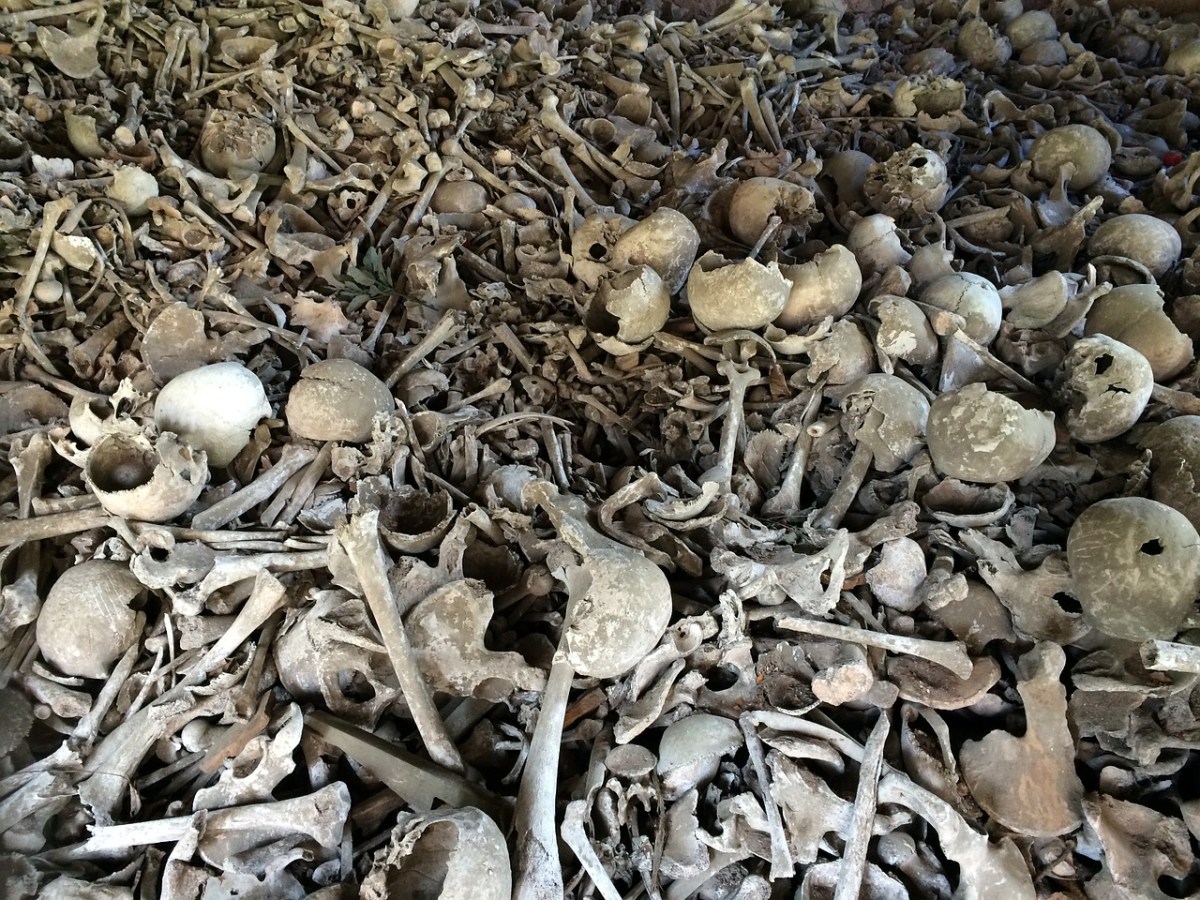
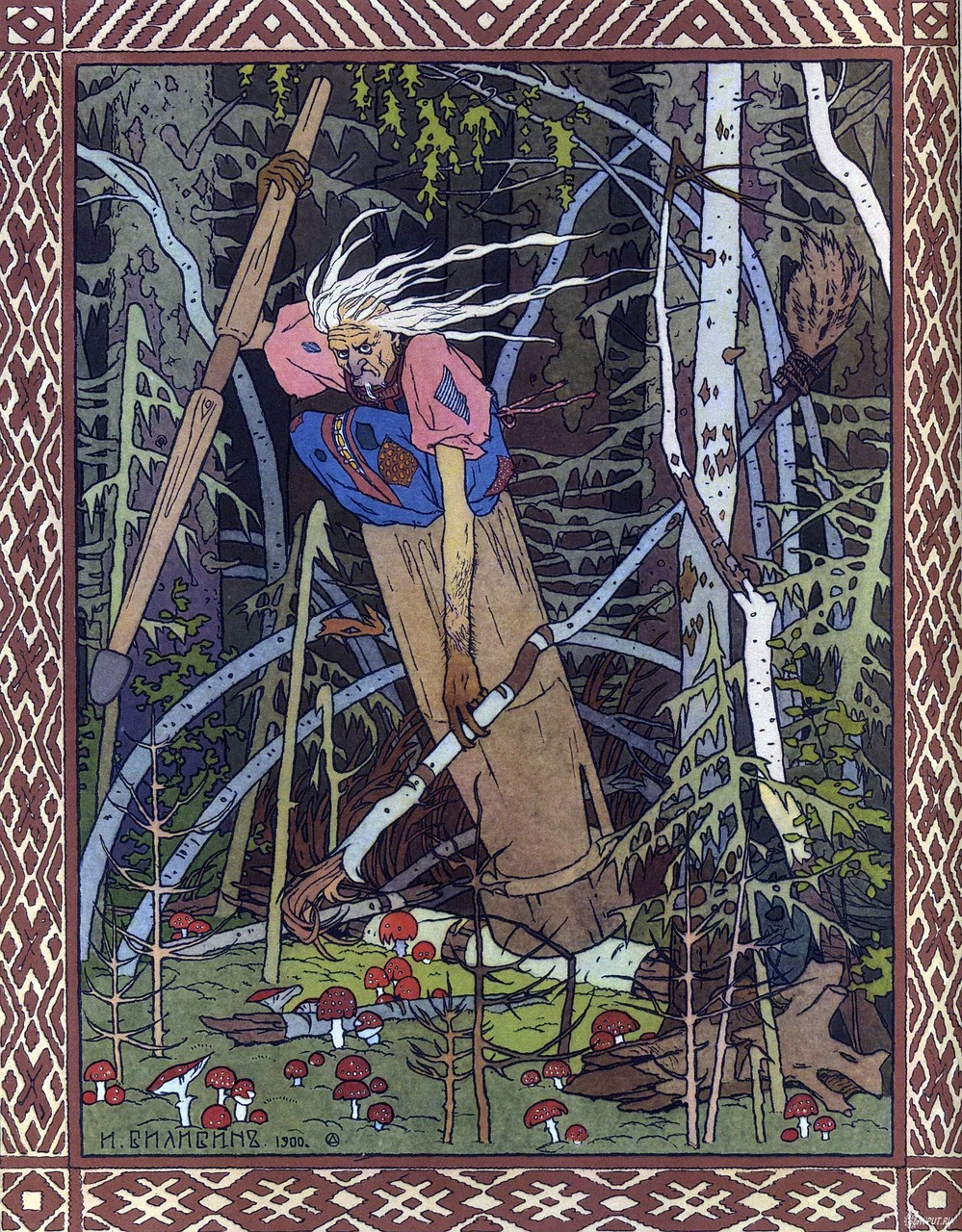
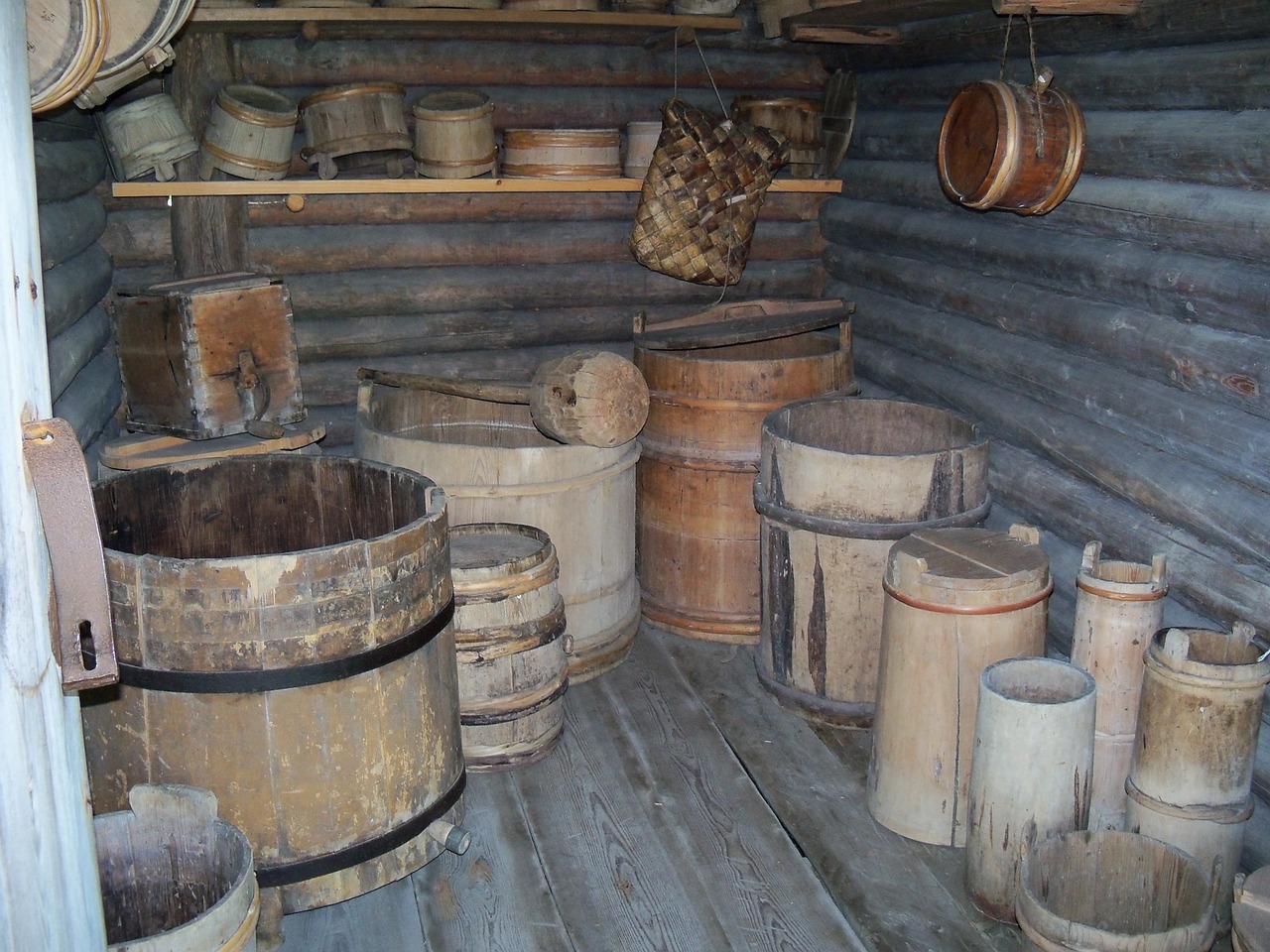




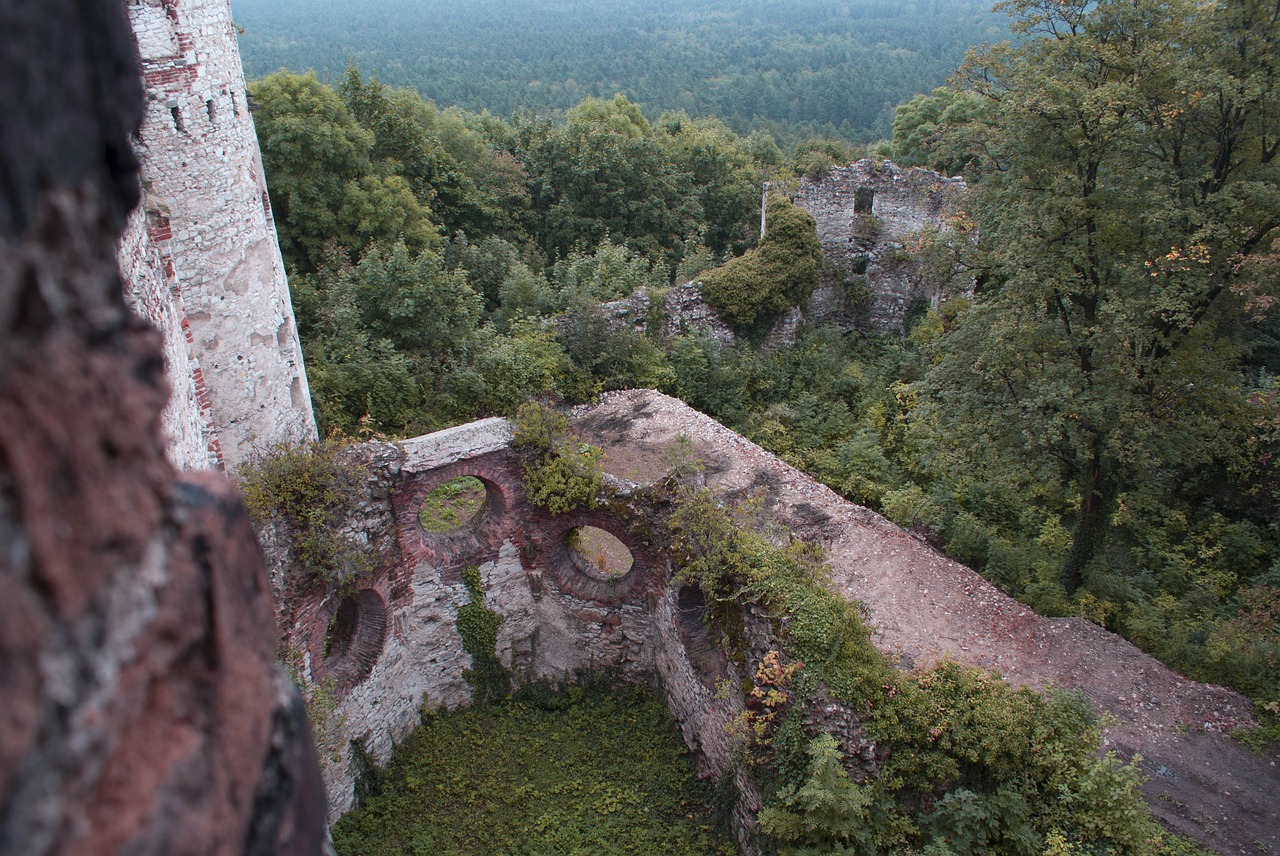
 Excavatia