

*Scene 01* 8:00 (Pull of The Stones)
In the inner storeroom, beneath the upper levels of the granary, Begglar and I continued our conversation in earnest.
His face was grave and his countenance sober and disturbed. The dire implication of the moving Builder Stones was one I had not anticipated in coming back to The Mid-World. When the factions formed between the Mid-World kingdoms, tensions were exacerbated when their Builder Stones locked down.
“How many of the twelve stones have been impacted?”
Begglar huffed, “We believe it affected all of them, though we cannot be sure about Capitalia. It is too remote and on the far side of the Walls of Stone mountains. Their stone could even now be cutting its way through the mountains, but we have no way of knowing that for sure. It has been many years since the Capitalians have come on this side of their massive gates. Agents could be riding quietly in these lands, but they would do so unannounced. You know how the others feel about them. But there is no reason to believe that their stone was not affected as well.”
“How do you know this?” I countered, my uneasiness causing my voice to quaver.
“We have our people. They have seen some very mysterious things. You know how the kingdom leaders are when it comes to the stones. They suspect some kind of sorcery. Accounts from one kingdom to the next vary, but all are consistent on the timing. Best we can account, it started happening on the first day of Sukkot, a historic feast day of temporary shelters. On that day, twenty-one years ago, all building ceased. The stones once light as an ash pumice stone, suddenly fell from the hands of their bearers. They seemed to gain the weight of all the quarried stones they had borne in the building of each of the stone cities. Arms bearing them were wrenched out of their sockets. Some had their feet crushed beyond repair. All those unfortunate enough to be carrying the stone at the time suffered some injury or maiming. Some were at rest in the citadel treasuries upon pedestals that were summarily crushed to powder, as the stones crashed to the ground unable to be raised by the might of men or any device which was contrived to try to lift them once more. Rumors spread, and the talk in the holding kingdoms reached the outer lands, until the lords of each realm agreed to meet upon neutral ground near the Capitalian stone gates, near the Walls of Stone Mountain Range in the Kidron valley. Each kingdom suspected the others. It was a tense few days. Armored men were cordoned off in encampments bristling with weaponry and raw nerves.”
“There is a narrowing channel through that one passable valley. Military soldiers were forced to narrow their ranks columns as the envoys met in the grounds where the old annual festivals were once held in times past. When each of their representatives realized that what was happening to the stone of one kingdom was happening to all, they were first suspicious that one kingdom, might be in league with The Pan and its bizarre kinds. That some witchcraft had arisen out of his shadowy moon kingdom, for none of his kind had been invited to the counsel, for reasons that should be obvious.
But The Pan is a suspicious one. He has his creature agents make note of any large gathering of mankind. Especially when it involves rival kingdoms. He knows one day man will again move against him. He stands to rest easy when the kingdoms of men are divided. One or two kingdoms moving against him are not enough to succeed and he knows it. But when all gather, that is something else altogether and he is poised to rouse his dark ones against such.
The Pan has never been one to share power or bind itself to a treaty. Emissaries have tried in the past, but it wasn’t until the emergence of trolls coming from among the kingdoms of men, that The Pan has ever agreed to hold counsel with an envoy, without them being beaten, pursued or eaten. The Pan has always hated mankind. It is an unreasonable and unnatural hatred. The sight of a human seems to enrage it. When The Pan finally encountered a troll among a troop of men, it was the first time it and its hybrid minions allowed that company to live. He was intrigued by the changes in the unfortunate being. For some reason he calls them human frogs. Seems quite pleased with these recent mockeries of humankind. So much so that he agreed to grant counsel to mankind, only if it was conducted through emissaries of the troll kind. That is why Xarmni has gathered to itself a community of their loathsome kind. They are cultivated as spies and brokers between the kingdom of The Half-Men and the Xarmnian monarch. The Xarmnians hope to be the first to secure an understanding with The Pan and his creatures. To secretly understand what conjuring power The Pan might be using to arrest the kingdom stones. Xarmni seems to be the only realm with a subcommunity of trolls within their midst, so the other kingdoms have grudgingly agreed to let Xarmni lead in this discovery. But they suspect the Son of Xarm may not be as forthcoming with whatever he finds out through his troll envoys. Other kingdoms have tries to follow the trolls on their missions into the moon kingdom, but The Pan seems to know that others not of troll kind are following, and these have all been taken captive and killed. Only troll kind are allowed passage into and out of the realms of The Pan, and only those men or women a troll vouches for, will live to tell the tale. It wasn’t until a few months ago that the stones of each kingdom began to move of their own accord. Xarmni has not reported much to the other kingdoms. Each is growing impatient. They suspected The Pan had found a way to wield The Cordis Stone he took from you and Caleb to cause the effect in their stones, but now that their stones are on the move, they suspect that The Son of Xarm has not been straight with them about all he knows. They are gearing up for battle. Each kingdom is preparing to annihilate and enslave one another. The truce has broken. They are each following the movements of their stones. Their anger grows with each mile their stones gain day by day.”
“What have they seen?”
“Every city is different, but they are essentially the same when it comes to those stones. When not in use, they all kept them locked up and heavily guarded as a matter of sacred ritual. The Xarmnians kept their stone in the Citadel vault, on the stone pedestal. You knew they had even begun worshipping it.”
*Scene 02* 8:00 (Anchored in Awareness)
I shook my head in amazement, “How have you and Nell endured this paganism and the constant shadow of threat all this time? The Xarmnians have been hunting you for piracy, yet you live out here under their noses, still operating as a pirate of sorts. Why did you choose to remain here when you could have gone back to the Surface World at any time?”
“What do you mean, and leave my Nell here? Alone? With them?” Begglar grunted.
I winced, “I know, I know there’s that. But we are of that other world, and I am not sure it was wise to make ties here when we belong there.”
“That is not entirely true. A part of us belongs here and you know it. But staying away as long as you did, perhaps that has taken an awareness from you. Be that as it may, something made you return. A part of you knew we have unfinished business here. In fact, if we don’t keep an awareness of here, and especially of Excavatia, then we are entirely useless living back there in the Surface World. In whatever world you chose to remain the most in, there you are most vulnerable to what seeks your destruction. Danger exists in both worlds since they are the most in the parallel nexis. The Surface World is the place where your true sense of self lives in the most fog. While there is danger here, there is more clarity than back in the Surface World. Living here I do not lose the awareness but sharpen it, and I can still catch a glimpse of the shoreline of the home we all seek to be part of.”
“Yes, but the dangers here are real too,” I countered. “The Xarmnians will most certainly torture and kill your family, your wife, and son, and it would then only be a mercy if they kill you too. Death guilt is not an easy burden to bear. It crushes you and steals purpose away from you. It overshadows everything you hope to accomplish hereafter. Afterward, you are merely a shell, a dead man walking.”
“Then don’t carry it,” Begglar grunted.
“That’s easy enough for you to say now, while you still have Nell and Dominic under your care,” I groused.
“O’Brian, this is why, if given me own choice in the matter, you would’ve been the last one I would choose to lead this renewal of the Stone Quests.”
“I don’t follow,” I said looking away around the storeroom.
“And that is my point. You cannot lead if you don’t follow. The lives of others are not your burden to bear. It is too much for any man. It is a burden that can only be borne by The One. You once knew that. Jeremiah did too, but you’ve both forgotten it. Life and death are not in your hands. The safest place in the world is in following that Voice that seeks you…” he said tapping my chest with two fingers, “…in here.”
I met his hard gaze and faltered a bit.
“You ask me how I remain here, and knowing what I once was, you know I must answer you in seaman’s terms because it is the same way I knew my ship would be where I left it when we set ashore. We set our anchor.”
“Your anchor?”
“I am anchored in the awareness of the Almighty. I keep that awareness here,” he tapped his own breast with the same two fingers he had used to tap me, “…always. The Xarmnians expect to find a seaman. Instead, they see a baker. An Innkeeper. The Xarmnians expect to find a brawny man. Instead, they see a man who has sampled more of his baked goods, than he ought to ‘ave. The Xarmnians expect to find a man hiding and on the run. Instead, they see a man running a prominent small business in a town on the far end of the high country. They expect to see a man of the waters, not a man of the fields. It is all these expectations that blind them to what we’ve been right in front of them. Their expectations cloud their vision because they are too proud to really see outside of their own perspectives. This is the problem of all mankind. Hubris. We are too wedded to our own perspectives that we fail to see what is true, even if it stands before us.”
Begglar’s words were deep waters, and I knew if I waded too far into them, they would be over my head, but they could not be ignored either.
At last, I said, “Anchored in the Almighty, huh?
“Aye,” Begglar nodded, “Tis madness to set to the seaport in any other harbor.”
Tentatively, I touched the shoreline of Begglar’s argument.
“How can I lead, if I don’t take responsibility for those who follow my leadership?”
“O’Brian, this is not about avoiding responsibility, but about assessing how best that responsibility may be carried so that you can have the freedom to move forward into the leadership for which you were called. The One’s purposes are not achieved by following the course of a man’s reasoning. In fact, that is the very thing that will most ensure the leader will fail in anything The One calls them to. It is not about your capability, but about His.”
The illusion of shallow waters was dispelled, as the realization affirmed what I felt the Inner Voice had been telling me in gentle whispers all along. My own fears and failings kept the soil of my heart in a gravel mix of stone and earth. Now the tendrils of the roots in Begglar’s words began to penetrate deeper and curl into the dark earth beneath.
“You must drop your anchor, O’Brian. Else you will drift about and find yourself in the breaker rocks. It may sound counter to what one expects, but The One’s ways are higher than ours. To move forward into your purpose, you must lower your anchor into His moving. It is an undercurrent that does not register in the surface waters, but when you find His flow, then you will find yourself secure and those who follow you in that will also be secure because of it. Your ability to lead depends greatly on your choice to follow. This places the responsibility in His flow, and not in the set of your own sails.”
Quietly, I whispered, “What if I miss His guidance?”
“Courage is not the absence of fear but doing what is right in the face of it. Fear will always be a headwind. Whether it influences you or not, depends on the set of your sails and where you cast your anchor. The anchor will tow you along following The One’s undercurrent, and you handle the captain’s wheel loosely, allowing your vessel to roll and pitch in the tow, letting the headwinds slip through the slack in your sails. If you catch the headwind in a gathering sail, the ship will yaw and tilt and may swamp you. Let the headwinds slip past the sail, but do not gather it, because it will resist the towing of your anchor.”
Fear. He was talking about fear as wind. The seaman’s images were not lost on me. Instead, they affirmed me and showed me the truth of what was holding me back.
I sighed, knowing that I needed to embrace all that Begglar was saying, but still feeling some struggle to do so. Knowing the truth is one thing, embracing it by setting your hands and feet to move into it was something else.
“So, what are we doing down here? Why did you bring us here?”
Begglar reached down and placed his hands on the top of a wooden iron bounded barrel.
“Help me move this, will ya?”
“What’er we doing?”
“Just help me and you’ll soon find out.”
The barrel was short but thick, and it was very heavy and seemed to be filled with rocks or something that caused it to be of great weight. We rocked it to a canted tilt and then I helped him roll it upon its staves until it was three to four feet further into the corner of the small storage room.
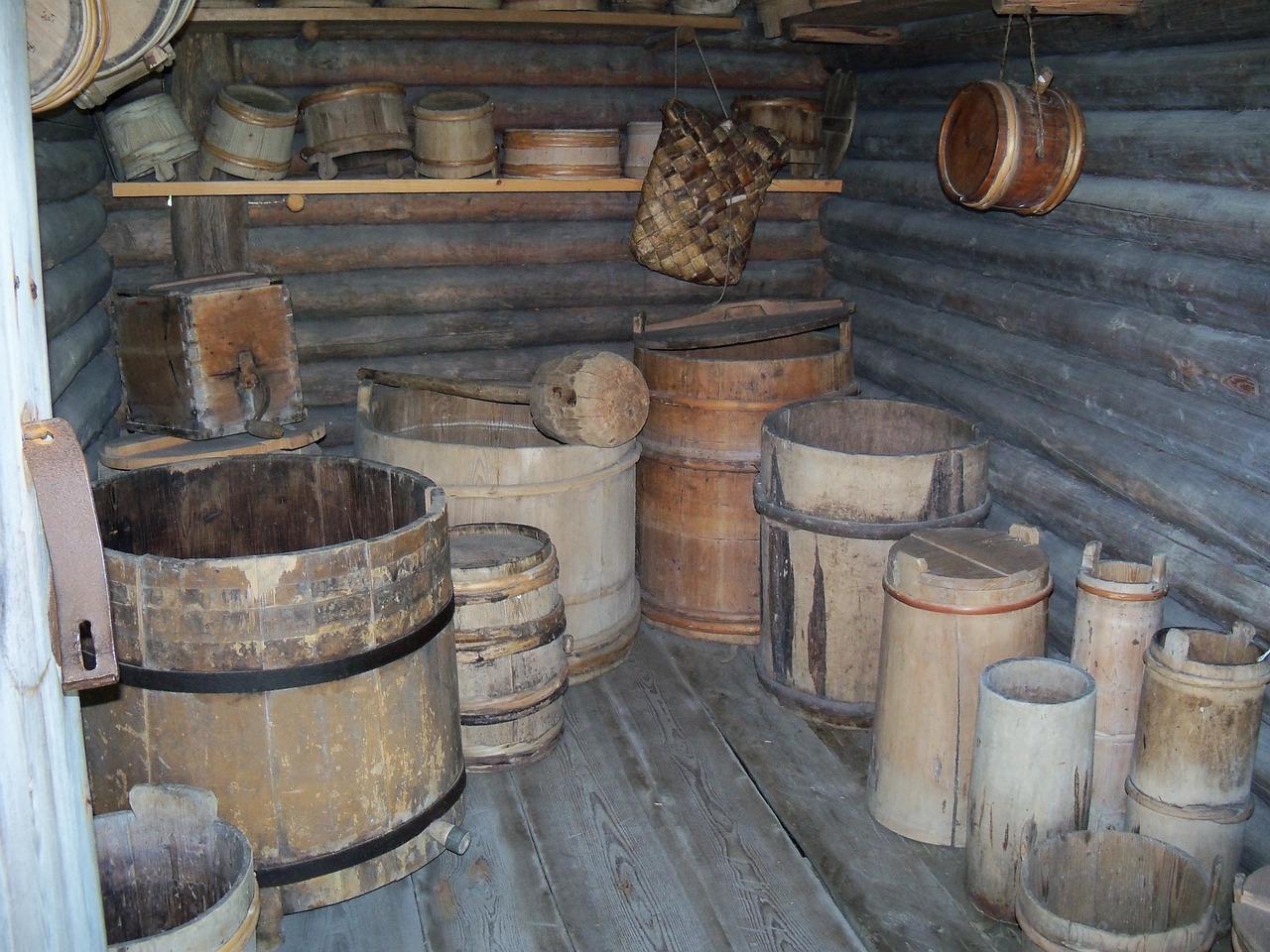
The walls were made of joined timber, shaved down for uniformity until they could be joined together in an even seam along the way. Because this storage area and the subsequence rooms were cut into the ground beneath the threshing floor, the walls were thick and packed against the ground in which they provided the substructures. As the weight of the mounds and piles of grain pressed down on the floor above, the crushed earth filled in and pressed against the substructure timbers and sealed the area off against the seasonal weather keeping these vaults dry and cool for perennial storage. The air in the vaults, though a little stale from being sealed, was neither musty nor wet, which made it perfect for its use as storage for perishables.
Begglar had crawled down on the floor and with a small, metal instrument was prying loose one of the floorboards. I bent down and helped him, and we set it aside. He reached into the dark oblong cavity and tugged at a rope in the darkness until some hidden catch was released. Then he carefully set the displaced floorboard back into its groove and thumb-pressed a wooden dowel pin back into place to secure it. He stood up. Brushed himself off and commenced to drag rolling the barrel back over the spot in which we had displaced it only moments ago. I assisted him until got it done. I followed him out of the storeroom and he pulled the planked door and leather latch shut over the set pin closing the room once more.
“Now to the weapons,” he said.
“The weapons are here?”
“Above us. In the grain pits. I had to release the locking pin mechanism first. But we’ve a little weeding out to do, before we uncover them.”
“What do you mean?”
“The monster,” he said, turning. “We’ve got to root out the monster in our midst with the Shibboleth test and, living here all these years waiting for your return, and seeing the Honor Sword show up in that dried streambed out there, I’ve learned just the way to do it.”
“How?”
Begglar looked hard at me, and then grumbled, “What makes you think I will not have to put you through the test as well? You’ll find out when the others do. Gather them together and lead them down the streambed to the sword. I will address each of you privately there. One by one. You will be last.”
“And afterwards…? To the weapons cache?”
“We will see what happens.”
*Scene 03* 10:40 (Edge of The Escarpment)
On the upper edge of the plateau where Begglar’s wagon and team of horses rested just beyond the edge of the escarpment and the slanted taper onto the descending roadway, the group of Surface World travelers milled about stretching their legs and looking to the west where the lands descended into a chain of hanging valleys and stepped plains. A golden grain field edged the base of the winding cut-row carved into the longer side of the plateau.
It stood to reason that over time the spilled grain seed being separated and milled would be caught and carried by the drafts passing through the hill cleft of the granary and might inadvertently reseed the plain to the leeward side of the hill. The happenstance of this reseeding process appeared useful to the Xarmnian land managers, and they ordered the locals to use their teams of oxen to plow and harrow the rolling plain beneath the escarpment for convenience. Colluvial chutes were carved and chiseled down the rockface of the cliffside. In the areas where the descending roadways impeded these channeled colluvial chutes, the road was cut away and short bridges were built to allow the emptied wagons to cross the bridge while the flowing granules passed under the bridgeways on their descent to the floor of the grain field.
Some of the seeding, not picked up by the winds were shoveled into the lower grain bins that were carved into the catcher pits at the base of the escarpment. These pits and caves were the covered and sealed by large thick ironbound wooden doors, that rests on rollers and were opened and closed by a winch and drum rig located within a hidden grotto stable. The stable was also carved out along base below a shelf of the escarpment to allow rested, fed, and readied horse stock the proximity to assist in the effort to capture the mounds of spillage and draw the grain back into the storage caves and bins.
The winding road angling down the length of the long-edge of the plateau with four switchbacks passes ending down near the open gates of the cave stables. Only the emptied wagons used this switchback descent. Loaded wagons of grain approached the granary hillock from its eastern side and made their way up the longer and more gradual lower-grade slope, while the emptied wagons then were driven down the winding cut-road to assist in the field harvesting and the transport of cut sheafs for the Xarmnian grain fields below. The leeward side of the granary hill was pale and, by sight alone, did not appear to be the same form of dark granite that made up the rest of the hill.
Five of the travelers stood with Dominick, looking down the long-edge of the hill to the winding roadside and the wind rippling grain fields at the base approximately one-thousand feet below.
A young woman asked, “Why is this side of the hill white? And those fields. Such an amazing transition from white to distant green. Why is that?”
“Grain dust,” Dominick, answered, “The granary operation does it. The winds catch the ground chaff, but it also catches the flour that comes from the crushing and separation. It forms clouds of powder, and the downside of the hill is dusted with it. When the winds get particularly high, some of the grain kernels are caught too. Much of the kernels fall down the colluvial chutes and are carried down to the berm, but the milled flour is sifted, and the pass-through winds shears out of the stone breaks.”
“Dominick, is it?” the young woman said, eyeing him with a sidelong glance, not turning her head.
“Aye.”
“My name is Lindsey,” she said simply.
Dominick smiled to himself, still observing the far distance but not the landscape alone. Perhaps there was more hope for this quest than he had first thought. The travelers were softening.
The sky was gray with billowing clouds, gathering rain that had only briefly spilled and spattered before, but were now swirling with a darkening heaviness that portended a great deal more of it to come.
A teen girl, who had been listening to them, observed solemnly, “Is that why the roads seem to glow?”
“Aye, same reason,” Dominick nodded, “The wagons carry and shake some of it off as they drive away to the west there to reach the main road, but most of the wagons circle the hillside until the end of the workday. The wagon drivers are almost ghost white by the end of the day. The grain dust cakes everything. The grain fields seem to be pale perennially. They are only green during the midseason. Near harvest they become white again. See those rain clouds, yonder?”
The watchers nodded.
“After the rainfall, that field will be rinsed from much of the powder. If there is green in the stalks and leaves, the nearer end of those fields will become pale green. Unfortunately, the flour dust coats the plants and prevents much of the sunlight from getting to the leaves, so the prospect of rain is always a welcome sight. If the rains are frequent enough during the growing season, it will yield a better harvest. For that reason, the farthest ends of those fields yield more of the grain since the dust doesn’t carry that far.”
A taller man, who had been observant and quiet spoke up. “My name is James. I am sorry for the snide remark one of the others made about your father’s wagon. You’ve done a great deal here with what you had. This system is more sophisticated than I could have imagined, and you seem to know considerable more about it than even you’ve shared with us.”
“Aye,” Dominick responded quietly, “We learn as we find. Me mother’d see this below as a lesson connected with how a new life should be lived. A second sight, she has. She’s a seer. Me father too. ‘Tis a way of seeing beyond what is there before you. A way to see the meaning in it. An attribute coming from Excavatia itself. The capacity for that sight is planted in everyone who follows in The Name of The One. Aligning to the will of The One, is why it is important to give your names to the quest. It is His will that calls us to it, not merely the calling from a man like O’Brian.”
A degree of understanding altered the expression of both Lindsey and James, the two travelers standing nearby who had offered their names to Dominick.
The three others standing near them noticed, but only one of them responded.
“My name is Gemma,” the young teen girl tugged on Dominick’s sleeve. “Please tell us what your mom would see.”
Dominick grinned, “I am but a follower of this quest too, y’know. Tis not I who you should be giving your names too on behalf of The One. My name as well as me mother’s and me father’s already appears on The Marker Stone from long ago, before it was given a burial. We are committed. Determine for yourselves what your choices are, and you will see a lot more in this journey ahead than merely what appears before your eyes.”
One of the remaining, unnamed ones, a man who had stood silent and seemed to be observing and taking in much more by choosing to listen rather than interject, finally spoke up. “Dominick, my name is Tiernan. What do you see with that insight you speak of when you observe what is below?”
“I see a field moving from outside of its grave clothes and learning to thrive in the freshness of a cleansing rain,” Dominick said, gesturing forward.
“From this vantage point, upon the hilltop on this granary, we observe that when the harvest time comes, the grain seeds in the stalks must cut from the ground, bundled and carried up the hill for threshing. Much like a man or a woman must be in life. The value of the plant is in the head of the stalk. The head represents the soul of mankind, also referred to as the heart. Your hearts must endure the threshing and separation process from the desires of the flesh, like the valued grain must endure the separation from the dying chaff. This is not an easy process, but it is a necessary one. The grains must separate from the chaff and fall to the ground before it can be replanted. There is a verse in the Ancient Texts that says: “When you put a seed into the ground, it doesn’t grow into a plant unless it dies first.” (1 Corinthians 15:36b NLT) It is only through death that life is reborn and renewed. The seed that is completely crushed into powder will never bring forth life, because it does not survive the pressing of the millstone, the trials and tribulations of life and the testing we must endure. The powder of the crushed grains represents merely the death shroud of the flesh. As it flows downward and is allowed to cover the living, reborn stalks of grain, the newborns suffer in the layers that separate them from the Son. If we are given rebirth, we need the rains to wash us clean of the powder of dead seeds, before we can thrive to produce the harvest value in the field. That is why the far end of the field, furthest removed from the influence of the grave thrives the most. These are the lessons me mother and father taught me from this vantage point. To see the cycle of the seed as it reflects the cycle of our lives. The Xarmnians have no knowledge of the fields, so they remain blind to its lessons, because they cannot access the second sight in this second world.”
The four who had given their names to Dominick–Lindsey, James, Gemma, and Tiernan–looked again on the outward lands and fields below with a new appreciation, both for what it represented and for Dominick and the wisdom he had gained through the influence of his parents and a faith in someone ever-present, but yet unseen. The other, a young woman, who had remained silent but had been listening closely, had a growing sense of uneasiness about all that had been shared between Dominick and the other four. Perhaps, she thought to herself, we may have chosen the wrong side.
*Scene 04* 3:30 (Vector and Vengeance)
Thousands of feet below, in the deep darkness of a cavernous world, carved by a monstrous metallic worm boring into the flesh of the Mid-World, the sentient trans-dimensional beast calling itself ‘Sheol’, twisted and flexed in the darkness, displacing earth and rock jettisoned behind its coiled flanks, and huffed into the hollow by it pulsing and flexing scales. Its monstrous mind followed the invisible scent and signature, gaining lost ground on its Surface World prey that it had lost seeking passage around the immovable rib of stone that projected, horn-like into the hills above. The land above that unbreakable stone smelled sweetly of dead and decaying flesh. The deep soil below it anointed and drenched with saturations of human blood, untainted by the machinations of the hybrid crossbreeds.
Every movement the beast made to come from below and injest and consume the bloodied earth, its inner ears pounded with shrieks and wails that disoriented the shadow-dwelling beast. It had dug blindly about, losing its inner sense of direction, always digging frantically away from the buried Stone, but finding itselfs ramming into it, and stunning its senses further.
Finally the beast cut a wider circle and was able to distance itself far enough from the blood hallowed ground and spine of Stone, that it began to sense its way again, and pick up the northwestern trail of the travelers above.
It sent out sonic pulses to its covert agent, looking for further connections to triangulate and vector its subterranean approach.
“Where are you, (רוּחַ טִיט) titu ruah?!” it growled, its frustration and anger accompanied by flashes and electrical pulses of red light, lighting up the cut tunnels. “Do not deceive me! The body I gave you to serve me, I can take that form from you at any time, you vaporous wretch!”
A old woman’s raspy voice responded to the beast from a far distance away, muffled by the need to whisper through the energies of the ground.
“We travel by wheel and wagon. Rains have muted my ability to communicate, but they are a sign that thousands of my sisters are nearby and follow us. I am working out a way to eliminate both a Seer and the child. An opportunity is presenting itself. Please be patient, Sire. I should have them dispatched soon and then you may take their leader and dispose of the company that follows him. Your glut of blood is coming, my Lord. When my feet touch the ground you will know where I am. Come swiftly, my Lord. Come with vengeance, and power. Burst the land and take them upon the hill of grain and separation.”
*Scene 05* 5:15 (Pushed to The Precipice)
Elsewhere atop the granary plateau, beyond the dumping deck, where the sheafs of grain were typically unloaded and spread across the large, flat-stone milling plate, a further low-walled stone bin, slightly smaller in circumference, was slanted and stepped down about five-feet below the wider main deck. A large canvas tent was held up by poles and roped stakes covering the lower grinding areas. Large wooden rakes were tied in bundled lay-by racks to be used by the workers when the granary was in full operation. The furthest ring was also canopied and that lower ring, sitting another ten to twelve feet lower than the previous ring ran closer to the pointed edge of the escarpment with the more sheer cliffs dropping away with a flattened rock-faces hundreds of feet high.
Becca had refused to leave the wagon and was not responding to any effort to coax her out of it. One of the other women agreed to stay with Becca and keep an eye on her, and a young man had offered to stay and steady the team of horses, lest they spook and take off towards the edge of the escarpment with Becca still in the wagon.
Seeing that nothing further could be done with Becca, Nell and Miray walked hand in hand down under the stepped and canopied sifting decks and Cheryl followed in a limping gait.
Nell tried to calm Miray by distracting her and telling her all about the granary operations. She showed her the dropping floor where the kernels of grain that had been separated and sifted in the upper rings were finally allowed to fall downward into the bore holes to end up in the catcher pits hundreds of feet below the top of the hill. They both hunkered down on the spilling stone, which bore thousands upon thousands of dark pitted boreholes, making the stone surface appear speckled.
“This is where the kernals of grain fall through down into the catcher pits far below.”
Miray squatted further, laying prostrate and putting her eye close to one of the boreholes, looking down into the dark shadowy grooves unable to see anything but pitch darkness.
“I can’t see anything,” she seemed disappointed, “How far down do the seeds fall”
Nell tossled the young girl’s curly red fair, with a gentling hand, “If the gathering doors were opened below, you could see all the way down there into the grain bins where there are tons of grain stored in the lockers and catcher pits.”
“Do the seeds fall all the way to Hell?”
Startled, Nell asked, “What makes you say that, child?”
Miray raised up and wrinkled her nose, shrugging with her shoulders, turning a palm upward, “Well they fall into a dark pit. Isn’t that like falling to Hell.”
Nell smiled at the child’s innocence. “Oh, I see,” Nell said, helping Miray sit full upright, “Not nearly that far down, lass.”
Miray dusted the fine grain powder off of her jeans and hands, rubbing them together. “Is it far down there, then? How deep is it?”
Nell rose to her knees, but she put out her hands to Miray.
“If you will hold tight to my hands, I will give you an idea, lass,” Nell said gently, glad she had finally piqued the girl’s interest.
Carefully, Nell and Miray approached the steeper edge of the escarpment, and Cheryl hobbled up beside them. The escarpment edge jutted out from the final pit onto a promontory with a granite stone edge of jagged rock. Yellow scrub grass whipped and whirled in the updrafts as they gazed out upon the open country and valleys below. Miray was impressed by the sheer heights, and Nell smiled at the child’s wide-eyed expression as she attempted to take it all in. Miray held tightly to both Nell and Cheryl’s hands, but she strained forward a little, wanting to get closer to see over the jutting edge. “We must be up really high, huh?” Miray exclaimed, “I can see the furthest, and I am the shortest of all you guys.” Both Cheryl and Nell chuckled.
At last, Miray said, “Miss Nell?”
“Yes, dear?”
“Can you put me up on your shoulders, like my daddy does, so I can be the tallest?”
“As you wish, dear,” said Nell, bemused.
Cheryl laughed, as she helped Miray balance on Nell’s shoulders, while Nells secured both of Miray’s hands in hers, with the child seated prominently around the back of Nell’s neck.
Cheryl has almost turned away to enjoy the high vantage vista, when she caught the sight of the swift, but furtive movement of a small figure running up behind Nell and the delighted child together taking in the grand view, oblivious to all the others roaming the upper plateau.
Becca was approaching in a ducked run, almost as if she were some primate animal, and the savage and pleassured look on the young girl’s face did not appear to be that of an innocent child.
*Scene 06* 8:23 (Tensions Rising)
As Begglar and I ascended the stairway from the lower decks, a task which took much longer than it did coming down, we continued our conversation through labored breaths.
“How did your spies know they are heading this way?”
“I’ve told you before of the place I once lived in the Surface World. It was a seafaring village. A port of call for many boats, but fishing boats in particular.”
“Yes, I remember.”
“On the sea, a good sailor never loses a sense of the direction where land is. His or her home port. If you get lost at sea, chances are high that you are a landlubber, a novice, and that your journey was ill-fated before you even set sail or stepped aboard the vessel.”
He fished into his pocket and produced a small metal device with a pivoting screw hinge, a blunted point and a combination of three eye loupes.
“What is this?”
“A good luck charm. I may be far from the sea, but seawater still flows through these veins. That’s a device used for finding your way. It took quite a bit of time locating one of those here. This is a much older version. Crude, but it works after a fashion.”
“What do you mean?”
“The problem is in the stars.”
“The stars?”
“Yes. The sky here is all wrong. High above it cracks and has strange fault lines. Like a vein of silver or gold in the rock, only the marbling of the sky obscures most of it. The clouds and fog obstruct its usage. The moon is hard to follow and transparent at daybreak. You’ve seen it. It is luminous but seems muted. If memory serves, I remember it much closer and brighter up in the Surface World. The problem with that is the moon is not a fixed point. The device relies on a fixed point in the heavens. Without it, the device is useless, to a certain degree.”
“A certain degree?”
“It can be used in other ways, we’ve discovered. Both the sun and moon follow predictable paths. At sunrise or sunset, we can be certain of directions east and west, and by consequence north and south. Moonrise and moonset take longer and are tricky because of the roll of the land, and the influence of the Sun. The Sun reveals the moon as it leaves and swallows the moon in the light as it rises. That device becomes useful when one has determined where the true points of direction lie on the horizon, from observing the passage of the Sun. Once you can sight those fixed points, you can measure the degree or direction from your vantage point from just about anywhere you are standing.”
“And your spies have one of these?”
“Absolutely. And they know how to use them. We recruited them from the lake country. They had found them useful on the boats, but also overland.”
“How did you get seamen to leave the sea?”
“That was easy. When the Xarmnians decided they wanted to regulate and control the fishing. Xarmni wields most of it power in the large cities. In the cities, people are grouped and packed closely together and are more easily controlled by regulating their access to goods and services. In the outlier communities and rural areas is where the Xarmnians have the greatest challenge to maintain their rule. Those communities tend to be more independent and self-sufficient. They are by and large agrarian communities or game hunters or fishermen. They can live off of the land and water sufficiently enough to have no need to ask from the government much of anything. They don’t like being ordered about by some distant ruler who knows little about them, their needs or their way of life. So when the soldiers moved in and started harassing them, they fought back. They valued their independence. They did not need some power-grabbing ruler to order them about. They fought long and hard until the soldiers came in larger numbers and began to quell the rebellions. Men, women, children. It did not matter to the Xarmnians. They were slaughtered by the hundreds. Marched in chains up to the Marker Stone and killed before it until the townsfolk begged them to stop and agreed to let themselves be ruled.”
I had been away too long. So much had happened here, while I had become so preoccupied in the Surface World. Hearing all of this, my gut tightened and turned at what these residents must have gone through. Witnessing it happening firsthand may not have made much difference, but sometimes even the presence of a fellow in the midst of tragedy can mean so much to the one suffering through it.
I closed my eyes and bowed my head at the thoughts and implications hammering into me.
Begglar continued, “The seamen, like the rural farmers and herders, were of good hardy stock. Muscled and grizzled, deeply tanned and weathered by a life lived in the open and earning their daily provision by the sweat of their brow. These were the men most desired to be in the armies of the powerful, but these were the men, most averse to being conscripted. So the Xarmnian leaders had to gain leverage over them. Each circumstance is a little different, but by and large, the leverage taken was most likely a loved one brought back to live in the walled cities. In a place where the Xarmnians could keep an eye on them, and a metal shackle about them, if necessary. Needless, to say, they sought us in the Underground out and gladly volunteered to go down the lion’s throat and live within the belly of the beast, it that might serve the cause. When the time comes, they will be within striking distance.”
“How many of the stones are being watched?”
“Ten. And by all accounts, they started moving at the same time. We can only assume that the same is true with the other two.”
“And they are all pointing back to The Marker?”
“Everyone that we observed, yes.”
“Then we don’t have much time.”
“No,” he shook his head, “we don’t.”
As we exited the upper stairwell onto the granary deck, we witnessed something very odd and disturbing.
Cheryl pounced on Becca and pressed her to the ground but was thrown off as if she were a mere rag doll. Nell had Miray upon her shoulders, and they were dangerously close to the edge of the steepest edge of the escarpment.
Two of the men had run up behind Becca, but they hesitated to approach her too fast for fear she might lunge at Nell and Miray and push them over the cliff.
Begglar shouted in a bold and loud voice reminiscent of his sea command days, an order brooking no argument, “Nell! Dominic! Others! To the wagon! All of you!”
Becca turned, responding instinctively to the shout, and that is when the two young men charged her and with difficulty, managed to restrain her.
Becca did not resist, this time, but only winced as if the two young men holding her were squeezing her too tightly. “You all don’t understand! You are all being fooled! You don’t know what she is!”
By this time, Nell had swung Miray down from her shoulders and Cheryl was attempting to get back up on her feet, but had hit the stone milling pit and had painfully suffered additional scratches and severe bruising.
“Who are you talking about?” one of the young men holding Becca asked.
“Her!” screamed Becca, jabbing her desperate and accusing finger at Miray.
*Scene 07* 6:02 (The Remains)
In the abandoned burg of Basia, the storm winds continued to gain in strength. Gusts raked across the face of the stone bungalow near where the Surface Worlders has first encamped, slamming the old, thick-oak door, now free of its mat covering of vines, against the jamb, almost snuffing out the stuttering fire inside the cabin still struggling to breathe light into the dusty room. Two squat-figures had emerged from the hovel, but, upon seeing the approaching horseman and the startled woman fleeing across the intervening stream, they had fled along the side of the structure scrambling over the embankment that backed the brow-built dug-out, preferring their chances out in the stormy open terrain to being trapped in the small cabin. The rider had started to give pursuit, but the two figures seemed to fade into the darkness, camouflaged by the storm-lit terrain, rustling through the whipping field grasses, blending into the mud-caked hill, and scrabbling over the rock-ridge beyond.
Coming back around to the front of the makeshift hermitage, the rider dismounted, and guided his black horse closer to the facing wall of the small domicile, allowing the hill and the intervening structure to shield them from the harsher blows of the crosswinds coming down from the upper ridge.
He patted the horse’s nose, shearing off some of the rainwater that had collected on its muzzle. “Hold here, Starlight,” he spoke calmly to the horse, as he slipped the reins into what remained of the source roots growing along the edge of the doorframe. The stubs of the vine-cover showed clear signs that the foliage covering had been recently hacked away.
The rider drew his short-blade from a scabbard tucked and hidden under the split-flap of his thick gambeson, worn beneath a hooded, rain-cloak that he’d oiled against the wet weather. The door brace bolt lay across the wet muddied floor in a puddle of water. The shadows of the small dusty room jumped and stuttered against the stone stacked wall and glinted off of the dusty pane of a small inset window. Dusty shelves covered in cobwebs, signified that the place had not been lived in for many years. Mice scurried along the top of a bracing rafter, casting enlarged and furtive shadows, along the upper ceiling. The white ash at the edge of the hearth was mixed with settled dust and had only recently been raked and scattered on the hard packed dirt floor. A wooden table predominated the interior, flanked by a single-sized bed that had not been slept in for many years. Dust covered what may have once been a bundle of blankets and a web of yellowish plants and cobwebs had tried and failed to root into the pile to add additional cover. Only a freckling of white mushrooms and fungus seemed to have found stasis in the former sleeping frame. A set of three small candles in low saucers were placed on two of the chairs and on the flat plank of the long bench that were configured along the table to provide light for something that lay across its top.
The rider lowered his blade for the room was too shallow to hold any occupant that could be concealed behind the spartan furnishings it contained. The wind drafts through the door had extinguished the candles, but the staccato of lightning allowed the man to navigate entry. He slowly squatted and retried the bracing bar from the puddle and leaned it against the door, to prevent it from closing behind him. Moving carefully to the stone bricked hearth he lifted a lightly burning ember from the fire and lit one of the candles on the stool and chair near the table. He lifted one of the sconce saucers to better examine the charred mass that lay across the table.
The light revealed a thick but short body, badly burned with its clothing flaked and charred, its flesh desiccated and blistered. Its arms were drawn into angular bends, pulled tightly into around its upper torso. Its hands were black skeletal claws, like knobby, and brittle winter branches. Flakes of its scorched clothing and flesh littered the table with sooty powder. A Troll.
Its large feet were facing the fireplace, its upper torso was pointed towards the sole window, enfolded in its grisly, struggling arms still in a frantic postmortem posture, still very much in shadow. When the man raised the candle toward the thing’s face he drew back with a sudden start.
Lightning and thunder clapped, bleaching the room with ghost light. The creature’s head had been hastily removed. A pool of oozing black blood seeped onto the tabletop and wept black droplets to the dirt floor.
The man moved the candle over the pool, examining the ragged stump of the troll neck. The black ooze seemed to ripple under the light of the candle flame, tendrils of the liquid seeming to burrow in between the slats of the table.
Suddenly, the bar plank, that he had propped against the doorframe, clattered to the floor, splashing into the shallow rain puddle. In one swift motion, the man dropped the candle, whirled to face the portal and drew out his blade as the giant shadow of a dark, massive man obscured the sole doorway. Ponderously, the giant man leaned in from outside the doorstep, ducking carefully under the top lintel, and moved slowly, filling the room and fully blocking the man’s only escape.
A voice rumbled out of the giant man, as his face was partially revealed by the firelight. “I would be very careful with that body. Despite how it may appear, …not all that is in him…is truly dead.”


I can relate so much with the story of Gideon and God taking away every “safety net”. That was a good reminder.
LikeLiked by 1 person